MAM
Urban Company and Talented release ‘Dignity of Labour’ series’ third film


Mumbai: Urban Company has been on a mission to bridge the respect gap between India’s white and blue-collar workers over the past year. After Chhota Kaam, and Chhoti Soch, their third film in the series speaks about this subtle yet insidious prejudice, brought to life in conversation between a father and daughter.
Around this time each year, LinkedIn is flooded with chatter about leadership in workplaces- good managers, bad managers, toxic managers, handing out peanuts in the name of increment managers. However, the very same employees who engage in discourse around leadership styles, work-life balance and mental health, often don’t make the best employers, at home.

Urban Company senior brand manager Kartik Ahuja said, “Over the last 10 years, Urban Company has been instrumental in reshaping India’s access to blue-collared services. We have two constituents, our customers and our partners, and in order to create a mutually beneficial platform, a conversation around the dignity of labour isn’t just a communication platform, but a business necessity that ensures consistent year-on-year earnings growth for our partners, safety nets in the form of insurance and medical cover, Over 57,000 Urban Company professionals have benefitted from skill training programs and accreditations, climbing the ladder to upward social mobility. With this work, our intent is to nudge society to see our partners the way we see them – as professionals.”
Through hours of interviewing UC professionals, the creative team at Talented derived insights about the various ways in which the respect gap between blue and white-collar workers has widened. This bank of biases highlighted that the limited glass-cabin’ view of workplaces excludes the very environment that millions of UC professionals work in every day – our homes. Thus the mutual respect, irrespective of the stature or nature of work, that forms the bedrock of dignity, doesn’t permeate these glass borders.
Talented’s Aakash Desai added, “We all wax eloquent about mental health at the workplace and what we expect from our managers within the contours of Corporate India. We have an expansive vocabulary to talk about what makes a “toxic” workplace; and yet we often forget that our homes are the workplaces for UC Professionals and other support staff -that we are their managers. How do our actions at home weigh against our ideas of creating a conducive environment for someone to do their life’s best work? In our third film in the series, we attempt to bridge the respect gap between white and blue-collar workers, to reflect UC customers being allies to UC Pros.”
Superfly founder and director Kopal Naithani said, “The film is a slice-of-life, everyday conversation between a father and a daughter a casual chat that takes an unexpected turn and pushes the father to counter an unspoken prejudice. Our biases against blue-collar workers are seldom verbalised it is complex, rooted in class-based ‘othering’ and passed down generations. Therefore the only way to break these intergenerational cycles of bias, is to pause, recognise and question them.”







Brands
Vodafone Idea elevates Vineeth Jayendranath as VP, marketing head Mumbai
Telecom marketer takes charge of Mumbai circle with growth and brand focus
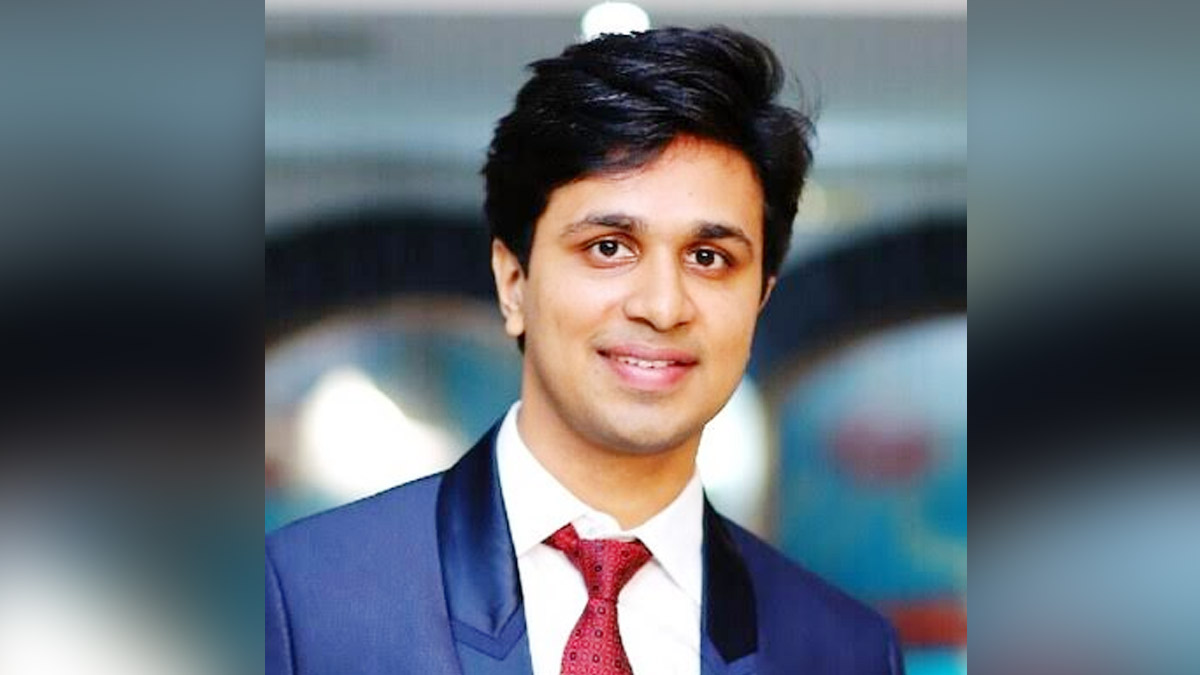
MUMBAI: Vodafone Idea Limited has promoted Vineeth Jayendranath to vice president, marketing head for the Mumbai circle, marking a key milestone in his career as the telecom operator sharpens its regional strategy.
In his new role, Jayendranath will lead marketing efforts across prepaid and postpaid segments in one of the country’s most competitive telecom markets. His mandate includes driving revenue growth, strengthening brand positioning, and deepening customer engagement, while also managing profit and loss responsibilities for the circle.
Sharing the update, Vineeth Jayendranath said, “Excited to share, I am starting my new stint as Vice President, Marketing Head for Mumbai circle at Vodafone Idea Ltd. Would like to thank everyone who has supported me in this journey.”
Jayendranath brings over 12 years of experience spanning telecom and IT, with a strong focus on customer value management and data-led marketing. Since joining Vodafone Idea, he has held multiple leadership roles, most recently serving as general manager leading customer value management and prepaid business across Gujarat, Maharashtra and Goa.
During this period, he handled large subscriber bases and multi-billion rupee revenue portfolios, while rolling out hyper-personalised campaigns and a “segment of one” strategy to improve customer retention and upgrades. He also championed a digital-first approach, pushing adoption of data services and unlimited plans through targeted, insight-driven initiatives.
Earlier, he worked with Idea Cellular Ltd in strategy and business intelligence roles, and began his career at Infosys as a systems engineer. A brief stint at Hyundai Motor India Ltd during his internship added early exposure to marketing strategy.
An alumnus of SVKM’s Narsee Monjee Institute of Management Studies, Jayendranath has steadily built a reputation for combining analytics with marketing execution.
His elevation comes as telecom players double down on circle-level strategies to stay competitive, and Vodafone Idea appears to be betting on data-backed marketing to keep Mumbai firmly in its corner.







