MAM
Umanshi Marketing announces ambitious growth plans on fifth anniversary


Mumbai: Umanshi Marketing, a full-service marketing and PR agency known for ROI-driven solutions reveals ambitious plans on its fifth anniversary. Umanshi has demonstrated rapid growth with a remarkable 34 per cent CAGR in the past five years. Going forward, the agency aims to double its team size and physical presence while focusing on tripling its revenues and expanding service capabilities.
Umanshi Marketing, the brainchild of IIMB alumna, Tamanna Gupta, was formed with the vision to democratise marketing for small businesses. As an outsourced marketing team, Umanshi offers comprehensive solutions including brand strategy, public relations, social media management, full-funnel marketing and website development. Speaking about her vision and the winning features of the agency that helped it grow consistently, Umanshi Marketing founder and director Tamanna Gupta said, “In our early years of working with start-ups & small businesses, we realised the significance of identifying their core business challenges and designing solutions to make a real difference to their universe. We do not chase superficial metrics like the number of followers or share of voice. This remains our mantra even today as we work with prominent brands across sectors. And as we continue to focus on purpose-driven growth, we aim to triple our revenues and double our team size in the next 5 years. We are also looking at establishing our physical offices in Gurgaon, Bangalore and Hyderabad to stay closer to our clients.”
Apart from their business-centric strategies, another key differentiator that has fuelled the organic growth of Umanshi is the hands-on approach of its leadership team and their investment in customer success. They work as in-house CMOs gunning to achieve the business goals of the client. Their case studies are a testament to this approach. One such success story is that of the transformation of an insurtech firm’s sales strategy across channels driving a 125 per cent revenue increase leading to its acquisition. For a D2C startup in a new category, Umanshi helped them revive dormant customers digitally, resulting in a phenomenal 520 per cent boost in customer lifetime value.

Another success story for Umanshi boasts of their expertise in the employer branding segment. The agency’s PR campaign helped a Polish IT giant to register a 500 per cent increase in hiring applications and a 280 per cent increase in acceptance of offer letters in under two months.
Looking ahead, Umanshi isn’t just driven by growth but by purpose. Speaking about what excites her the most as a marketing professional, Ms Gupta added, “While scaling up to serve industry giants, Umanshi will continue to stay true to its commitment to help small businesses, especially start-up and second or third gen run, ensuring brilliant ideas and innovations aren’t stifled by lack of marketing muscle. We are excited to leverage our expertise to empower the next generation of small businesses and passionate entrepreneurs.”
Umanshi’s portfolio boasts of over 120 clients across 55 sectors. It has doubled its team size and established itself as a prominent player in the industry with a proven record for ROI-driven strategies and flawless execution. Its client repertoire includes brands such as Liladhar Pasoo Group, Farmdidi, Ionage Technologies, KLT Automotive, SOUL, Flexibees, Mapro, SME Corner, Celcius Logistics, ForMen, Lingaro and Apeiro Energy. Additionally, the agency has been instrumental in nurturing and guiding more than 165 early-stage startups through various incubators and accelerators such as AIC ISB, IIT Bombay SINE, IIMB NSRCEL, Upaya, World Resources Institute and others.



Brands
Vodafone Idea elevates Vineeth Jayendranath as VP, marketing head Mumbai
Telecom marketer takes charge of Mumbai circle with growth and brand focus
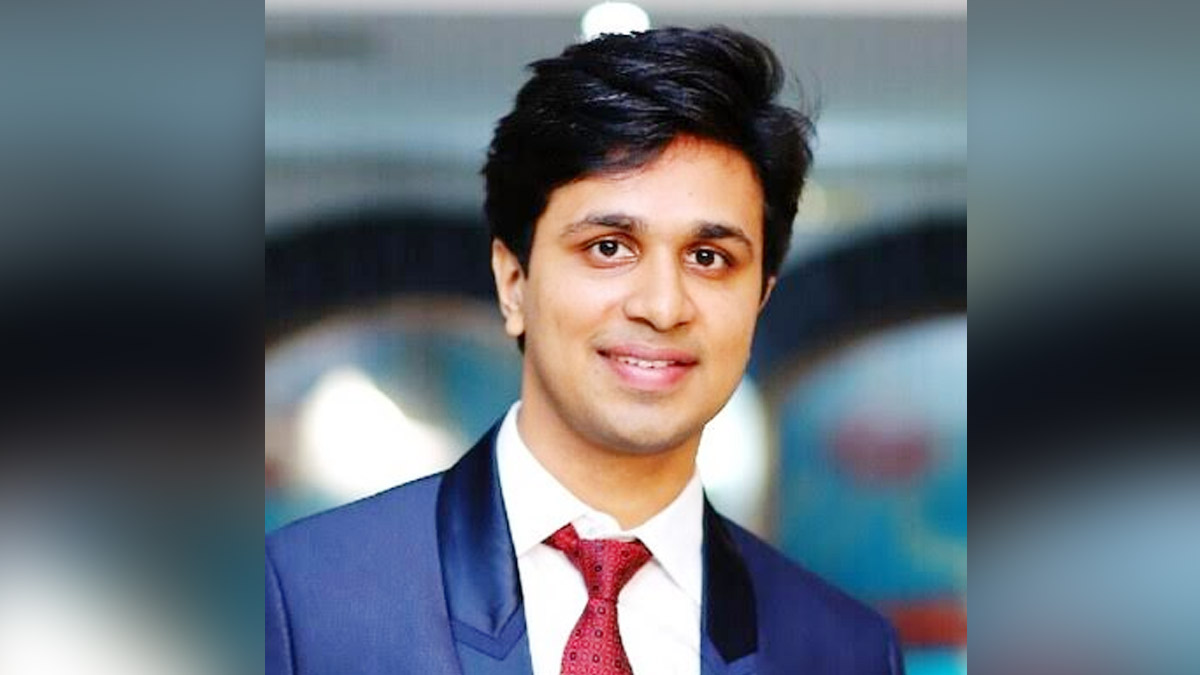
MUMBAI: Vodafone Idea Limited has promoted Vineeth Jayendranath to vice president, marketing head for the Mumbai circle, marking a key milestone in his career as the telecom operator sharpens its regional strategy.
In his new role, Jayendranath will lead marketing efforts across prepaid and postpaid segments in one of the country’s most competitive telecom markets. His mandate includes driving revenue growth, strengthening brand positioning, and deepening customer engagement, while also managing profit and loss responsibilities for the circle.
Sharing the update, Vineeth Jayendranath said, “Excited to share, I am starting my new stint as Vice President, Marketing Head for Mumbai circle at Vodafone Idea Ltd. Would like to thank everyone who has supported me in this journey.”
Jayendranath brings over 12 years of experience spanning telecom and IT, with a strong focus on customer value management and data-led marketing. Since joining Vodafone Idea, he has held multiple leadership roles, most recently serving as general manager leading customer value management and prepaid business across Gujarat, Maharashtra and Goa.
During this period, he handled large subscriber bases and multi-billion rupee revenue portfolios, while rolling out hyper-personalised campaigns and a “segment of one” strategy to improve customer retention and upgrades. He also championed a digital-first approach, pushing adoption of data services and unlimited plans through targeted, insight-driven initiatives.
Earlier, he worked with Idea Cellular Ltd in strategy and business intelligence roles, and began his career at Infosys as a systems engineer. A brief stint at Hyundai Motor India Ltd during his internship added early exposure to marketing strategy.
An alumnus of SVKM’s Narsee Monjee Institute of Management Studies, Jayendranath has steadily built a reputation for combining analytics with marketing execution.
His elevation comes as telecom players double down on circle-level strategies to stay competitive, and Vodafone Idea appears to be betting on data-backed marketing to keep Mumbai firmly in its corner.







