MAM
TVCs more effective than product placement in TV shows in the US: Study

MUMBAI: While product placement in television shows is growing in the US a new study has found that TVCs are still more effective in influencing consumer behaviour. The conventional medium of television advertising is very much alive.
According to a recent study by single-source provider of custom business research services Find/SVP, more than half of the consumers surveyed (52 per cent) said that they would be much more or somewhat more likely to purchase a product seen in a commercial versus one featured in a product placement (23 per cent).
Subliminal effects notwithstanding, the study also found less than one in four Americans believe that a product seen in a show would motivate them to purchase.

Relatively speaking nine per cent of consumers surveyed said brand cameos during programs would actually make them much or somewhat less likely to
purchase the product compared to advertising at 6 percent. Find/SVP’s study asked 1,000 consumers in August 2005 a range of questions online to determine
their opinions on traditional TV advertising compared to branded entertainment or product placement.
Find/SVP VP marketing Frank Dudley said, “Even with the exponential growth of spending on branded entertainment, traditional TV commercials are still having an impact on consumers. These findings
speak to consumers’ familiarity with the traditional advertisement. However, using branded entertainment within a fully-integrated marketing campaign has the potential to deliver the measurable results marketers’ desire.”
The study revealed a disconnect with some consumers regarding the intent of all TV marketing practices. Assuming all things equal, when consumers were asked the primary objective of various marketing activities, fewer than half (43 per cent) agreed completely that a scene in a show featuring someone using a product was an attempt to influence purchase. Not surprisingly, 73 per cent of consumers surveyed said that the primary objective of TVCs was to influence purchase.
TV commercials were more acceptable across all types of programming for consumers. When asked within what type of TV show is most acceptable for
them to be exposed to such marketing practices, more than half of the respondents accepted TV commercials for each genre including dramas, sitcoms, talk shows and reality shows. However, consumers surveyed were much more likely to accept product placement in scripted shows (36 per cent in dramas, 47 per cent in sitcoms) than reality shows (25 per cent).
Dudley adds, “Innovative marketing strategies will continue to impact and influence consumer purchasing behavior. Product integration in all forms of entertainment will continue to see success, but this new study proves that the television commercial is not dead.”
Consumers surveyed were asked to recall the well-publicised car giveaway on The Oprah Winfrey Show earlier this year. Supporting the findings cited above, only one in three (36 per cent) actually recalled seeing the episode, and 44 percent of those who saw the show recalled the car she gave away a Pontiac. Not surprising of the males who saw the show 51 per cent recalled the car, and of the females who saw the show 40 per cent recalled the car.





Brands
Jubilant FoodWorks faces Rs 47.5 crore GST demand, plans appeal
Tax authorities flag alleged misclassification of restaurant services
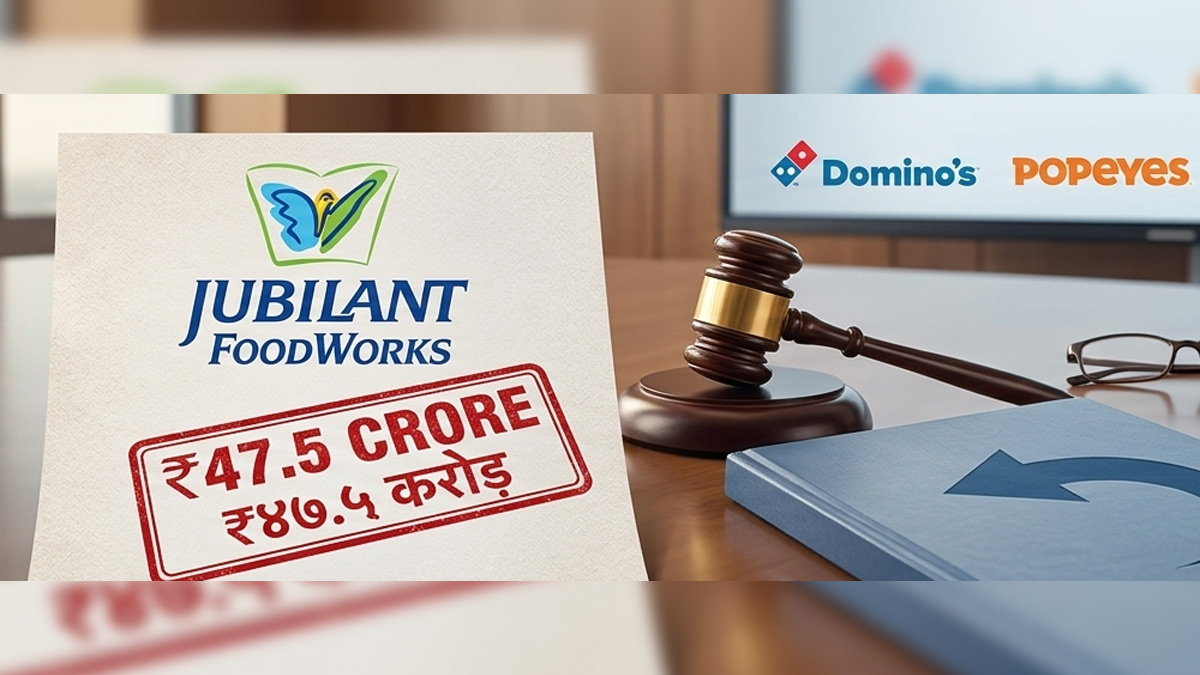
MUMBAI: Jubilant FoodWorks Limited has landed in a tax tussle after receiving a GST demand of Rs 47.5 crore from the office of the additional commissioner of CGST and central excise in Thane, Maharashtra.
The order, issued under the provisions of the Central Goods and Services Tax Act, 2017, relates to an alleged incorrect classification of certain services under the category of restaurant services. According to the tax authorities, this classification resulted in a short payment of goods and services tax for the period between the financial years 2019-20 and 2021-22.
The demand includes Rs 47.5 crore in GST along with an equal amount as penalty, in addition to applicable interest. The order was received by the company on March 13, 2026.
In a regulatory filing to the BSE Limited and the National Stock Exchange of India Limited, the company said it disagrees with the order and believes its arguments were not adequately considered.
The company is preparing to challenge the decision and plans to file an appeal. It added that once the redressal process is complete, the demand is likely to be dropped.
Despite the sizeable figure attached to the notice, the company said it does not expect any material impact on its financials, operations or other activities.
The disclosure was signed by Suman Hegde, EVP and chief financial officer, who confirmed that the company received the order at 19:06 IST on March 13 and has already initiated steps to contest it.
The development places the quick service restaurant major in the middle of a tax debate that could hinge on how certain restaurant-linked services are classified under GST rules. For now, the company appears ready to take the matter from the tax office to the appeals desk.