MAM
TV festive ad spend to reach Rs 8000 cr; experts divided


MUMBAI: The festive months of October and November are welcome months not just for you and your family, but for most Indian brands as well. After all, they eagerly wait for this early window when consumers loosen up their purse strings and put their Diwali bonuses to good use, aka, shopping.
Thus, it is almost a tradition in the marketing world to budget separately for the third financial quarter, and sometimes allot a majority share of their marcom budget to campaigns during this period. New trends emerge each year from consumer behaviour, which, in turn, decide how brands invest their advertising budgets. Unlike last few years, media experts have mixed opinions on what this year’s festive season means for the advertising industry as a whole.
Many within the industry believe this Diwali isn’t lighting up as bright as they had wished. Brands aren’t spending ad dollars as enthusiastically as they had in the last few years. “The festive season itself has shortened this year. Instead of stretching out to November, this year Diwali is wrapping up by October, leaving a 15 to 20-day period for Diwali campaigns. Barring the bigger e-commerce players, we did not see many brands advertise before the 2nd week of October. Even when it comes to print, which usually commands the lion’s share of festive ad spends, there were very few jacket ads that were spotted,” pointed out Havas Media Group India CEO Anita Nayyar.

This year’s most noticeable trend would be polarised points of view on how the e-commerce players are spending. According to several media reports, e-commerce players have cut down their media spends on television this year and are concentrating on print instead.
“Compared to their spends last year, the spend on print has pretty much remained the same. They (the e-commerce players) have also had multiple sales promotions instead of just one major sale day and the print has dominated the promotion budget of these sales. When it comes to their spends on digital, most of them are performance related than pure innovation or advertising. It is directly tied to purchase,” observed a media planner requesting anonymity.
The expert also correlated the category’s marketing spends strategy to the consolidation that has happened in the sector in the last one year, including major developments like Jabong being bought over by Flipkart’s Myntra.
“In general, it wasn’t as great a year for e-commerce players as last year. The accountability is much higher on performance than it was in the previous few years. Most of their current spends are to make sure they have enough sales,” the planner adds.
Nayyar too believes that e-commerce players have become very cautious of how they spend this year. “Not just in TV, but over all even throughout the year, e-commerce brands have toned down. Most of these companies are in their 5th and 6th year, and that is when returns have to show up.”
What does that mean for the television industry? Have the ad revenues dropped because of this? “Not at all,” reassured another senior executive. According to him, “E-commerce spending on television has actually increased in the range of 60-65 per cent,” He acknowledges that ‘print pie is always the highest considering the tactical nature of festival communication with its local and regional role that it plays.”
It could be because, “while the total number of players in the e-commerce have relatively reduced or opted out of spending increasingly on TV this year, the big players such as Amazon, Snapdeal, and Flipkart continue to spend a lot on TV,” shared Dentsu Aegis Network chairman Ashish Bhasin.
With the festive season just around the corner, Droom, India’s pioneering online automobile transactional marketplace, is taking the celebrations up a few notches by allocating INR 10 crore to its marketing budget.
Snapdeal earlier announced that it would spend Rs.200 crore on a 360-degree campaign spanning over 60 days in the run-up to the Diwali festival. eBay India marketing director Shivani Suri too recognises this period as the ‘most important time of the year, where they expect to do the most sales.” Online automobile marketplace Droom too had promised Rs 10 crore of its marketing budget to the season.
According to Bhasin, the total festive season ad ex of the market across media is estimated to hit a whopping Rs 20,000 crore this year, which is a 10–12 per cent hike from last year. “Of this, Rs 8000 crore can come from television, is the estimate,” Bhasin shared.
Another analyst who did not want to be named pegged this year’s TV ad-ex at Rs 3000 crore.
When it came to analysing festive season advertising by categories, FMCG and automobile once again stole the show, especially when it comes to being the biggest spenders on the medium of television.
“Automobile Category continues to spend the highest in festive season, followed by real estate. Then comes e-commerce. With similar contribution levels across categories, 30-50% increase in spends if you compare similar period of last year vs. vis-à-vis this year,” a planner shared.
It should be noted that sales at the leading passenger vehicle makers, including Maruti Suzuki, Hyundai, Mahindra and Hero MotoCorp, had risen by 15 per cent this year to 253,007 units from 216,352 a year ago, as per an early September report.
“Telecom is another important sector which has made its presence felt this festive season. With Jio’s launch acting as a catalyst for other competitors in the sectors to also up their marketing ante,” Bhasin added.
Apart from the conventional players, categories such as electronic devices (read smartphones), home decor and accessories have also garnered could traction. As reported earlier in several leading dailies, Oppo and Vivo are spending close to Rs 80 to Rs 100 each on marketing this year, almost doubling their budget from last year. Other electronic segments aren’t far behind. As recently reported, Japanese electronics manufacturer Panasonic has raised its festive marketing budget in India to Rs 85 crore.
Thus, while this year’s festive season may be short-lived for both, brands as well as consumers, celebration in India is definitely neither conservative nor curtailed.





Brands
Tessolve lands a semiconductor veteran to drive its next big push
Ravi Kumar Chirugudu, who started his career at ISRO and has spent 35 years building chips and companies, joins the Bengaluru-based firm as president and chief operating officer
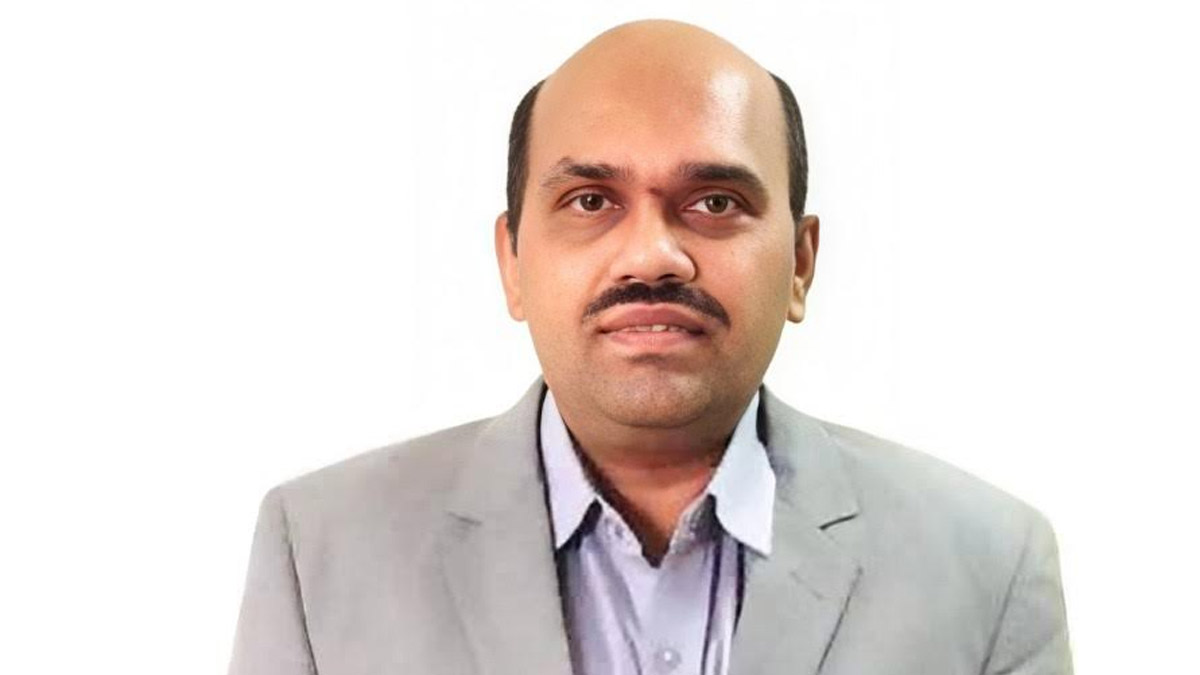
BENGALURU: Tessolve has never been shy about its ambitions. The Bengaluru-based engineering services firm already counts 18 of the world’s top 20 semiconductor companies among its clients, employs more than 3,500 engineers across 12 countries, and last year pocketed a $150m investment from TPG. Now it has hired the executive it believes can turn those assets into something bigger. Ravi Kumar Chirugudu, a 35-year semiconductor veteran who once built satellite payloads for ISRO and has since scaled engineering organisations across three continents, joins as president and chief operating officer, effective immediately.
THE MAN AND THE MANDATE
The appointment is, by any measure, a serious hire. Ravi Kumar Chirugudu comes to Tessolve after senior leadership stints at HCL Technologies, Altran and Wipro, where he managed large profit-and-loss portfolios and oversaw cross-regional teams. Over the course of his career, he has been instrumental in bringing more than 1,000 new products to market across the high-tech, energy and manufacturing verticals. Before the private sector claimed him, he began his working life as a scientist at the Indian Space Research Organisation, contributing to research and development in charge-coupled device technology and satellite payloads, a foundation that shaped everything that followed.
In his new role, he will lead Tessolve’s global growth strategy: expanding its engineering capabilities, deepening customer relationships and accelerating innovation across semiconductor and high-performance computing domains. The brief is broad, but the context is specific. Tessolve operates in the $550 billion global semiconductor market, and its recent moves, the acquisition of Germany’s Dream Chip Technologies and the TPG funding round, have sharpened both its reach and its expectations.
Srini Chinamilli, co-founder and chief executive of Tessolve, is characteristically direct about why Ravi Kumar Chirugudu was the choice:
“As we scale our global semiconductor and system engineering capabilities, Ravi’s appointment marks an important step forward. As global semiconductor demand continues to accelerate across industries, it is creating significant opportunities across the semiconductor lifecycle, from design, packaging, validation and systems integration. Ravi’s deep knowledge and leadership in this ecosystem brings the right mix of industry expertise, customer connect and execution capability, which will play a key role in strengthening our position as a trusted global engineering partner and reinforcing our market leadership.”
THE NEW ARRIVAL SPEAKS
Ravi Kumar Chirugudu, for his part, frames the move in terms of timing and culture, two factors that veteran executives tend to weigh as heavily as title or compensation:
“I am happy to join Tessolve at a time when the industry is rapidly evolving towards more complex, AI-driven systems. What stands out to me is its strong people-first culture and its commitment to bringing value to its customers. The strength of its global team, combined with its deep expertise in semiconductor innovation and next-generation product engineering, creates a solid foundation to build differentiated, scalable solutions. I look forward to working closely with the team to drive strategic growth and strengthen its role in shaping the global semiconductor ecosystem.”
The reference to AI-driven systems is not incidental. The semiconductor industry is in the midst of a structural reshaping, driven by the insatiable compute demands of artificial intelligence. For engineering services firms like Tessolve, which offers end-to-end capabilities from silicon design to packaged parts and invests in high-performance computing, high-speed interfaces, photonics and 5G, the moment is both an opportunity and a test. The company says it is well positioned to capture the next wave of industry growth. Ravi Kumar Chirugudu is now the person who has to prove it.
He came in from outer space, literally, and spent three decades learning how the semiconductor industry works from the inside out. Now Tessolve is betting that accumulated knowledge can help it cross the next frontier. In the $550 billion global chip market, the gap between ambition and execution is measured in engineering hours and leadership quality. Tessolve has just gone shopping for both.






