Brands
Toyota CEO Koji Sato to step down


Toyota City: Toyota Motor Corporation is redrawing its power map, carving up the top job as it braces for a more turbulent automotive era and a faster pivot towards mobility.
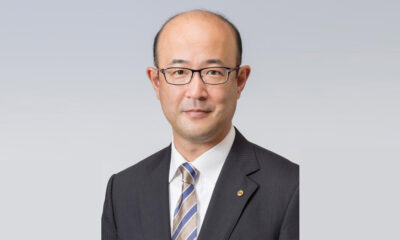
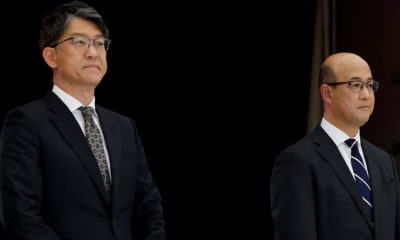
The Japanese carmaker said it will revamp its executive structure from April 1st 2026, moving Koji Sato from president and chief executive to vice chairman and a newly created chief industry officer, while elevating Kenta Kon to president and chief executive. Board-level changes will follow from the date of the company’s 122nd ordinary general shareholders’ meeting, scheduled for June 2026.
The logic is blunt: split the outward-looking industry and policy role from the grind of running the company. Sato will range across the broader industrial landscape, while Kon will run Toyota’s internal management.

Toyota says the shift is designed to accelerate decision-making amid rapid internal and external change and to build a structure that better serves its mission of contributing to society through industry.
The backdrop is a car business under strain from electrification, software, new rivals and geopolitical risk. Toyota argues that deeper industry collaboration is now essential to protect international competitiveness. In that context, Sato’s parallel roles loom large.
Sato is set to play a central part as chairman of the Japan Automobile Manufacturers Association, or JAMA, a role the industry body asked him to assume in October 2025 after he had been serving as its vice chairman. Toyota’s board approved his appointment as JAMA chairman from January 2026, framing industry contribution as part of the firm’s duty.
He also serves as vice chair of Keidanren, Japan’s business federation, a post he took up in May 2025, where he is expected to push policy proposals centred on monozukuri, or manufacturing, and broader industrial cooperation.
Toyota’s ambitions go beyond the car sector. As it morphs into a mobility company, it wants partnerships outside the traditional automotive orbit as well as within it.
Inside the firm, the priorities are more prosaic but pressing: lift earning power and lower the break-even volume needed to stay profitable. Toyota says this demands company-wide reform across the entire value chain, not siloed fixes.
That is where Kon comes in. As chief financial officer, he has been leading efforts to strengthen Toyota’s earnings structure. He has also picked up cross-functional management experience at Woven by Toyota, the group’s technology arm. The company is betting that a finance-hardened operator can tighten performance while steering transformation.
Top appointments at Toyota are treated as long-term strategic matters. Candidates are reviewed continuously by the executive appointment meeting, which vets director nominations to ensure independence. The body comprises two independent outside directors, Shigeaki Okamoto and Kumi Fujisawa, and one internal director, Yoichi Miyazaki. Its proposals are then decided by the board and formally approved at shareholders’ meetings.
After weighing the strain of one person holding the trio of roles of Toyota’s top executive, JAMA chairman and Keidanren vice chair, the group concluded a split structure was cleaner. The new line-up was proposed at the executive appointment meeting and approved by the board on February 6th.
Other responsibility shifts follow. From April 1st, Yoichi Miyazaki becomes executive vice president, board member and representative director with the additional role of chief financial officer.
Board changes will be formalised in June. Koji Sato will resign his current board post and continue as vice chairman and chief industry officer. Kenta Kon is slated to become president, board member and representative director alongside his role as chief executive.
The message from Toyota is unmistakable: in a harsher, faster industry, governance must be as adaptive as technology. With one leader scanning the horizon and another gripping the tiller, the world’s biggest carmaker is tuning its engine for the next lap. Whether the new gearbox shifts smoothly will be watched far beyond Toyota City.





Brands
Wellbeing Nutrition ropes in Malavika Mohanan as brand ambassador
Actor fronts Marine Collagen and Skin Fuel Glutathione portfolio.

MUMBAI: Malavika Mohanan just became the face of inner glow because when your skincare starts in the bottle instead of the jar, even beauty gets a glow-up from the inside out. Wellbeing Nutrition has appointed acclaimed actor Malavika Mohanan as brand ambassador for its premium Korean Marine Collagen and Skin Fuel Glutathione range. The move signals a deliberate shift in the Indian ingestible beauty segment from surface-level routines to foundation-level nutrition that supports skin health from within.
The campaign positions collagen as the essential “beauty protein” that maintains elasticity and firmness, with daily supplementation reframed as a consistent ritual rather than a quick cosmetic fix. It aims to simplify the science behind collagen and build awareness around long-term skin nourishment.
Wellbeing Nutrition co-founder Saurabh Kapoor said, “In India, collagen is still largely viewed through a cosmetic lens, associated with glow and quick fixes. In reality, it is the primary structural protein of the skin, and we begin losing nearly 1 per cent of it every year in the late 20s. Yet a significant number of consumers remain unaware of its foundational role in long-term skin health. Our goal is to shift the conversation from fixing visible signs to feeding the foundation.”
Malavika Mohanan added, “For me, skincare has always been about consistency and taking care of myself in ways that go beyond just what I apply on my skin. I love the idea of supporting skin health from within, and that’s what drew me to Wellbeing Nutrition’s Marine Collagen and Skin Fuel Gluta.”
The Korean Marine Collagen uses nano-hydrolyzed peptides for better bioavailability, while Skin Fuel Glutathione complements the inside-out approach. The portfolio targets structure, brightness and resilience over time, backed by clinical research.
The ambassador announcement kicks off a broader collagen-focused roadmap for the brand, with planned innovations across formats and functional blends.
In an era where beauty routines are getting deeper than skin, Wellbeing Nutrition isn’t just selling supplements, it’s selling the quiet power of feeding your glow from the inside, one daily scoop at a time.







