MAM
Top US execs prefer Net to TV, print – say recent surveys

MUMBAI: Top level executives and advertisers have started relying more on the Internet for information, communication and research at least during workdays rather than reading newspapers. The findings indicate that marketers have a great opportunity to advertise on content sites, which draw an audience of 3.8 million users per minute.
Morning newspapers are trying hard to make their online versions more appealing in an attempt to enhance their revenue streams. Perhaps television channels also should think on similar lines simply because a studies point out that the Internet is five times more effective than television at reaching consumers during the day.

Several recent surveys conducted by research agencies (Nielsen/NetRatings), marketers (e-marketers.com) and online versions of publications (washingtonpost.com, Forbes.com, wallstreetjournal.com) have confirmed the same and added that advertisers cannot afford to ignore this wealthy captive audience. In fact, several online versions of news related publications have developed special sponsorship packages which give prominent placement throughout the site at a set time at a higher premium on regular rates.
According to the Forbes.com survey of 11,000 executives and senior managers, done in association with GartnerG2 and Survey.com in the US, nearly half of the management executives actively use the Web in the early part of the day even before leaving for work. Amongst the C-level executives (CIOs, CTOs and other tech-savvy executives) the numbers were even greater.
The survey also showed that the surfers showed a propensity to explore advertising banners on the net but weren’t so keen on reading e-mails with marketing messages. The following are some significant findings of the same:
* The Web is a pervasive presence in C-level executives’ lives: more than half (53 per cent) say they access the Web before they go to work while only 41 per cent said they read a newspaper before going to work.
* Not surprisingly, 82 per cent of C-level executive respondents said they check their e-mail before they start other work (only 6 per cent said they have an assistant do it for them).
* 35 per cent of C-level executives visit business/financial Web sites before they start other work.
* More of the C-level respondents (58 per cent) do online research than use the Web to check their portfolio (33 per cent). (Only 11 per cent delegate online research to their assistants).
* 58 per cent say they find what they “want” online
* 46 per cent say they find what they “expect” online
* 24 per cent buy/sell financial investments online
* Nearly half (48 per cent) of C-level respondents say they “click on online ads” when they see something of interest to them.
Recent research by Nielsen//NetRatings and washingtonpost.com concluded that affluent customers spend a good portion of their days online. The research, done via a study of nearly 1,000 washingtonpost.com users, found that affluent customers — those making over $100,000 annually spend a good portion of their day online. The site seized on this fact as further evidence of online publishers’ assertion that work hours are the Internet’s “prime time.”
Likewise, a study by eMarketer and The Wall Street Journal Online found that the at-work audience was 50-million strong, with more than half in households taking in over $75,000 annually.
NYTimes.com also linked up with a number of fellow online publishers in an ad-sales consortium called the “At-Work Brand Network” in June 2002. Last October, AOL announced it would begin selling time-targeted ads. Yahoo! has sold dayparts since 2001, and its executives have expressed interest in using them further.
The eMarketer report found that the at-work audience also has some other enticing traits for marketers. Since 86 percent of users have broadband access at work, they are more likely to shop online, with 60 percent of e-commerce sales coming from consumers at work.
The study found that nearly all affluent consumers use the Internet for research before buying a product, and the Internet tied newspapers as the media advertising chosen as most influential. Over half of the affluent said they were influenced by Internet advertising to make a purchase in the past six months.
The Online Publishers Association (OPA) released a white paper that seeks to define dayparts in an effort to give publishers better metrics to prove the Internet’s strength as a marketing vehicle. The study, done with data collected by Nielsen//NetRatings in September 2002, concludes that the five dayparts exist for Internet use: early morning (6 am to 8 am), daytime (8 am to 5 pm), evening (5 pm to 11 pm), late night (11 pm to 6 am), and weekends.
For marketers, daytime hours offer the largest daypart, in terms of audience size and usage minutes. It’s also the time to reach the most affluent. The OPA found that 25-to 54-year olds, often stuck at their desks at work, represent the largest share of daytime Internet users. For this reason, news and information sites do well, traffic-wise. At night and on weekends, however, entertainment and sports sites take over, as adults unwind and children go online.
Key advertising sectors, such as entertainment and food, have begun experimenting in running daypart ads. Dayparts are attractive to publishers mostly because they can charge a sizable premium during work hours, when Internet advertisers are five times more likely than television advertisers to reach consumers.
Are the Indian media planners and buyers listening?






Brands
Kingfisher signs three-year IPL partnership
Packaged water brand signs on as ‘good times partner’ for 2026–28 cycle
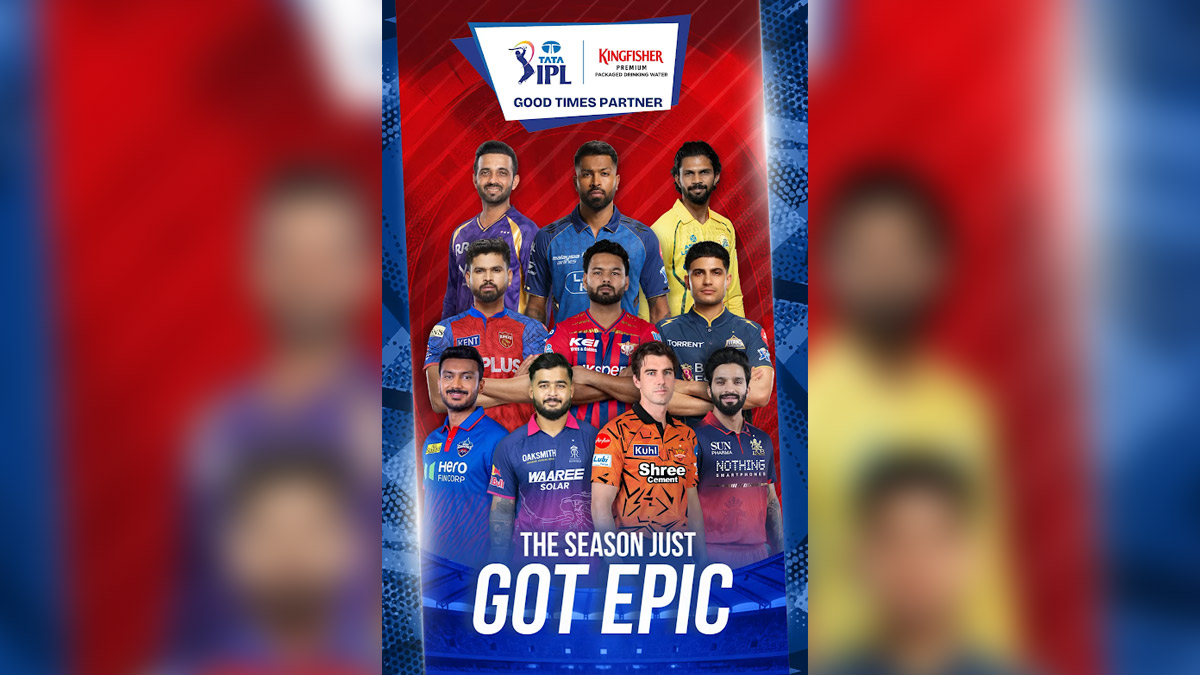
MUMBAI: Kingfisher Premium Packaged Drinking Water is betting big on cricket’s biggest stage, sealing a three-year partnership with the Board of Control for Cricket in India to sharpen fan engagement at the TATA Indian Premier League.
The brand, owned by United Breweries, will serve as the official “good times partner” for the men’s IPL from 2026 to 2028, extending a relationship that began with the Women’s Premier League. The move signals a broader push to embed itself deeper into live sport, with a focus on immersive, consumer-led experiences rather than conventional sponsorship visibility.
At the heart of the tie-up is a suite of fan-first activations spanning broadcast, stadiums and digital channels. These include the “Kingfisher Bird Cam”, offering a branded spider-cam perspective during live matches, and the “Good Times Zone”, an in-stadium entertainment hub during play-offs aimed at amplifying match-day buzz. The brand will also back IPL fan parks, elevate public screening experiences and run digital contests tied to key moments through the season.
Vikram Bahl, chief marketing officer, United Breweries, said cricket in India “is more than a sport, it is a shared cultural moment”, adding that the IPL brings that energy alive at scale. “For Kingfisher Premium Packaged Drinking Water, being present at the heart of these moments, in partnership with the BCCI, is a natural extension of what we stand for. Through this association, we aim to enrich how fans experience the game… making every match more immersive, social and memorable,” Bahl said.
Devajit Saikia, honorary secretary, BCCI, said the IPL “has always been at the forefront of redefining sports entertainment and fan engagement”. He added that the collaboration would fuse cricket fandom with “innovative fan experiences that extend beyond the stadium”, helping create memorable moments for audiences nationwide.
For United Breweries, part of the HEINEKEN group, the play is clear: move from passive branding to active participation in the fan journey—on screens, in stands and across social spaces. With millions tuning in and turning up each season, the IPL remains the country’s most potent marketing theatre. The question now is whether “good times” can translate into lasting brand recall in a market where visibility is easy, but engagement is hard-won.








