MAM
Top five game-changing technology-based solution providers for precision farming

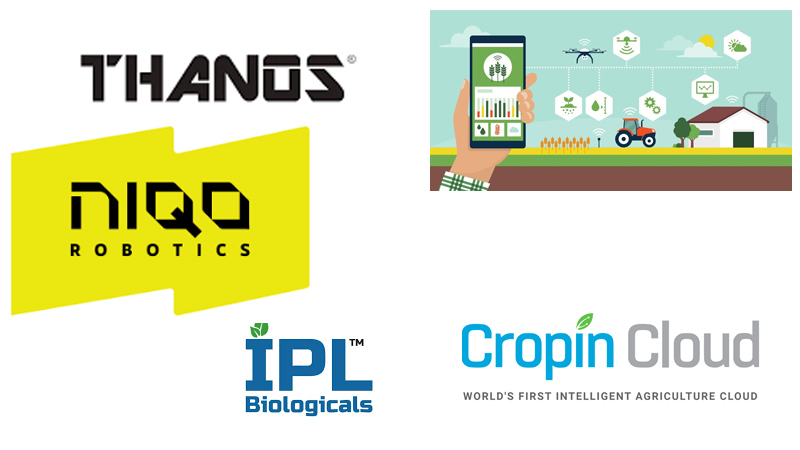
Mumbai: The agriculture sector is currently attempting to feed a growing global population sustainably while dealing with major issues including resource depletion and climate change. To improve agricultural practices, precision farming makes use of a variety of technology, including sensors, GPS, drones, artificial intelligence, and microbial-based solutions. These technologies enable farmers to monitor crop health, soil conditions, and weather patterns precisely, improving crop quality and increasing yields while decreasing waste and more efficiently allocating resources. In the face of climate change and food scarcity, precision farming is essential for sustainable agriculture because it promotes resource conservation, well-informed decision-making, adaptability, and global food security.
Listing down the top five game-changing technology-based solution providers for precision farming:
Microbial-Based Solutions: IPL Biologicals Limited has promoted a sustainable future by managing pests and residues while optimizing crop yield, quality, and soil health through the use of native microbial-based solutions. Maintaining its dedication to secure and environmentally friendly farming, IPL combines integrated pest and nutrient management, substituting microorganisms for chemicals. Ever since its inception in 1994, the company IPL Biologicals has laid down the benchmark to gain trust among farmers for premium yields and return on investment by putting the health of the world and the welfare of their customers first. With its wide array of biological solutions—such as bio-fungicides, bio-fertilizers, and bio-insecticides—IPL uses the power of microbes to promote sustainable agriculture. Their cutting-edge products, which have more than 50 organic certifications and comply with regulations, aim to transform the sector with their high CFU counts and extended shelf lives. Performance and sustainability are given top priority by IPL to improve the world going forward.

Drones: Thanos Technologies has been a pioneer in the domain of drone manufacturing since 2016. However, no other company shouts louder about the revolution in precision farming than the company. They have a keen focus on in-house drone production and state-of-the-art technology for customized solutions for agriculture. Their commitment to innovation goes beyond anything and extends from agricultural drones for crop management to tailor-made solutions for specific needs. Notably, they have just introduced a cutting-edge agricultural spraying-as-a-service that pushes the boundaries of precision farming practices. On the path of innovation, Thanos Technologies represents the idea of a revolutionary break from ordinary practices. Their commitment to surpassing expectations underlines their belief in delivering instead of promising, painting the skies with ideas that challenge the status quo of farming practices.
Artificial Intelligence (AI) and Machine Learning: Agriculture is changing through AI and machine learning in various ways: from predicting yields to disease detection and even sorting. To make these predictions, Cropin, a company founded in 2010, is a leader in Agtech thanks to its Cropin Cloud, the first industry cloud specifically designed for agriculture in the world. By enabling stakeholders to make well-informed decisions through the use of digitization and predictive intelligence, farming efficiency, production, risk management, and sustainability are all improved. With 16 million acres digitalized and more than 250 B2B partnerships, Cropin has an impact on more than seven million farmers worldwide. Leading the way in the ‘Ag-intelligence’ trend, Cropin’s agricultural knowledge graph spans 103 nations and more than 500 crops and 10,000 variants. Predictive intelligence is computed for more than 0.2 billion acres globally using the Cropin Cloud’s intelligence platform. By enabling data-driven insights, streamlining resource use, tackling issues like food shortages and climate change, and revolutionizing precision farming, this game-changing technology eventually advances sustainable agriculture on a worldwide basis.
Robotics: Using AI-powered agricultural robots, Niqo Robotics (previously TartanSense) is leading a sustainable agricultural revolution in India. With a foundation in their goal of “Victory of the People,” Niqo seeks to liberate the farming ecology by developing trustworthy and easily available robots for environmentally friendly farming practices. Their creative strategy combines the concepts of precision farming with artificial intelligence to maximize agricultural techniques. These robots give farmers cutting-edge instruments to increase output, reduce resource use, and lessen their influence on the environment. Niqo Robotics enables farmers to make well-informed decisions, adjust to changing conditions, and sustainably increase yields by utilizing automation and data-driven insights. Their dedication to developing precision farming technologies is a testament to their vision of a day when agricultural innovation will drive agricultural growth and provide food security and environmental stewardship for future generations.
Internet of Things (IoT): GramworkX uses satellite, AI, and Internet of Things technology to provide a cutting-edge smart farm resource management application. It provides farmers with essential information on microclimate, current weather information, forecasts, and irrigation scheduling. To avoid over- and under-irrigation, which can impede crop growth, the algorithm optimizes irrigation by taking into account soil type, meteorological conditions, crop stage, and irrigation system. Furthermore, by continuously improving forecasts through the analysis of meteorological information from multiple places, their machine-learning system provides irrigation forecasts up to one week in advance. Farmers can make more informed decisions with GramworkX, which increases farm output and resource efficiency. With the help of this all-inclusive solution, farmers can plan irrigation more easily and make well-informed decisions that will maximize crop growth and sustainability.
From Microbial Based Solutions, drones, artificial intelligence, Robotics and the Internet of Things, there exist technological innovations that will revolutionize precision farming. These, in turn, have improved crop resilience, raised yields, and laid the foundation for sustainable and efficient production, in a bid to curb concerns of global food insecurity, while ushering in the way for effective and efficient agricultural production.






MAM
Kwality Wall’s appoints new board members after Magnum acquisition
Abhijit Bhattacharya named Chairperson as ice cream company enters next growth phase.

MUMBAI: When your ice cream business gets a fresh scoop of leadership, things are bound to get even cooler and Kwality Wall’s has just done exactly that. Kwality Wall’s (India) Limited (KWIL), now part of The Magnum Ice Cream Company (TMICC), has announced the appointment of Abhijit Bhattacharya and Tahir Toloy Tanridagli to its Board of Directors. The appointments, effective 30 March, follow TMICC HoldCo’s acquisition of a controlling 61.90 per cent stake in KWIL.
Mr Abhijit Bhattacharya has been appointed as additional (non-executive and non-independent) director and chairperson of the board. He currently serves as Chief Financial Officer of The Magnum Ice Cream Company N.V. and previously held the role of CFO for Unilever Ice Cream. With nearly four decades of experience, including 38 years at Koninklijke Philips N.V. in senior finance and operational roles across Europe, Asia and the United States, Bhattacharya brings deep expertise in strategic transformation and complex corporate restructurings.
Mr Tahir Toloy Tanridagli has been appointed as additional (non-executive and non-independent) director. A graduate of Bogazici University with a High Honours BA in Business Administration, he currently serves as President for METSA markets (Middle East, Turkey, Africa, Israel, and South Asia) at TMICC and is a member of the Global Ice Cream Executive Leadership Team. With over two decades in the snacking and FMCG sector, including leadership roles at Kraft Foods–Mondelez and Unilever, Toloy has extensive experience across ice cream, chocolate, snacks, beverages and desserts.
The appointments come as KWIL, which listed as an independent entity after its demerger from Hindustan Unilever Limited, enters a new phase of growth following the Share Purchase Agreement signed between Unilever and TMICC in June 2025.
In the fast-melting world of ice cream, adding two heavyweights to the board is a clear signal that Kwality Wall’s is ready to scoop up even bigger opportunities ahead.