Brands
“Today, what a brand stands for has more value than the product itself”: BIC Cello’s Devanshi Dholakia

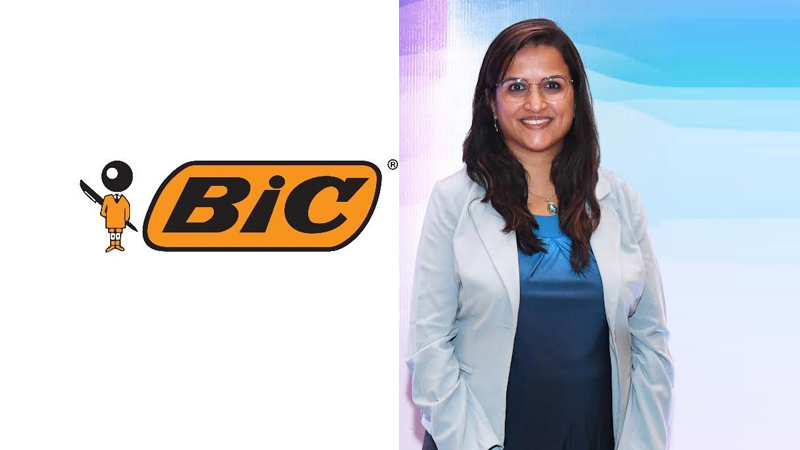
Mumbai: The pen is your sword. Well, it literally is, so you should be careful of the pen that you write with! The pens and stationery market is a burgeoning one with several national and international brands vying to be on the top of the consumer’s mind. And BIC Cello is one such player in this category.
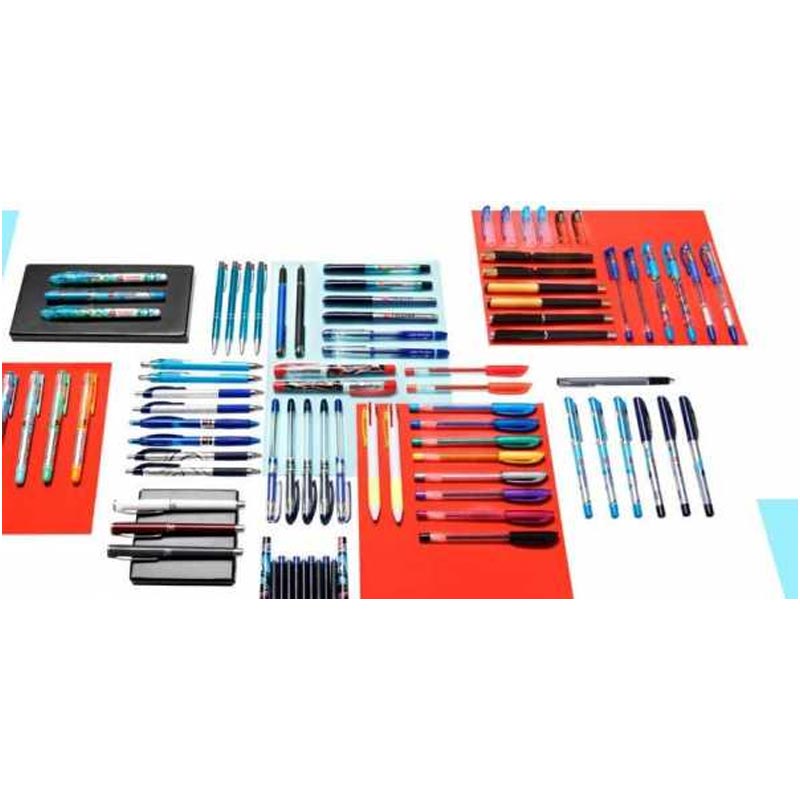
BIC Cello, the manufacturer of Cello pens, is India’s market leader for writing instruments. The company focuses on developing innovative new products and ink flow systems, delivering significant value to the writing experience of the customers. BIC Cello’s expanded portfolio now includes a range of world-class products including permanent markers, whiteboard markers, colour markers, mechanical pencils, roller pens, fountain pens and office and school stationery products. The company sells over five million pens a day and has a strong presence in more than 70 countries around the world. BIC Cello’s robust and growing distribution network ensures that its products are accessible across demographics and geographies.
Indiantelevision.com caught up with BIC Cello brand lead Devanshi Dholakia, who spoke about the brand’s journey, changing consumer behaviour, creating brand preferences for stationery items on e-commerce platforms, unexploited rural markets, and more.

In her role, Dholakia is responsible for seeing marketing strategies from planning through to execution. She is a seasoned marketing professional with over 12 years of experience in crafting successful marketing strategies for a portfolio of brands. The brand’s lead at BIC Cello, India’s #1 Pen brand, has previously put her talents to best use as a category manager and built the products vertical as business manager at Lakme Lever Pvt. Ltd., HUL’s professional beauty arm.
Her expertise lies in utilizing consumer insights, and analytics, fuelled by a passion for innovation. As an enthusiastic marketeer with a passion for analytics, she utilizes both interests to drive campaigns that strategically answer business challenges. She has led the relaunch of Butterflow, India’s highest-selling ball pen brand with a strong cause-driven approach, launched Colour Up, the brand-new category of colouring for Cello, and restaged Signature, the premium pen range of Cello.
Edited excerpts:
On the journey of BIC Cello in India since its launch
India is one of the largest markets for pens and stationery in the world with the youngest population and one of the largest education systems. It was to tap into this potential that BIC acquired Cello in 2015. Since then BIC Cello has had its focus on investing in local production, safety, and quality.
We have gone on to establish the largest manufacturing plants for pens in Asia, established with cutting edge technology and automated systems. Cello’s capacity to consistently innovate and produce new exceptional products has propelled them to a distinct market advantage. Since the acquisition, BIC Cello has focused on creating national brands as opposed to local, regional products.
We have aggressively invested in the most cutting-edge technologies accessible anywhere in the globe. Cello Gripper, Cello Fine Grip, Cello MaxWriter, and Cello Butterflow quickly became household names among students.
On the change in consumer behaviour in the stationery industry and brands understanding customer preferences and desires, and creating brand preference on e-commerce platforms
The pandemic has significantly impacted consumer purchasing behaviour. E-commerce saw a steep incline as it served as a convenient shopping platform allowing consumers to compare prices; access reviews; and read detailed product descriptions.
The change has pushed brands to invest further in e-commerce, during and post-pandemic as the behaviour change has proved to be permanent. At BIC Cello, we have worked to optimize our digital platforms ensuring consumer centricity and providing a seamless online experience that is not different to what you would experience in a physical store.
There are three main factors to understanding consumers and reaching them effectively:
● Gathering the right and relevant insights: It’s crucial to leverage data to delve deep into consumer behaviour, purchasing decisions, and market trends. This allows for focused and evidence-based strategies resulting in a tailored business and marketing communications approach.
● Communicating effectively: Building on the strong research and analysis, it is fundamental to leverage the right platforms to communicate offerings, as well as product features and benefits in a visually appealing manner to help consumers visualize and get a robust understanding of the product.
● Leveraging the right platforms to reach your target audience: Once you have the right foundation in place, you start employing the right channels to communicate around your offering and create intrigue. This could be in-store or through e-commerce, following an omnichannel approach.
On sustainability as an influencer of consumer behaviour
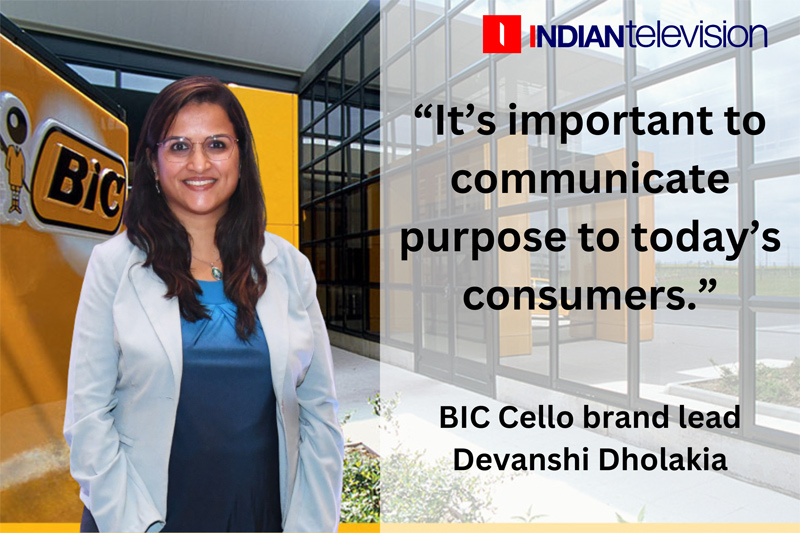
Consumers today, especially the young generation such as Gen Z, need to see purpose in brand communications. Today, what a brand stands for has more value than the product itself. It’s important to communicate purpose to today’s consumers.
For today’s youth, sustainability is an extremely important influencer. And brands that incorporate sustainability not just in their communication, but also in their business processes are able to leverage the same to create brand preference. Consumers today are very conscious and wary of hollow commitments backed by little action and brands must incorporate sustainable practices at every level to improve their environmental and societal footprint. This could range from taking action on climate change, making the supply chain more sustainable, or by strengthening commitment to CSR actions.
In 2018, we launched the Writing the Future, Together sustainability program because we believe that fulfilling our five commitments – improving the environmental and societal footprint of our products, taking action on climate change, providing our employees with a safe working environment, making our supply chain more responsible, and strengthening our commitment to education – will be a decisive factor in shaping tomorrow’s business so that we can write a sustainable future for all.
On the most important markets for BIC Cello in India and internationally
BIC Cello is present across India, and so are our consumers. We aim to provide them with the necessary writing and self-expression tools despite their geographical location. BIC is present around the world with a strong footprint in North America; Latin America; Europe; the Middle East; Africa; Asia-Pacific; and of course, India.

On the USP of your brand and what makes you stand out in a cluttered market
Consumer centricity has always been our focal point. We are adaptive and constantly ensure that we are close to our consumers to provide them with the best based on their demands, purchasing trends, and changing behaviours. Innovation is a key element that helps us remain relevant, and which has allowed BIC Cello to earn its position at the forefront of innovation in the stationery space. We pride ourselves on a wide and diverse visually appealing product portfolio catering to our consumers’ varied & changing needs with innovative, best-in-class and reliable products. This is reflected in our tagline Har Haath Mein Hain Cello.
On the unexploited stationery market of rural India, and about you leveraging technology and e-commerce to improve sales penetration in rural markets
There is untapped potential in rural and semi-urban areas in the country. Today, the market is dominated by white-label products. However, there is a change in landscape, as well as a cultural and behavioural shift which is impacting consumer needs, making rural areas a land of opportunity for the stationery industry.
The use of technology and e-commerce is crucial in expanding distribution channels and reaching a wider audience. From a BIC Cello perspective, we work closely with e-commerce platforms including Amazon and Flipkart to ensure access to our products in a timely manner. Similarly, our offerings and marketing communications campaigns are tailored and adapted to rural communities, helping us remain consumer-centric and focused.
On the advertising and marketing strategy
Consumer centricity has always been at the centre of what we do. We regularly adapt to ensure that we remain close to our consumers and keep abreast of their changing behaviours and purchasing needs. The landscape has significantly changed over the past several years, with digital communications taking centre stage. This meant that, just like any other brand, we had to adapt our strategy and approach to remain close to and relevant to our consumers.
In a category that is commoditized, we adopted the approach of becoming a ‘consumer first’ brand by creating a purposeful connection with our consumers. A prime example of the same would be one of the biggest brands from our portfolio, Cello Butterflow. It’s positioned to enable consumers to “Write the Change they want to see”.
We have sharpened our digital marketing strategy and our approach to influencer partnerships, tapping into customized consumer occasions. Along with building a strong omnichannel presence, we follow a targeted and digitally led strategy. Underlining our consumer-driven activities is our purpose which is driven by the Writing the Future Together sustainable development program and predominately focused on education and sustainability in India.
While we build consumer brands, another key pillar is innovation. We continue to develop and enhance our products following evidence-based research and strategies centered on consumer preferences, industry developments, changing demands and requirements, and purchasing patterns. Our recent launch, Jetta Gel Pen with an ergonomic grip providing comfortable writing along with premium ink technology is a key example of this innovation-led approach.
On the media mix that you have put in place for the brand
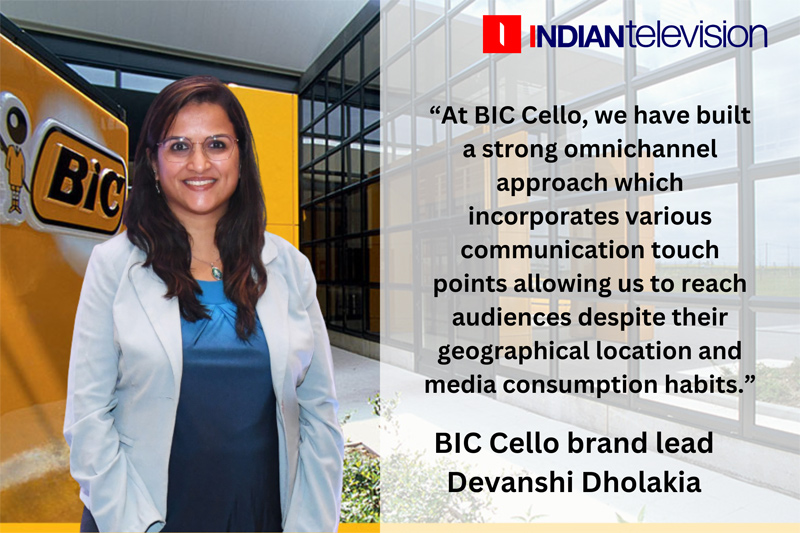
Despite the growth of digital platforms, TV and radio remain popular and a great way to reach a mass audience, especially in our market. At BIC Cello, we have built a strong omnichannel approach which incorporates various communication touch points allowing us to reach audiences despite their geographical location and media consumption habits. This supports our consumer-centric strategy and approach.
On your vision and way forward for the brand
As a company, we are driven by the Horizon Plan – a business strategy that aims to drive sustainable growth. Everything that we do is centered around that, keeping our purpose in line with the Writing the Future Together sustainable development program in mind. We will continue to develop our products and provide new innovative solutions to ensure a seamless writing and self-expression experience to our consumers.


Brands
Samsung certifies 1,000 Maharashtra students in AI and coding
The South Korean electronics giant marks its first large-scale skilling push in the state, with women making up nearly half the national programme’s enrolment
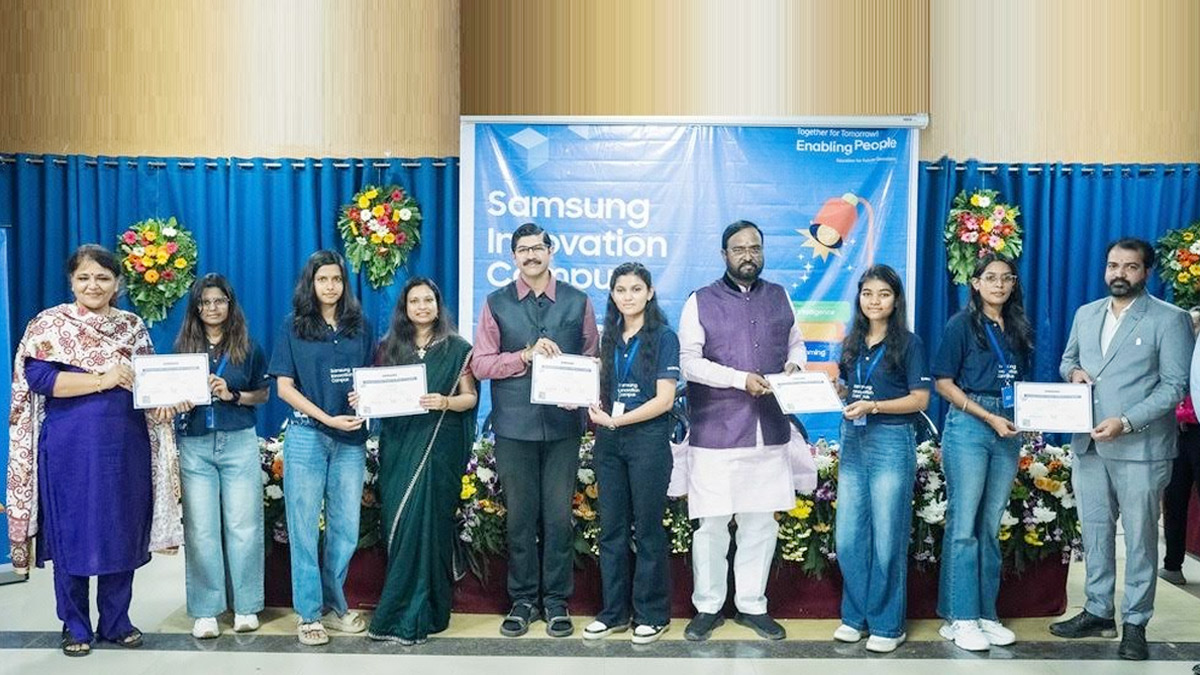
PUNE: Samsung has put 1,000 students in Maharashtra through a certified training programme in artificial intelligence and coding, the largest such drive the South Korean electronics company has run in the state and a signal that corporate India’s skilling ambitions are moving well beyond the boardroom brochure.
The certifications were awarded under Samsung Innovation Campus (SIC), the company’s flagship corporate social responsibility programme, which launched in India in 2022 with the stated aim of democratising access to future-technology education. The 1,000 graduates were drawn from four institutions: 127 from Savitribai Phule Pune University, 373 from Pimpri Chinchwad University, 250 from D.Y. Patil University’s Ramrao Adik Institute of Technology and 250 from Anjuman-I-Islam’s Kalsekar Technical Campus. All completed training in either AI or coding and programming, the two disciplines Samsung has identified as the critical pillars of the digital economy.
The programme does not stop at technical training. Soft-skills development and career-readiness modules are baked into the curriculum, a deliberate attempt to close the gap between what universities teach and what employers actually want.
“India’s digital growth story will ultimately be shaped by the quality of its talent pipeline,” said Shubham Mukherjee, head of CSR and corporate communications at Samsung Southwest Asia. “As technologies like AI move from the periphery to the core of industries, skilling must evolve from basic training to building real-world capability. This milestone in Maharashtra reflects how industry and academia can come together to create a future-ready workforce that is both globally competitive and locally relevant.”
The Maharashtra drive sits within a rapidly scaling national effort. Samsung Innovation Campus trained 20,000 young people across India in 2025, hitting its stated target for the year. Women account for 48 per cent of national enrolments, a figure the company cites as evidence of its push for an inclusive technology ecosystem. The programme is implemented in partnership with the Electronics Sector Skills Council of India and the Telecom Sector Skill Council.
Samsung, which is marking 30 years in India this year, runs SIC alongside two other initiatives, Samsung Solve for Tomorrow and Samsung DOST, as part of a broader effort to build what it calls a generation of innovators with both the technical depth and the problem-solving mindset to thrive in a fast-moving digital world.
A thousand certified students is a tidy headline. Whether they find jobs that match their new skills is the harder question, and the one that will ultimately determine whether corporate skilling programmes like this one are genuine pipelines or well-photographed gestures.






