MAM
Three senior OpenAI infrastructure executives join Meta
Key members of Stargate project move to rival amid aggressive AI spending race.


MUMBAI: Three key architects of OpenAI’s ambitious data centre plans have switched sides and joined Meta Platforms, according to people familiar with the matter. Peter Hoeschele, who played a central role in OpenAI’s high-profile Stargate initiative, is among the new hires. He is joined by Shamez Hemani, who focused on computing strategy and business development, and Anuj Saharan, another leader in the computing organisation. The Information first reported their departure from OpenAI on Thursday.
The moves come as Meta CEO Mark Zuckerberg has pledged to spend aggressively on AI infrastructure. The company is projecting capital expenditure of up to $135 billion this year alone, with hundreds of billions more expected before the end of the decade to support its Meta Superintelligence Labs and new models such as Muse Spark.
OpenAI, which is pushing ahead with massive data centre expansion, had described its early lead in securing computing power as a competitive advantage. Stargate, originally announced last year as a $500 billion venture involving OpenAI, Oracle, and SoftBank, has since become an umbrella term for the company’s broader data centre ambitions. However, the project has seen recent adjustments, including a pause on its UK plans and the decision not to expand the Abilene, Texas site.

A spokesperson for Meta declined to comment, while Hoeschele, Hemani, and Saharan also declined to comment. OpenAI said it was grateful for the contributions of the three employees and remains focused on hiring talent for its infrastructure plans. The company recently brought in former Intel executive Sachin Katti to lead its industrial compute efforts.
In the high-stakes race to build the future of artificial intelligence, talent is proving to be as valuable as computing power itself. Meta’s latest hires suggest the competition for top infrastructure minds is intensifying, even as OpenAI continues to scale its own ambitious projects. The move highlights how quickly the AI talent war is heating up across Silicon Valley.






MAM
Womaniya on GeM opens government procurement market to women entrepreneurs
Over 2.1 lakh women-led MSEs tap public procurement via digital platform
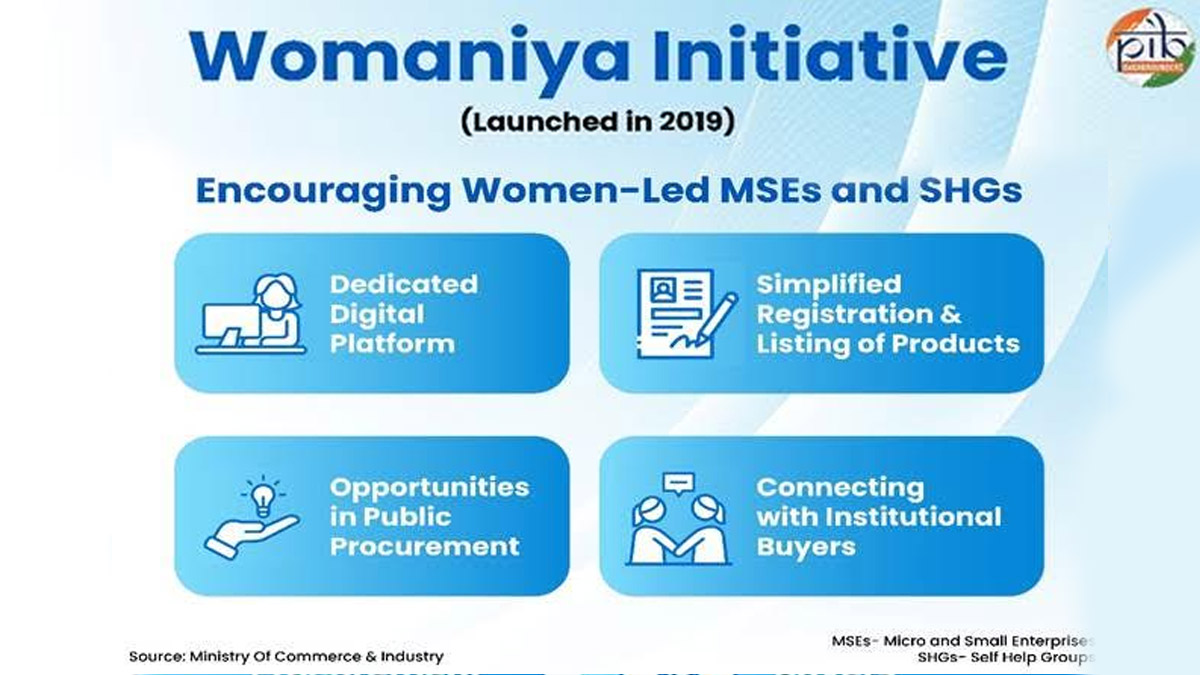
NEW DELHI: The Womaniya Initiative is steadily reshaping how women entrepreneurs access government markets, with over 2.1 lakh women-led micro and small enterprises now registered on the Government e Marketplace.
Launched in 2019 under the Ministry of Commerce and Industry, the initiative enables women entrepreneurs and self-help groups to sell directly to government buyers through a dedicated digital interface, cutting through traditional barriers such as limited market access and reliance on intermediaries.
Public procurement has long been one of India’s largest organised markets. With the rise of GeM, a fully digital, paperless and cashless procurement platform, the system has become more transparent and accessible. Womaniya builds on this foundation by creating a focused pathway for women-led enterprises to participate in government supply chains.
The scale of participation is already notable. In FY 2025-26, women entrepreneurs on GeM secured an order volume of 13.7 lakh, with contracts worth over Rs 28,000 crore awarded to women-led businesses. This accounts for 5.6 per cent of total procurement on the platform, comfortably exceeding the mandated 3 per cent target.
The initiative focuses on product categories where women entrepreneurs already have a strong presence, including handicrafts, handloom textiles, coir products, home décor and office accessories. These are grouped under curated storefronts, making it easier for government departments to discover and procure from women-led suppliers.
Beyond listings, Womaniya is also about capability building. Entrepreneurs are onboarded digitally through Udyam verification, supported by training workshops, buyer-seller meets and vernacular outreach programmes. The platform ensures standardised cataloguing, transparent bidding and time-bound payments, which are critical for small businesses operating with limited capital.
The initiative works in tandem with SWAYATT, a broader programme aimed at improving access to public procurement for startups, women, youth and marginalised groups. Together, they form a wider push towards inclusive economic participation.
At the grassroots level, self-help groups continue to play a vital role. With over 10 crore women mobilised into lakhs of SHGs nationwide, the pipeline of potential entrepreneurs is steadily expanding, strengthening the ecosystem further.
What began as a targeted inclusion effort is now evolving into one of the country’s largest organised procurement channels for women-led enterprises. By linking digital infrastructure with on-ground mobilisation, Womaniya is not just opening doors, it is helping women walk confidently through them into formal economic participation.







