MAM
Threat from ad-skip tech hyped: Nielsen


MUMBAI: Has the main and traditional media lost its mojo? The answer is a definite no. However advertisers would do well to consider alternative platforms like gaming. This was a key message at this morning’s plenary session of technology, media and research.
Nielsen Media Research International MD Ian Garland offered a perspective on consumer’s changing TV habits. During his lively presentation he used the movie Austin Powers as a metaphor. After all the character played by Mike Myers is only too well aware of the concept of time-shifting. It is estimated that by 2007 17 per cent of television homes in the US will have TiVo like capability. However, there is more fear and worry than is warranted over the sight of consumers watching later and skipping ads.
Only 15 per cent of ads will be affected by this phenomenon in 2007. The TiVo Nielsen Custom Panel conducted a study recently. The fact is that 80 per cent of people will watch TV live. Even those that watch on time shift will do so only for certain shows like the West Wing. News and sports broadcasts will be watched live. Around 10 per cent will skip ads completely. A part of this segment is content hoarders. These viewers will store content like films that will be viewed over the weekend. The catch-up soon segment that will be ten per cent will skip 50 per cent of the ads.

An alternative mechanism for advertisers is embedded ads in film and TV. For instance in Austin Powers when Myers says, “Get your hands off my Heinie” he is referring to Heineken beer. The embedded ad market in the US will be worth $2 billion this year.
This will grow to $3 billion in 2007. While reality shows like American Idol and Extreme Makeover draw a lion’s share of this revenue other drama shows and sitcoms will also feature companies embedding products into the storylines in the next couple of years. Coke, Pepsi and Nike are some companies doing a lot of product placement in TV and film.
Sports sponsorship is also huge in the US. It attracts $ 8 billion a year. Gaming is an emerging opportunity. It will be worth $ 7 billion in 2007. What is good is that a Nielsen survey found that most customers do not mind in-game advertising. In fact it makes the experience more real for them. Seventy five per cent of Nielsen’s male TV homes own a video game system. Those that play do so for as long as eight hours at a stretch. So their consumption is beginning to rival what is happening in the main media.
Nielsen is now working on a new marketing information service called Apollo. Here an integrated study is done of all the media being consumed. This will help Nielsen gives its clients a better idea of the best media mix for their products. Garland is confident that with technological advancement this service will grow in utility. Project Apollo will aggregate a ‘day in the life’ of thousands of consumers.
Marketers would have the opportunity to get a read on when and where key consumer segments receive product messages, how they process and filter that information, and the impact on the ultimate purchase decision. The service will measure the gap between seeing an ad and making a purchase. It will also be able to gauge how often a person sees an ad before deciding to buy a product.
What Apollo seeks to answer is one of the biggest questions facing American marketers today-the relative effectiveness of their spend. With more than $1,012.6 billion in US marketing expenditures on the table, the issue becomes one of weight and allocation. Are companies spending too much or too little?
Meanwhile, IBM Global Media and entertainment industry VP Steve Canepa dwelt on the importance of digital networks in helping content owners discover new revenue sources. The fact is that in 2004, 80 per cent of US consumer spent money on digital media compared with 37 per cent in 1998. He mentioned that developing standards would lead to the creation of new business models in a digital age. The IBM digital media factory works at developing an integrated digital media value chain. According to him firms that integrate business delivery systems with content systems will emerge as winners.
For content management IBM has a digital media centre. This can send 20 gigabytes per second. It has worked with CNN towards digitising its archive and assets. This was done by using an open standards database technology. IBM is also working with a Korean radio station to achieve a tapeless workflow that links editing suites.
“This will deliver significant cost savings. We are also working with the National Football League in the US to help them deliver a more enriching experience for the fans. Movielink is an example of a new business model. The company uses broadband IP to licence and deliver movies over the Net. We manage their infrastructure. As far as Consumers’ homes are concerned what is required are new home architectures. We are coming out with HD DVDs. This will allow consumers to record and play back HDTV content.”







Brands
Axis Bank named Official Banking Partner of DP World PGTI
Partnership supports all tournaments this season to grow professional golf in India.
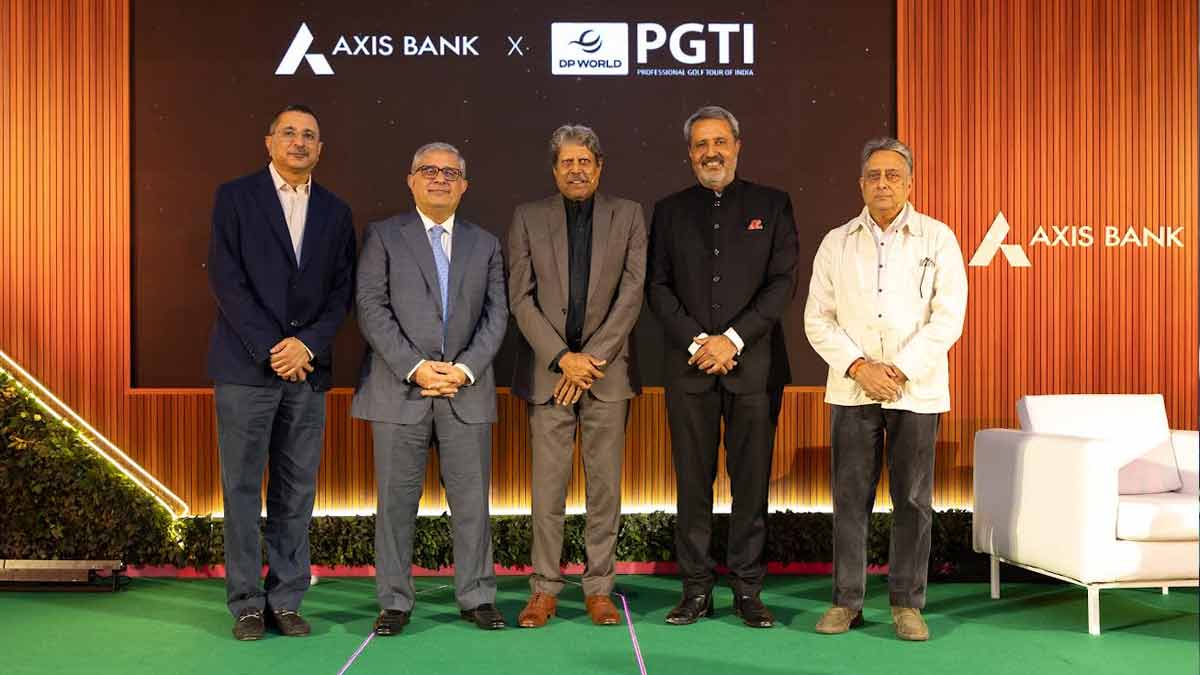
MUMBAI: Axis Bank just teed up a hole-in-one partnership because when a bank sponsors golf’s biggest swing in India, even the fairways feel more financially secure. Axis Bank has been appointed Official Banking Partner of the DP World Professional Golf Tour of India (DP World PGTI), strengthening its commitment to sporting excellence and community engagement while backing the growth of professional golf across the country.
Under the partnership, Axis Bank will support all DP World PGTI tournaments this season, contributing to talent development, enhanced tournament experiences and wider fan engagement. The collaboration aligns the bank’s values of precision, discipline and trust with the Tour’s focus on performance and opportunity.
Axis Bank executive director Munish Sharda said, “We are pleased to partner with DP World PGTI as its Official Banking Partner. Golf embodies precision, discipline, and a pursuit of excellence qualities that strongly reflect who we are at Axis Bank. This association also strengthens our engagement with India’s growing premium customer segments, where the sport has a deep and enduring connect.”
Professional Golf Tour of India president Kapil Dev said, “We are extremely pleased to welcome Axis Bank as a Tour Partner of the DP World Professional Golf Tour of India. Partnerships of this stature play a vital role in strengthening the foundation of the Tour, enhancing opportunities for our players, and expanding the sport’s reach across the country.”
Professional Golf Tour of India CEO Amandeep Johl added, “Axis Bank’s strong legacy of excellence, innovation, and nationwide reach aligns perfectly with DP World PGTI’s goal to elevate professional golf in India and provide greater opportunities for our players.”
In a sport where every stroke counts and every partnership drives distance, Axis Bank isn’t just backing golfers, it’s investing in the fairway to future, turning India’s greens into a stage where precision meets passion and every drive has the power to inspire.