MAM
The Typing Revolution in Cyberspace

At the early dawn of the office cubicles, the expensive and elegantly dressed secretarial pools were eliminated as grown-up executives were ordered to type and lick stamps. This great cost savings certainly pleased the CFOs, but quietly halted the intellectual interactions that such pools had offered, while keeping most adults pretty dumbfounded and sluggish for a decade.
Certainly mesmerized by keyboards, now after decades of torture and misery, most of us type and are masters of the two-finger tango. At this point, we are all heavily engaged in a global war of e-commerce, in which somehow everyone is forced to type. It’s type or else.
Type, Type, Type

This “Typing Revolution” of the recent past has surely taken control of the mainstream, creeping up on us, from basic keyboards to pocket devices that control our behavior in an almost bionic form. Type, type, type. Type in the morning, type in the afternoon, in the evening, in cars, in elevators, in bedrooms, restrooms, dining tables, picnic tables and sometimes all day in the office, too.
The same fingers that did all the walking in the Yellow Pages have now learned tap dancing. Klika-ta-klick, klika-ta-klick… Ole!
Those twisted business names and complicated URLs that everyone is forced to remember are of particular concern, demanding absolutely correct spellings, like Axcioum, or Qununantum, or Progexys. (None of these exist so far on Google, but you get my drift.)
One mistake and you end up in a strange La La Land: From whitehouse.gov to whitehouse.com — what a contrast! Dot-gov takes you to Lincoln’s bedroom, while dot-com will take you to Lolita’s.
Without precise spelling, one can spend all day searching through thousands of not quite identical names on a search engine.
Revolutions Make for Evolution
There were also other similar major revolutions during the last century, each creating a culture and a society entirely based upon that revolution of the period, including:
- “Print Society.” Expanding reading and literacy.
- “Radio Society.” Listening, dialogue and music.
- “Telephone Society.” Conversation, spiel, telemarketing.
- “TV Society.” Better sofas, centrality of the living room and visual knowledge.
- “Computer Society.” Organization and planning.
- “Telecom Society.” Globalization and surfing.
- “Cyber-Society.” Decentralization, intellectual-anarchy.
- “Broadcast Society.” It’s next. Be prepared.
The latter is fueled by the “Broadcasting Via Web Revolution” that will bring anchoring and broadcasting from every basement and every floor of office buildings around the globe. Make-up, lights, camera, action. Hello, CNN. (Adapted from: Sunrise, Day One, Year 2000, Naseem Javed, Linkbridge, 1996)
Keyboard, a New Battleground
Today naming is all about search ability and search engines. Spelling and cognitive associations control corporate names. Business listings have gone through the roof: A two-inch directory of the past is now a two-mile-thick book.
The masses, with their strained ability to memorize, are frustrated with typing mangled names with strange dashes and slashes. The human brain with its own pace of evolution is simply stuck somewhere just slightly ahead of the Jurassic era. The brain has no power or incentive to store and remember weird business names by the hundreds.
Positioning a name for maximum impact in global e-commerce is the new game. No one really cares about logos and colors anymore, only the name and how it relates to the business. After all, it’s only the name that everyone talks about, remembers, types, chats about, refers to, calls, praises or curses. Leave it to the Germans to come up with the longest domain name in the world. Roughly translated, the 63-space Web site means: “Just how human humans are is shown by how they treat their mother tongue”:
http://www.WiemenschlichMenschensindzeigtihrUmgangmitderMutte
rsprachefrsch.de
Are keyboards now the real battlegrounds where the next marketing fights will be won or lost? Is this typing revolution finally creating a hyper-global-hyper-secretarial-hyper-typing-pool? Ole!
Is typing replacing logos? Has pure memorability of the precise name become more critical then the entire design and packaging campaign? Will recalling an easily type-able name make more money then blindly spending millions of dollars on abstract market research to approve some abstract branding strategy? Why will simple names like Sony.com survive, while names like Exproptroxtron.com won’t?
Why not have a national holiday and declare it a Global Typing Day? Klika-ta-klick, klika-ta-klick… Ole!




Brands
Raj Cooling Systems launches Agreyas appliances brand
Emraan Hashmi named brand ambassador for consumer appliance push.
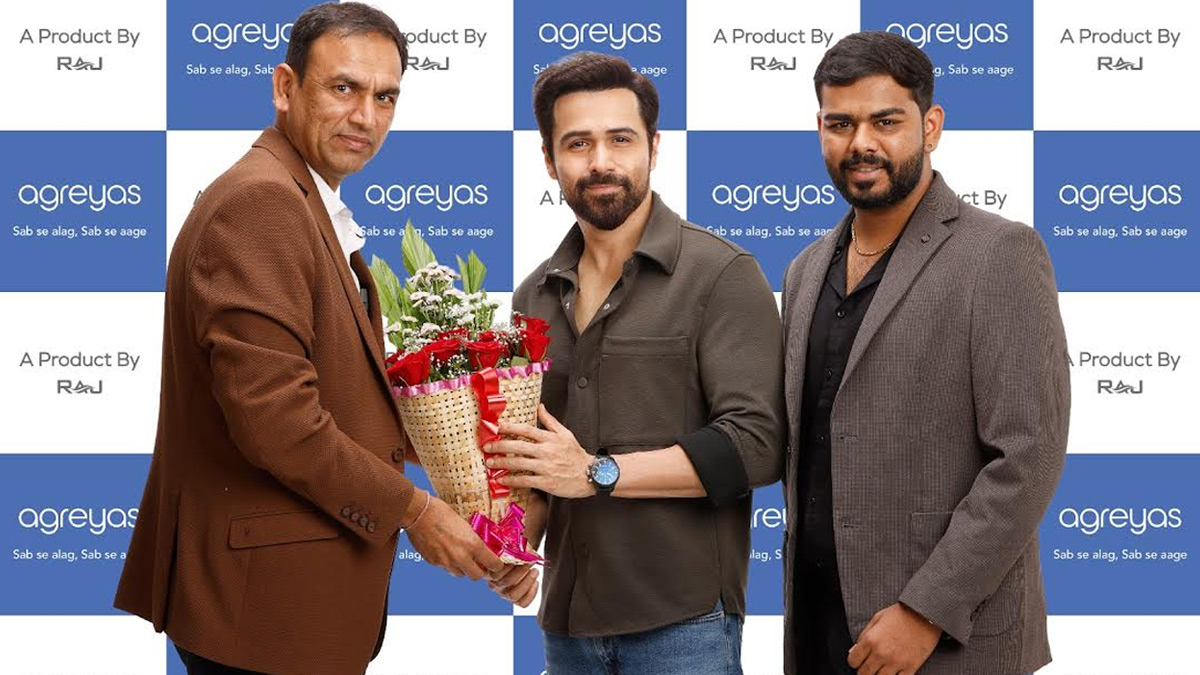
MUMBAI: A company known for cooling solutions is now heating up its ambitions in the home appliances market. Raj Cooling Systems Pvt. Ltd. has launched a new consumer appliances brand, Agreyas, marking its entry into India’s rapidly expanding home appliances sector valued at more than Rs 1.5 lakh crore. The move represents a strategic diversification for the company, which has traditionally focused on cooling solutions for residential, commercial and industrial applications. Through Agreyas, the firm plans to tap into growing consumer demand for energy efficient and technology driven household appliances.
To build brand visibility, Agreyas has appointed Emraan Hashmi as its brand ambassador. The campaign has been developed under the banner of Zoommantra Productions, with actor and filmmaker Rohit Roy contributing to the creative direction.
The brand’s initial portfolio will include mid premium air conditioners, washing machines, geysers and other white goods designed to cater to modern Indian households seeking efficient and reliable appliances.
Raj Cooling Systems, founder and chairman Kalpesh Ramoliya said the launch aligns with the company’s broader expansion plans.
“The launch of Agreyas is in line with our vision to build a strong presence in India’s consumer electronics and home appliances market. The brand has been developed as a standalone identity to meet the evolving needs of Indian consumers,” he said.
Hashmi said the collaboration comes at a time when Indian buyers are increasingly looking for innovative and functional home solutions.
“I’m looking forward to working with Agreyas at a time when consumers are seeking more innovative and efficient home products. The brand reflects changing consumer behaviour around functionality, innovation and ease of use,” he said.
Raj Cooling Systems plans to invest around 10 million dollars in developing the brand, with an additional 5 million dollars earmarked over the next three to five years for product development and distribution expansion.
Agreyas will follow a multi channel distribution approach, selling through online platforms, retail outlets and dealer networks aimed at both urban and semi urban markets across India.
With the launch, the company is positioning Agreyas as a standalone consumer facing brand while continuing to leverage its existing manufacturing, engineering and research capabilities built through its core cooling solutions business.