MAM
The HR role in a post-pandemic world


MUMBAI: As we look forward to a post-Covid2019 world, minus any lockdown restrictions and worries about the virus, how will companies deal with the scenario? Indeed, the world will never be the same again. How will then companies cope in such a changed world? The human resources (HR) personnel will have the cardinal duty of ensuring seamless business operations and employee welfare. Assessing the new requirements of the office as well as employees will be the immediate task.
Indiantelevision.com spoke to media and advertising industry heads to understand how their HR heads are preparing for the post-Covid2019 world.
Townhalls and virtual meet-ups are the common ways to ensure people feel connected to each other. DDB Mudra Group EVP and head-HR Rita Verma and Dentsu Aegis Network head HR business partner – south Asia Sunil Seth say that open and honest communication has been the way to tackle stress.

“Everyone is juggling their own unique personal living situation, so offering people some flexibility in work schedules and encouraging them to take time off, if they feel overwhelmed, has been critical. We’ve offered physical fitness sessions, virtual meditation, tips to manage stress at work and home. The idea is to help people tackle whatever roadblock they may be facing in a given week,” says Verma.
On the other hand, #ARM Worldwide co-founder and COO Abhishek Punia says that Covid2019 has taught the importance of mental health. “Psychologically, people will have fears in their mind and by providing them with a safe and clean environment, with all sanitisation and hygiene measures in place, we can instil confidence in their minds,” he says.
To tackle stress, Logicserve Digital created an online chat room, virtual tea-time session where employees can share stories, dance sessions, pet meetup, meditation sessions and money management sessions.
TheSmallBigIdea co-founder and CEO Harikrishnan Pillai says that there is a tendency to get deeply engrossed with work and forget that we are humans who are used to interacting with many individuals but now confined to the walls of our homes. “We have encouraged managers to keep speaking with the team members, especially ones staying away from the family or the ones who are new to the organisation,” he says.
As green zones have slowly started resuming operations, companies will now have to deal with an increased focus on health and wellness and in some cases, paranoia. Companies agree that checks such as using sanitizers or washing hands frequently, thermal scanners, compulsory wearing of masks, reminders to maintain social distancing will have to be taken. Additionally, pre-sanitisation, as well as frequent cleaning, will need to be incorporated as new measures. Another requirement will be to maintain physical distance between employees when they work as well as in spaces like lounges or cafeterias.
After health measures come flexibility, which most companies will now undertake if they haven’t yet already. The next step is to create batches of employees and divide them into shifts if they are called on the premises.
Seth says that there will be no change in shifts. Verma adds that common work hours have been found to be fruitful. “Not everything is solved through a company policy alone, but largely through office culture and ours is seen in the continued good work our teams are doing,” she says.
Godrej & Boyce Mfg has planned for business scenarios and rosters of employees who are required to come to work and which work could be carried out from home. It is also encouraging the use of personal vehicles.
Logicserve Digital head – HR Anshuman Misra says that they are in no rush to bring the workforce back to the office since flexible policies are already in place. He is considering flexi-working and flexi-timing with a greater focus on results than efforts.
While most companies are encouraging people to travel using their personal vehicles, if possible, The Visual House founder and CEO Deepmala says that carpools will be encouraged only after considering the health and safety of everyone involved. Similarly, TheSmallBigIdea is considering non-peak-hour travel to ensure minimal contact.
AGENCY09 culture manager Archita Arekar says that they are mentally prepared for another six months and the HR team is working on a new policy post-Covid2019 that favours work flexibility and employee safety.
Elderly people have to be extra cautious about the Covid2019 virus. Companies that employ older people need to take extra care. While DAN has a majority of millennials, elderly employees will be advised to continue to work from home until enough measures in the external environment allow them to travel to office with full safety. Same is the case with Logicserve; the company will also be cautious with those who have kids or senior citizens at home or those with health conditions.
The HR department will play a prime role in ensuring the wellbeing of employees in the new era. This will include creating new policies, structures and measures. There will be a nuanced approach to employee health, safety and wellbeing.
Verma says that HR will take a health-first approach with lesser crowds and more virtual engagement. Productivity matrix will also be a key focus. Different functions will be analysed and their ways of working will be looked into. Reskilling, restarting and realignment will be the newer approach, according to her. “But the lens through which we will continue to look at our policies will remain, i.e., empathy; to come out of this as healthy and strong as possible,” she adds.
According to Seth, organisations, where HR practices were strong, will see no difference. However, the HR horizon will require to be widened from the perspective of the psychological and emotional needs of employees. “It will further need a strong configuration in terms of leadership and management. It may also require certain investments to offer in terms of coverage on health, emotional and financial benefits to the employees,” he says.
As a consequence of the pandemic, companies have started focusing on intensive hygiene practices as a daily routine. Misra says, “Once the lockdown is lifted, HR’s role will be even more crucial and important as the personnel have to continually ensure the health safety and wellbeing of all employees while being aligned with the organisational goals.”
On the other hand, Pillai says, “In times like these, our HR department has played a crucial role in keeping the teams connected, formulating policies and helping in smooth operations along with the admin team. HR teams will need to be on top of the game as we might be looking at a workforce that won’t meet every day but still need to be kept motivated.”
HR heads have a lot on their plate right now and going forward, they will have to ensure strong measures that will enable their employees to be at their productive best.






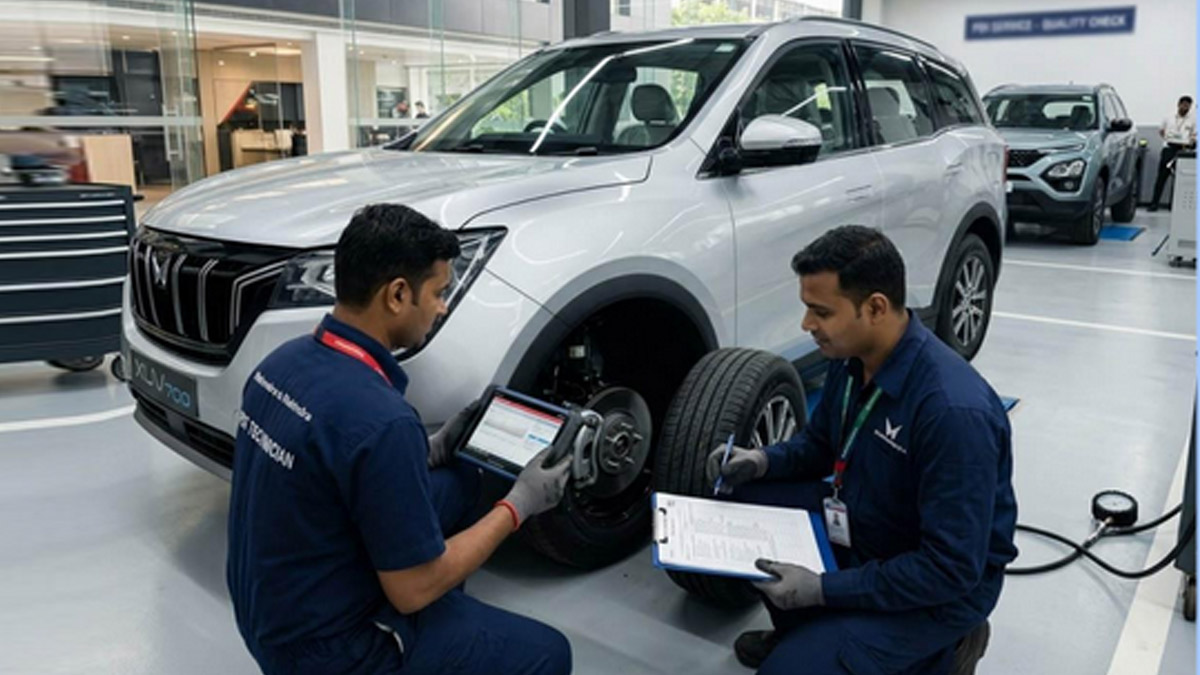
You have spent weeks researching, test driven a few options, finalised the colour and variant, and are now days away from taking delivery of your new car. It feels like the hard part is over. But there is one step that most buyers skip entirely, and it is the one that protects everything else. Understanding what PDI meaning covers and why it matters could save you from discovering a Rs 20,000 to Rs 80,000 problem after you have already signed the papers.
PDI stands for Pre-Delivery Inspection. It is a structured check that happens before your car is handed over to you. A proper PDI car service covers everything from paint quality and panel alignment to electrical systems, fluid levels and tyre pressure. Dealers are supposed to conduct this before delivery, but the depth of the check varies widely. And if the buyer does not know what to look for, problems slip through.
What Does a PDI Actually Cover?
A thorough PDI checks the car across four broad categories:
| Category | What Gets Checked | Common Issues Found |
| Exterior | Paint quality, panel gaps, glass, lights, tyres | Paint chips, uneven panel alignment, scratched glass |
| Interior | Seat upholstery, dashboard, AC, infotainment, switches | Loose trims, non-functional buttons, squeaks and rattles |
| Mechanical | Engine bay, fluids, battery, brakes, steering | Low fluid levels, minor leaks, battery not fully charged |
| Electrical | All lights, windows, central locking, sensors | Malfunctioning sensors, flickering displays, USB ports |
Each of these categories can hide issues that are minor at delivery but expensive if left unaddressed. A small paint chip near a door edge, for example, can lead to rust in a humid city like Mumbai or Chennai within 12 to 18 months.
What It Can Cost You to Skip the PDI
Here is a realistic look at what buyers have discovered after delivery that a proper PDI would have caught before:
• Paint defects requiring respraying: Rs 8,000 to Rs 25,000 depending on the panel
• Misaligned panels or doors that need workshop adjustment: Rs 3,000 to Rs 8,000
• Non-functional infotainment unit needing replacement: Rs 15,000 to Rs 40,000
• Scratched windshield that needs full replacement: Rs 6,000 to Rs 18,000
• AC not cooling properly due to low refrigerant: Rs 2,000 to Rs 5,000
• Tyre with a slow puncture from storage damage: Rs 3,000 to Rs 6,000
The total exposure from a single missed PDI can range from Rs 5,000 for minor issues to Rs 80,000 or more if multiple problems are found post-delivery. More importantly, proving that a defect existed before delivery becomes significantly harder once you have taken the keys.
Why Dealer PDIs Are Not Always Enough
Most dealerships do conduct a pre-delivery check on their own, but the process is not always as rigorous as it should be. There are a few reasons for this:
High Delivery Volumes
During festive season or at the end of a financial year, dealerships handle a surge in deliveries. When a service team is processing 15 to 20 cars a day, the depth of each check inevitably suffers.
Incentive Misalignment
Dealership staff are often incentivised on delivery speed and customer satisfaction scores. Finding a defect and sending a car back for rework delays delivery and affects scores. The incentive to look harder is not always present.
Buyer Unawareness
Most buyers arrive at delivery excited and in a hurry to leave. Without knowing what to look for, they miss things that a trained eye would catch immediately. Dealers know this, and the pressure to be thorough is lower when buyers are not asking questions.
What You Should Check Yourself at Delivery
Even if the dealer has completed their PDI, spend 20 to 30 minutes doing your own check at delivery. Here is a quick reference:
Check How to Do It Time Required Walk around in daylight Check all panels for scratches, chips and dents 5 minutes Open every door Check seals, check for rattles, test all windows 3 minutes Check interior thoroughly Test every button, switch and screen 5 minutes Start the car Look for warning lights, check AC, check all lights 5 minutes Check the boot Look for spare tyre, tools, jack and damage 2 minutes Inspect tyres Check pressure and look for sidewall damage 3 minutes
The Bottom Line
A PDI is not a formality. It is the last line of defence between you and a problem that the manufacturer or dealer should have fixed before you paid for the car.
Take the time to understand what the check involves, ask your dealer for confirmation that it has been completed, and do your own walkthrough at delivery. Twenty minutes of attention at this stage can save you weeks of workshop visits and tens of thousands of rupees down the line.