AD Agencies
The future of ads isn’t what you think, says Praseed Prasad, president – growth & marketing, South Asia at WPP Media
Prasad highlights why curiosity, brand building and AI adoption are key to staying ahead in advertising.

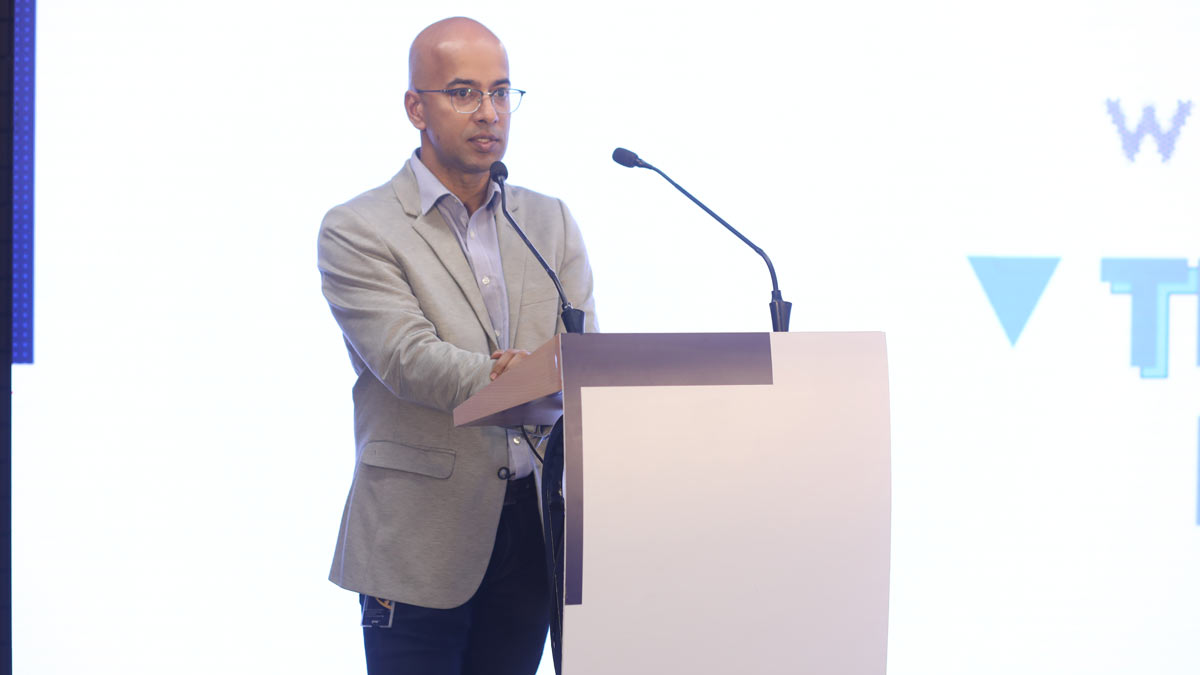
MUMBAI: Advertising is becoming increasingly fragmented, but that fragmentation is unfolding within a broader digital consolidation, according to Praseed Prasad, President – Growth & Marketing, South Asia at WPP Media.
At a macro level, he observes a clear structural shift. Content-led advertising, which once accounted for nearly 90 per cent of activity, has declined closer to 60 per cent, signalling a significant rebalancing of media strategies. While the industry appears more splintered than ever, he notes that consolidation is simultaneously taking place within emerging digital technology ecosystems.
“From a 20,000-foot view, it is definitely getting fragmented,” Prasad explains. “But within certain pockets, there is consolidation into new digital tech channels.”

Earlier, much of digital advertising was concentrated among a handful of global technology players. Today, the ecosystem is far more diverse. Growth is being driven by quick commerce, digital programmatic, digital out-of-home and influencer marketing, among others. The avenues for digital advertising have multiplied, altering how brands allocate budgets and engage consumers.
Beyond structural shifts, Prasad also addresses a longstanding perception about the industry itself. When he entered advertising 25 years ago, it was often viewed as glamorous. While there may be moments of visibility and excitement, he stresses that the reality is defined by intense deadlines and late nights.
“The glamour evaporates when you see the hard work behind it,” he says.
However, he argues that what the industry offers in return is unparalleled exposure. Professionals gain a deep understanding of consumer behaviour, business strategy and media dynamics simultaneously. That breadth and depth of experience, he suggests, equips individuals exceptionally well for leadership roles across sectors.
“You understand consumer mindset, business objectives and media strategy together. That width and depth of exposure prepares you better than most roles,” he notes.
On the debate surrounding performance marketing versus long-term brand building, Prasad is unequivocal. Performance marketing may drive short-term growth and help brands reach critical mass, but it cannot substitute sustained brand investment.
He cites the example of Nike, which pivoted heavily towards performance-driven channels around the pandemic period. While the strategy delivered immediate gains, the brand’s long-term positioning came under pressure as newer competitors, such as On Running, strengthened their brand associations and gained market momentum.
“In the short term, performance marketing will help brands grow,” he says. “But if you are not invested in brand building, you will struggle to scale further.”
He points out that even new-age e-commerce players in India, such as Flipkart and Amazon, continue to invest heavily in brand building. Remaining top-of-mind, he argues, is critical for category expansion and sustained growth.
“If you move away from brand building to pure-play performance marketing, you are not doing good service to your brand in the long term,” he adds.
For young professionals entering the industry, Prasad’s advice is simple but emphatic: be curious. He believes curiosity, particularly the habit of asking “why” and “how”, creates far greater long-term value than theoretical knowledge alone.
“Don’t accept anything at face value. Ask why. Ask how,” he says. “That curiosity helps you connect the dots and become a trusted advisor rather than just a theoretical expert.”
On artificial intelligence, his position is firmly pro-adoption. In his view, resisting technological change is neither practical nor productive.
“There is no point resisting technology. You have to adopt it and adapt,” he says. “Adopt and adapt.”
Prasad personally uses conversational AI tools such as Gemini and Perplexity as primary research aids, often turning to them before traditional search engines. While he acknowledges that outputs require verification before critical decisions are made, he sees AI as an accelerator of initial research and insight gathering.
At an organisational level, WPP Media has embedded AI through its WPP Open platform, which integrates multiple large language models. The system leverages first-party and third-party data to deliver recommendations and support client strategy.
“We have fully adopted it,” he says. “There is no benefit in being anti-technology when it can help you ride the wave.”
Ultimately, Prasad believes the future of advertising will be shaped not just by fragmentation or technological acceleration, but by how effectively brands balance innovation with enduring fundamentals. Channels may multiply and tools may evolve, but the core principles of curiosity, adaptability and brand investment remain constant.





AD Agencies
Publicis Groupe to acquire 160over90 from WME Group
Deal aims to build data-led platform linking brands, fans and culture at scale

MUMBAI: Publicis Groupe has agreed to acquire 160over90 from WME Group, in a move that signals a major push into the fast-growing world of sports and culture-led marketing.
The deal, subject to regulatory approvals, will see Publicis combine its existing Publicis Sports capabilities with 160over90’s global footprint to create what it calls a unified, end-to-end platform connecting brands with audiences through sport, entertainment and culture.
Founded as a division of WME Group, 160over90 has built a reputation for delivering high-impact campaigns across some of the world’s biggest sporting moments, including the Super Bowl, Olympic Games and FIFA World Cup. With over 670 employees across the US, UK, EMEA and Apac, the agency works with global brands to create experiences that resonate both on and off the field.
The acquisition reflects a broader shift in marketing, where sport has become a central pillar of premium media. With the global sports media market estimated at $150 billion and sponsorships crossing $90 billion, brands are increasingly looking for more integrated ways to engage audiences.
Publicis is betting that a data-led approach will be the differentiator. By integrating 160over90 with its own capabilities, including the Epsilon identity ecosystem and Influential network, the company aims to offer marketers a seamless way to plan, activate and measure campaigns across media, sponsorships, live events and creator partnerships.
Publicis Groupe CEO Arthur Sadoun said, “After building our industry-leading position in identity resolution, commerce, and creators, our next big bet is sport. In the age of AI, it has become one of the most high-value channels for clients.”
He added that combining 160over90’s expertise with Publicis’ data and technology stack would help “connect brands to fans in ways that are both meaningful and measurable”.
Echoing the sentiment, Publicis Connected Media CEO Dave Penski said, “Sport has become the most powerful intersection of culture, commerce and community,” highlighting the growing need to treat sports marketing as a measurable channel rather than just brand-building.
As part of the deal, Publicis will also enter into a strategic partnership with WME Group, enabling closer collaboration on talent, content and brand partnerships. WME Group president Mark Shapiro said the tie-up would open up new opportunities for talent and brands to scale their ambitions globally.
Post acquisition, the combined Publicis Sports entity will report to Suzy Deering, while Robbie Henchman will remain with WME Group to oversee the ongoing partnership.
The move builds on Publicis’ recent investments in the space, including acquisitions of Adopt and Bespoke in 2025 and a partnership with Magic Johnson Enterprises, underscoring its intent to dominate the intersection of sport, culture and commerce.
As brands chase both attention and accountability, Publicis’ latest play suggests the future of sports marketing may be less about moments alone and more about measurable impact at scale.






