Digital
“The core of CoRover’s platform’s conversational capabilities is BharatGPT”: Ankush Sabharwal


Mumbai: CoRover is the world’s first and the highest ROI delivering human-centric Conversational and Generative AI platform; which is secure, scalable and reliable; equipped with patent-pending tech (based on AI, ML, NLP, AR & VR); and powers Multi-Format (AI VideoBots, AI VoiceBots, AI ChatBots), Multi-Lingual (100+ Languages) and Multi-Channel/Omni-Channel AI Virtual Assistants being used by 1 Billion+ Users. Video-Voice Commerce Virtual Assistants is one of our USP, which facilitates end-to-end transactions including payment.
The company is on a mission to enable users to talk to any system the way they talk to an intelligent person. Indiantelevision.com caught up with CoRover co-founder & CEO Ankush Sabharwal where he shared numerous insights most notably on the role of Gen AI shaping the landscape of technology, BharatGPT and more…
Edited excerpts

On the role of Generative AI in CoRover’s platform and how it enhances the conversational experience for users
The core of CoRover’s platform’s conversational capabilities is BharatGPT, a type of generative artificial intelligence. Our platform is able to respond to user requests in a dynamic and relevant to context manner because of this cutting-edge Generative AI technology. Because BharatGPT understands the subtleties of human language, unlike rule-based systems, our chatbots and virtual assistants can have more casual and tailored conversations with users. Users’ conversational experience is greatly improved by Generative AI through the facilitation of interactive and customised interactions. It makes it possible for our platform to respond to complicated queries, mimic human-like speech, and fluidly adjust to various situations. In the end, enhancing customer value, simplicity, and efficiency across interactions with CoRover’s platform is largely dependent on generative AI.
On CoRover’s technology leveraging real-time analytics and data science to provide actionable insights for clients
CoRover’s technology leverages data science and real-time analytics to glean insightful information from user feedback and interactions. Our system finds significant trends, preferences, and areas for development by continuously evaluating a variety of data sources, including chat logs, user reviews, and interaction patterns. These insights enable businesses to maximise their overall strategy, make data-driven decisions, and improve the performance of their chatbots and virtual assistants.Furthermore, real-time analytics give customers the ability to track the success of their conversational AI solutions in real-time, allowing for quick adaptations to shifting consumer preferences and market conditions. To put it briefly, CoRover’s platform uses data science and real-time analytics to produce actionable insights that support clients’ conversational AI initiatives and encourage ongoing improvement.
On partnerships with companies like Microsoft, Accenture, and Google
CoRover works closely with major players in the market, such Microsoft, Accenture, and Google, to take advantage of their knowledge, assets, and broad networks when entering new areas. These strategic alliances enable cooperative go-to-market plans by fusing CoRover’s cutting-edge conversational AI technologies with these companies’ platforms and services. This makes it possible to provide their respective client groups with all-inclusive solutions. CoRover successfully expands into new markets, industries, and geographical areas through cooperative marketing campaigns, sales activities, and co-creation of customised solutions. Furthermore, the affiliation with prominent industry participants such as Microsoft, Accenture, and Google bolsters the legitimacy and dependability of CoRover’s offerings, promoting market uptake and propelling expansion. In the end, these collaborations are essential to CoRover’s ability to investigate fresh prospects for
On giving a brief overview of BharatGPT and how is it different from other Gen AI
BharatGPT, a special generative AI model designed for Indian languages and settings, was created by CoRover. BharatGPT is trained on a broad dataset that includes the linguistic subtleties, cultural allusions, and regional dialects that are common in India, in contrast to generic Generative AI models. With this specific training, BharatGPT can produce responses with higher accuracy, contextual significance, and cultural awareness in languages like Tamil, Bengali, Hindi, and others.As opposed to other generative AI models, BharatGPT focuses on catering to the unique language and cultural quirks of the Indian market. BharatGPT provides consumers with a more genuine and interesting conversational experience by comprehending and utilising these intricacies in its responses. Furthermore, BharatGPT can handle a variety of queries with ease.
Furthermore, BharatGPT is skilled in responding to a broad range of questions and subjects pertinent to Indian users, such as regional news, localised services, and cultural allusions. BharatGPT’s specialisation makes it perfect for use in Indian contexts for tasks like customer service, teaching, content development, and more. It is a useful tool in many industries, increasing user pleasure and engagement due to its capacity to understand and adapt to the particular language and cultural requirements of Indian users.
On perceiving CoRover’s impact on the Indian tech landscape, particularly in the field of conversational AI and customer engagement solutions
From the perspective of the Indian tech scene, CoRover has had a significant influence, especially in the areas of consumer interaction and conversational AI. CoRover’s cutting-edge AI-powered chatbots and virtual assistants have enabled businesses in a variety of industries to improve customer experiences, optimise workflows, and spur expansion. Businesses’ customer relationships have been transformed by CoRover’s creative conversational AI solutions, ushering in a new era of tailored engagement. CoRover’s virtual assistants use natural language processing and machine learning to provide personalised experiences that increase client pleasure and loyalty. Moreover, companies have been able to successfully reach and service a variety of client groups thanks to CoRover’s proficiency in enabling multi-format, multi-lingual, and multi-channel engagements.
The effect that CoRover has had on customer engagement solutions is also remarkable. CoRover gives businesses access to real-time analytics and data science, which helps them get insightful knowledge about the behaviour and preferences of their customers. This priceless information guides enhancements to product offers, marketing plans, and customer support procedures.CoRover’s strategic alliances with major tech behemoths like Microsoft, Accenture, and Google further enhance its prominence in the Indian tech industry. These partnerships strengthen CoRover’s position as a leader in conversational AI and consumer engagement solutions while also broadening its sphere of influence inside the Indian IT sector.
On envision as the next steps for CoRover in further influencing the tech landscape
CoRover has a number of strategic initiatives in place to broaden its market reach, provide customer value, and spur innovation as part of its plan to further advance its impact on the tech scene. In order to improve its AI skills, the company will give continuing research and development top priority. It will concentrate on developments in machine learning algorithms, conversational AI technologies, and natural language comprehension. As a result, CoRover will be able to provide its customers with solutions that are more intelligent, contextually aware, and individually tailored. Furthermore, CoRover will investigate ways to increase its market share in both vertical and horizontal markets, customising products to fit the unique requirements of various industries and companies. To effectively meet changing market demands, this may entail creating industry-specific offerings, forming strategic alliances, and entering new markets.
The core of CoRover’s approach is its dedication to providing value to customers by being aware of their changing needs, offering prompt assistance, and constantly improving its products in response to user input. CoRover strives to build enduring relationships and encourage customer loyalty by placing a high value on customer-centricity. In the future, CoRover sees its state-of-the-art artificial intelligence technologies being important in influencing how businesses and consumers engage digitally around the globe. The corporation wants to make a big effect in a lot of different areas and maintain its leadership position in the tech sector. CoRover will pursue strategic alliances, ceaseless innovation, and an unrelenting commitment to customer success in order to realise this vision.






Digital
RBI proposes Rs 25,000 compensation cap for small digital fraud losses
RBI, customer bank and beneficiary bank will share payouts
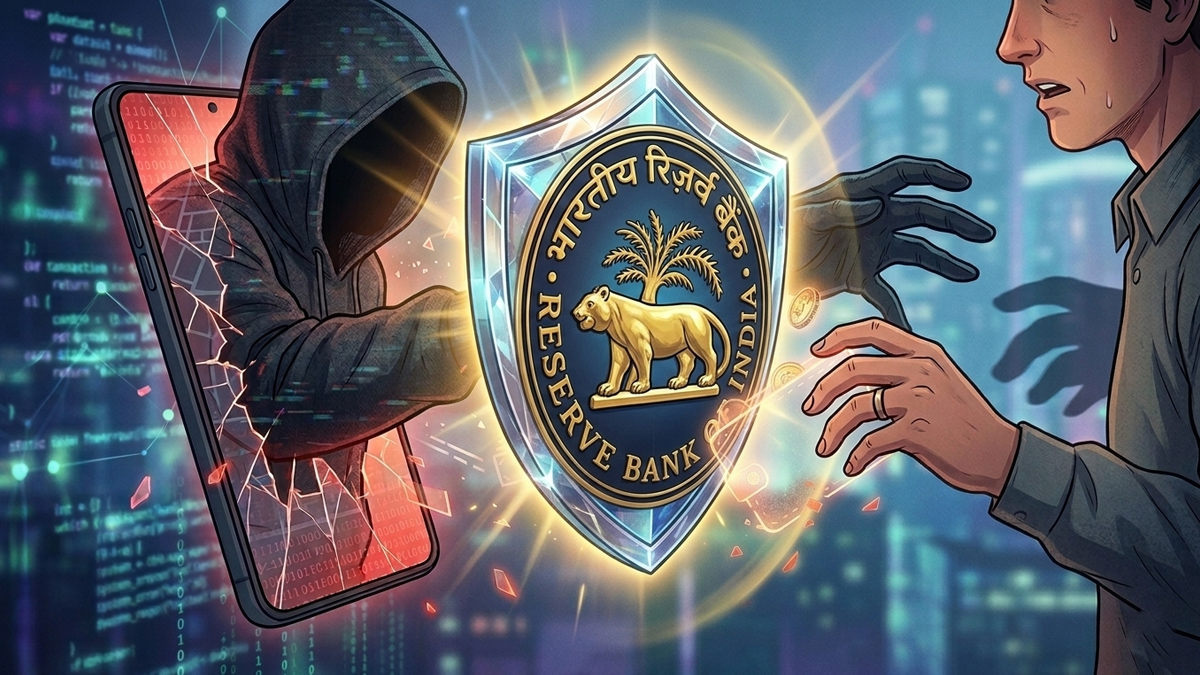
NATIONAL: The Reserve Bank of India has proposed a new compensation framework for small-value fraudulent electronic banking transactions, requiring the central bank, the customer’s bank and the beneficiary’s bank to share payouts to affected customers.
Under draft rules released on Friday, compensation will be capped at the lower of 85 per cent of the net loss amount or Rs 25,000 in cases where the gross loss from a fraudulent electronic transaction is up to Rs 50,000.
The proposal comes as regulators step up efforts to strengthen customer protection amid a rise in digital banking frauds.
RBI governor Sanjay Malhotra had indicated during last month’s monetary policy announcement that the central bank planned to introduce a compensation framework for small-value digital frauds, allowing affected customers to claim relief once during their lifetime.
According to the draft guidelines, when the loss is below Rs 29,412, compensation of 85 per cent of the loss will be paid. Of this amount, 65 per cent will be borne by the RBI, while the customer’s bank and the beneficiary bank will contribute 10 per cent each.
For losses of Rs 29,412 or more but up to Rs 50,000, the compensation will be capped at Rs 25,000. In such cases, the RBI will contribute Rs 19,118, while the customer’s bank and the beneficiary bank will each contribute Rs 2,941.
If funds are later recovered after compensation has been paid, the customer’s bank must recalculate the payout based on the revised net loss and adjust the recovered amount accordingly.
Customers will be eligible for compensation only if they report the fraudulent transaction within five calendar days of its occurrence.
Complaints must be lodged both with the bank and through the National Cyber Crime reporting portal or the National Cyber Crime helpline. Banks must also confirm that the loss is bona fide under their internal processes.
Once a complaint is received, banks must compensate the customer within five calendar days, the draft rules state.
In joint accounts, only one account holder may submit a compensation claim.
The central bank has also proposed tightening transaction alerts by mandating instant SMS notifications for all electronic banking transactions above Rs 500. For transactions of up to Rs 500, banks may decide whether to send alerts based on internal policies.
Banks will not be allowed to charge customers for SMS messages sent to meet regulatory requirements or those used for promotional, marketing or customer awareness purposes.
The draft framework also calls for stronger oversight by requiring banks to periodically report complaints related to fraudulent electronic transactions to their boards or board-level committees. These reports must detail the number and value of cases across categories including card-present transactions, card-not-present transactions, internet banking, mobile banking and ATM transactions.
The RBI has invited public comments on the draft guidelines until 6 April, 2026. The rules are expected to take effect on 1 July, 2026 once finalised.
Banking officials say the proposed sharing of compensation between the RBI, the customer’s bank and the beneficiary bank is intended to increase vigilance across the digital payments ecosystem.