Brands
The attention grabbing gimmick of comparative advertising

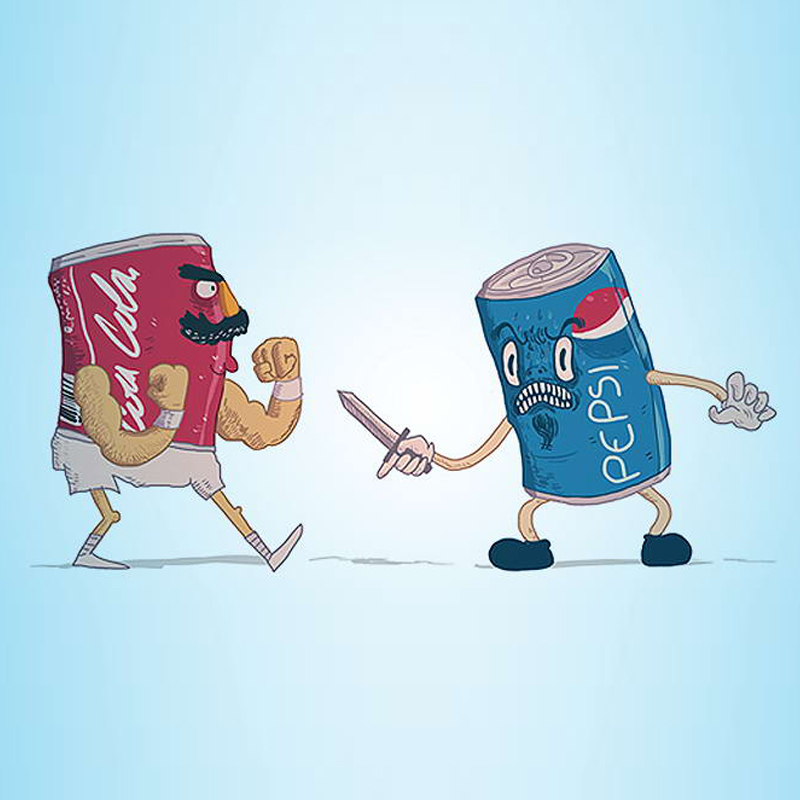
MUMBAI: The advertising world is a fiercely competitive place with brands waiting to pounce on an opportunity to grab as many eyeballs as they can. If you thought it is the survival of the fittest here, you could be wrong. Wit and smartness are needed for success. While some brands stick to creative storytelling, others resort to a more aggressive form of marketing, i.e., comparative advertising.
If you’ve noticed brands taking potshots at rivals through their advertisements, usually alluding that their products are inferior to its own, voila you’ve got yourself a case of comparative advertising or advertising war. Audiences can clearly comprehend the attack since in most cases they tend to name rivals.
Merely showing exaggerated claims of oneself don’t get categorised into comparison. Only when a brand degrades or insults another brand does it cross over to the territory of indulging in an ad war.

Mindshare India chief product officer M A Parthasarathy says that challenger brands tend to adopt the strategy of comparative advertising. “The success of such campaigns often depends on how tastefully or crassly is it executed. It works better when done occasionally or selectively, and not as the main communication from the brand.”
Some brands do that to show the superiority of their product, while others do it pull down their rivals. Glitch planning director Ramya Nagesh points out that brands opt for this kind of advertising solely for attention. “It gives consumers a look into what brands believe in the most about their products and their brand. In this crowded marketplace, it feels like a breath of fresh air when done right but can get stale really soon,” she adds.
The history of comparative advertising dates back to the beginning of the advertising world and ever since, brands have been mocking and taking a dig at each other. The latest incident is an ad created by Samsung Mobile that mocks Apple users. Teasingly titled ‘Growing Up,’ the video follows an Apple fan from his first iPhone in 2007 all the way up to 2017, when he finally decides to make the switch to Samsung Galaxy 8.
The ad has received mixed reviews where some found it funny and have applauded Samsung’s gut to mock Apple users while a certain set thought it was distasteful.
Though such ads are healthy for the marketing industry as long as they are done right, Publicis India managing director and chief creative officer Bobby Pawar notes that at times it is interesting to see such a face-off which is a tactic to get your name plastered in the news. With the right narrative, it can create a controlled controversy that gets people talking and even taking it in the right stride at times. “In the latest Samsung-Apple face-off, Apple is perceived as a thought leader brand whereas Samsung is trying to be the cheeky challenger,” he adds.
Though comparative advertising isn’t the norm of Indian advertising, some brands had the courage to take on their opponents. Indiantelevision.com brings to you a couple of comparative ads that may or not have resulted in higher sales but definitely created a higher brand-recall.
Rin v/s Tide:
Hindustan Unilever Ltd (HUL) launched its much controversial commercial for Rin in 2010, which made a direct jibe at P&G’s Tide detergent, and raised many eyebrows. The TVC made a no holds barred comparison between Rin and Tide, going on to claim that Tide is incompetent of fighting stains and providing whiteness like Rin.
Colgate v/s Pepsodent:
In this commercial, Pepsodent blatantly used Colgate’s name claiming 130 per cent better protection. Colgate took offence and filed a petition in the Delhi High Court, which was later rejected. The brands have ever since been taking a dig at each other time and again.
Amul ice-cream v/s Vadilal ice-cream:
Early this year, Gujarat Milk Marketing Federation Limited, which sells its products under the Amul brand created a campaign where it insinuated that others ice creams were made out of Vanaspati. HUL and Vadilal took Amul to court as the latter suggested its rivals are actually selling ‘frozen dessert’ in the name of ice-cream.
Times of India v/s The Hindu:
In the year 2012, Times of India launched its ‘Wake Up to The Times of India’ campaign to show Chennai how readers are being put to sleep by a boring news daily, which is also its main competitor in the southern market, The Hindu. The latter wasn’t easy on Times Of India either and came up with a brilliant advertisement to get back at it.
Patanjali v/s HUL and RB:
On 2 September this year, Patanjali launched its campaign that directly targetted HUL’s products like Lux, Lifebuoy and Pears along with Reckitt Benckiser’s (RB) Dettol. In the ad, Baba Ramdev was seen asking consumers to reject chemical based soaps and adopt natural and herbal soaps instead. HUL and RB took Patanjali to the High Court filing a defamation case and the ad was pulled out of TV channels and the internet after the court’s order.







Brands
Samsung certifies 1,000 Maharashtra students in AI and coding
The South Korean electronics giant marks its first large-scale skilling push in the state, with women making up nearly half the national programme’s enrolment
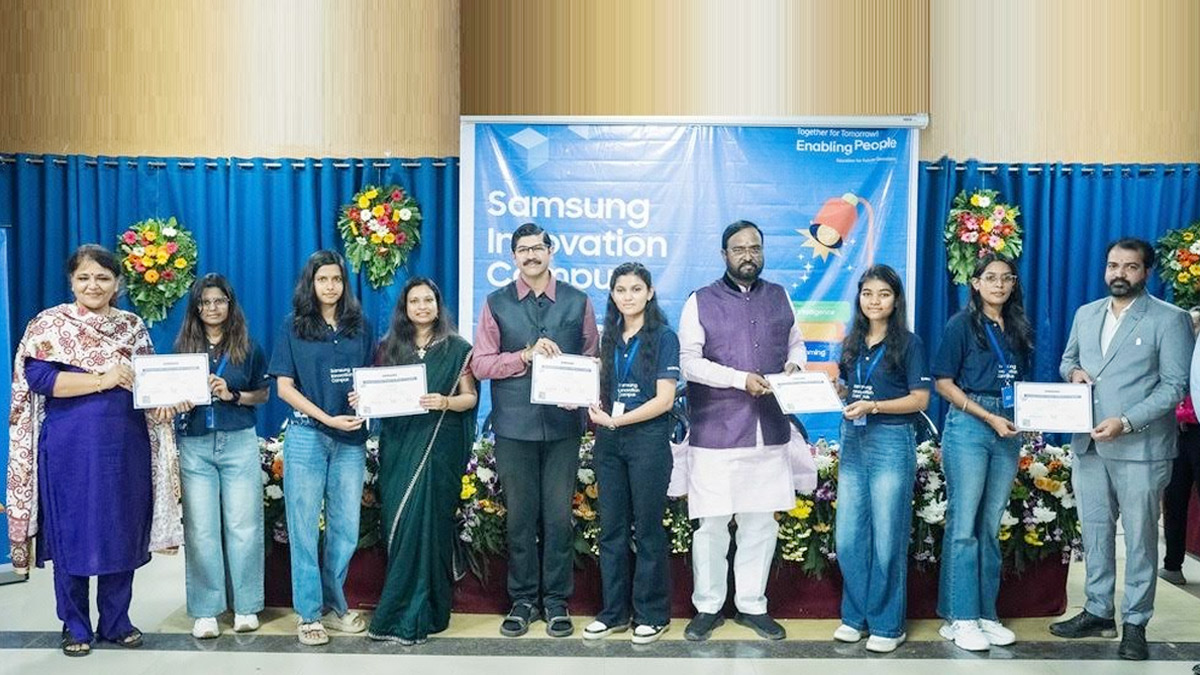
PUNE: Samsung has put 1,000 students in Maharashtra through a certified training programme in artificial intelligence and coding, the largest such drive the South Korean electronics company has run in the state and a signal that corporate India’s skilling ambitions are moving well beyond the boardroom brochure.
The certifications were awarded under Samsung Innovation Campus (SIC), the company’s flagship corporate social responsibility programme, which launched in India in 2022 with the stated aim of democratising access to future-technology education. The 1,000 graduates were drawn from four institutions: 127 from Savitribai Phule Pune University, 373 from Pimpri Chinchwad University, 250 from D.Y. Patil University’s Ramrao Adik Institute of Technology and 250 from Anjuman-I-Islam’s Kalsekar Technical Campus. All completed training in either AI or coding and programming, the two disciplines Samsung has identified as the critical pillars of the digital economy.
The programme does not stop at technical training. Soft-skills development and career-readiness modules are baked into the curriculum, a deliberate attempt to close the gap between what universities teach and what employers actually want.
“India’s digital growth story will ultimately be shaped by the quality of its talent pipeline,” said Shubham Mukherjee, head of CSR and corporate communications at Samsung Southwest Asia. “As technologies like AI move from the periphery to the core of industries, skilling must evolve from basic training to building real-world capability. This milestone in Maharashtra reflects how industry and academia can come together to create a future-ready workforce that is both globally competitive and locally relevant.”
The Maharashtra drive sits within a rapidly scaling national effort. Samsung Innovation Campus trained 20,000 young people across India in 2025, hitting its stated target for the year. Women account for 48 per cent of national enrolments, a figure the company cites as evidence of its push for an inclusive technology ecosystem. The programme is implemented in partnership with the Electronics Sector Skills Council of India and the Telecom Sector Skill Council.
Samsung, which is marking 30 years in India this year, runs SIC alongside two other initiatives, Samsung Solve for Tomorrow and Samsung DOST, as part of a broader effort to build what it calls a generation of innovators with both the technical depth and the problem-solving mindset to thrive in a fast-moving digital world.
A thousand certified students is a tidy headline. Whether they find jobs that match their new skills is the harder question, and the one that will ultimately determine whether corporate skilling programmes like this one are genuine pipelines or well-photographed gestures.






