MAM
Tele-Wise Tamil’s inaugural edition advocates greater involvement of national advertisers in regional markets

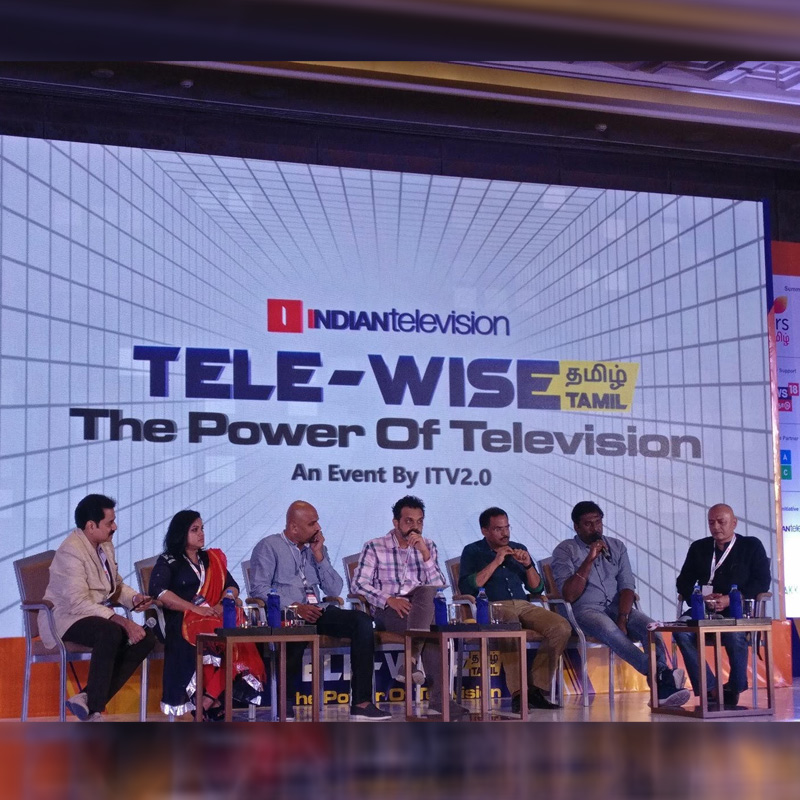
CHENNAI: Indiantelevision.com hosted the inaugural edition of Tele-Wise Tamil, yesterday in Chennai, with the aim of propelling the power of television in one of India’s biggest regional markets. The event offered a platform to stakeholders in the state’s TV industry to understand, analyse, and find potential solutions to issues faced by broadcasters and advertisers in the state.
The day-long conference was opened by Indiantelevision.com founder, CEO, and editor-in-chief Anil Wanvari with a welcome speech. Addressing the gathering inclusive of some of the top names from the media and advertising industry from the regional as well as the Tamil market, Wanvari noted that Tamil Nadu is a very vibrant market with a lot of local talent. “They are diverse and open to looking outward,” he said.
The proceedings of the day began with a presentation by BARC India chief operating officer Romil Ramgarhia who presented a report on the TV-viewing pattern and trends in Tamil Nadu market, which is unique in its viewing pattern and demographics.


Sharing some interesting numbers around the TV viewership in the state, Ramgarhia noted that 75 per cent of people watch television daily in Tamil Nadu, dominated by 53 per cent women. He added that roughly 15 per cent of all advertisers in India are currently advertising in Tamil Nadu.
The next item on the agenda was a fireside chat between Zee Entertainment Enterprises Ltd EVP and cluster head—south businesses Siju Prabhakaran and Indiantelevision.com founder, CEO, and editor-in-chief Anil Wanvari.
The duo discussed the role Tamil Nadu TV market can play for advertisers. Highlighting the sheer opportunity that Tamil Nadu TV space is for advertisers, Prabhakaran said, "Tamil Nadu is the only market that has a high point in every quarter—be it Tamil New Year, or Diwali, or Pongal. National advertisers haven't been able to understand this phenomenon."

Prabhakaran also emphasised on the need of good young writers to join the TV industry. He said "There is a need for young writers and technicians to come to TV. This is the issue throughout the country that they get enamoured by films and OTT. The onus is on broadcasters to make TV a more attractive medium for them.”
The chat was followed by the first panel discussion of the day themed ‘Gauging the Might of Market’ between TVS Auto Assist (India) Ltd head marketing Mahima Singh, Wavemaker general manager Rajendra J Prasad, TAM Media Research VP TAM Axis Vinita Shah, Lodestar UM EVP Laya Menon, Paytm Travel GM brand marketing Bhushan Walzade, and Matrimony.com AGM marketing communication India & International Akhil Jain. The panel was moderated by Bodhitree Multimedia Pvt Ltd co-founder and director Mautik Tolia.
The panel discussed some important topics including the potency of the Tamil Nadu advertising market, and how to get the attention of the screen-agnostic market. The panel unanimously agreed that there is a pertinent requirement for advertisers to create content in the regional language to connect with the people in the state as Tamil Nadu has a lot of potential.

Elaborating more on the importance of content in regional languages, Menon quipped that national advertisers are very well aware of the fact that to maintain a relationship with the audience they have to go vernacular. “Gone are the days when it was a revelation for national advertisers that they need to bond with these audience using their languages. They now understand that the audience here is culturally-bonded.”
Walzade added that it is critical for any business to connect with the tier 2 and tier 3 towns as they can contribute massively to the brand growth. He noted that along with language, brands can also work on introducing regional faces as brand ambassadors.
Speaking about the growth potential that the Tamil Nadu market has, Prasad said, “We rank second in terms of the GDP in India despite being the 6th largest when it comes to population. It proves that Tamil Nadu has a lot of growth potential for not only regional but also national advertisers.”
Shah noted that in the past five years, Tamil Nadu market has seen an exponential growth brought in by the growing number of GECs and by the top 10 advertisers in the country. However, there is a big gap that needs to be fixed between the viewership and advertising revenue that can be generated.
Discussing the ways to attract the attention of a screen-agnostic audience to TV, Singh shared that marketers face a lot of challenge to achieve this. She said that the right strategy can be to communicate in a simpler format and in languages that audiences can connect to.
Jain vouched for the need to maintain a balanced TV plus digital approach to target the consumers. Citing his own example, Jain mentioned that the digital-only approach has once failed for Matrimony.com and he thus maintains the mixed-media approach of marketing despite being a digital-first brand.
Shah added that only 2.3-3 per cent of advertisers are doing TV and digital advertising, both, and asked the house to put some more thought in the matter for the industry to grow further.
After the session, Lowe Lintas regional creative officer Kapil Mishra took center-stage to discuss how marketers can harness the power of TV.
He said that people should start looking at TV as a software and not the hardware which is a box or flat screen on the wall. “Technology has separated the software of TV from its hardware, changing the whole culture around it and liberating TV as a medium.”

Bringing his own answer to the looming question of which half of the advertiser’s money gets wasted, Mishra noted that the investments in TV ads don’t get desired return when brands try to be rational and try to say a lot about themselves. “The audience doesn’t want to hear that. They want entertainment. Power of TV lies in emotions.”
Following Mishra, an elaborate panel took center stage to discuss the ‘Changing Face of Tamil TV’. On the dais were Colors Tamil business head Anup Chandrasekharan, Sun Life content acquisition and Sun TV Network Ltd Kids Entertainment Kavitha Jaubin, Trend Loud CEO Chidambaram Natesan, Star Network deputy business head for Vijay TV Balachandran Ratnavel, Bodhitree Multimedia Pvt Ltd co-founder and director Mautik Tolia, and Polimer TV strategic advisor and consultant Suresh Iyer. The session was moderated by Horse Pictures partner and YuppTV former head Vijay Adhiraj.
The panel discussed the need for engaging content in regional languages and the challenge that the industry faces in order to attract the younger audience.
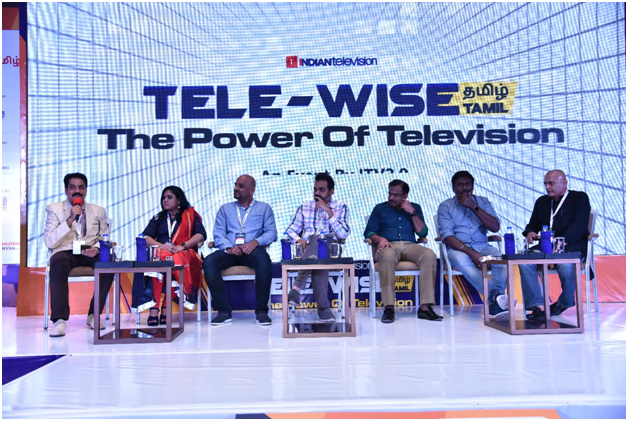
Natesan said that TV-viewing has been under immense change in the past 4-5 years. “Audiences are now very clear what they want to watch. There are no group viewings and more personalised experiences.”
Speaking on how to keep this changing audience hooked, Ratnavel shared, “If you know who your target audience is and you are sharp in identifying them, you have to stay constantly in touch with them. When you meet your consumers regularly, you know the right filters you need to put on your content.”
Adding to this, Chandrasekharan said that the content that Tamil TV is offering is evolving with time. “The content Sun TV was offering was largely family dramas, Vijay TV was into romance. ZEE brought that romance in the family. Now that family has expanded within the outer circles as well. In coming times, the content will be more to do with things around family, like complexities in the society.”
Iyer focused on advertising more. He said, “The content should drive the TG first. Then, at the end of the day, you will survive if you aggregate all the numbers and then give it to relevant advertisers. Platform can be anything.”
Tolia added that industry will also have to be cognizant of the fact that it is going to get really tough to gain the attention of the younger audience and should work in getting them to watch their content.
The next event was a fireside chat between Vikatan Group MD B Srinivasan and Anil Wanvari.

Srinivasan mentioned that he would rather like to get commissioned on OTT space than TV. He also announced that he will soon be launching the first digital daily soap on YouTube. "We will be launching the first digital daily soap soon. It will be 120 episodes and will be aired on YouTube from Monday to Friday. We are hoping the advertisers come on board. If the first 120 episodes are successful, we are also planning to come up with the second season,” he said.
Havas Group India CEO and media veteran & expert, Anita Nayyar was the next speaker on stage who in detail discussed with the room the concept of ‘Digi-Wise’ through an interesting presentation. She shared that in order to understand TV growth, one should not ignore the role of digital in it.

Next was a presentation by Kalimark Group joint managing director J Ramesh who shared a brief history of the brand with the room.
The next panel discussion happened between SRM University head of marketing and media Chaitanya Gurijala, Challenge advertising founder and CEO R Sakthivel, Kalimark Group JMD J Ramesh, Viveks VP marketing BS Vishal, and Jaya TV Network business head Viswanathan Devraj, on the topic of ‘Retail Therapy’. The session was moderated by WIN News ED, Cornerstone founder president and Puthiya Thalaimurai Group former CEO RBU Shyam Kumar.
The panel discussed how broadcasters can get retail advertisers on their platform and how the former can leverage the power of the latter.

While Gurijala mentioned that he has got his main focus on print advertising, J Ramesh noted that around 75 per cent of his ad share goes to television.
Sakthivel shared that for Tamil TV, almost 20 per cent of ad revenues come from movies, with producers spending as much as Rs 1.75 crore for a two-week campaign.
BS Vishal added another interesting dimension to the discussion as he noted that the brand shops are struggling to survive in the online as well as the offline world and it is quite difficult for them to get younger consumers to their doors.
Devaraj shared that as a broadcaster, he is depending on digital to drive retail advertisers to television.
The panel also discussed the viability of subtitling Tamil content in various languages to get more people to watch their offerings.
The day was concluded by a presentation by News18 Network CEO-languages Karan Abhishek Singh who spoke on the relevance of news genre in the Tamil Nadu market. He said that news as a genre has grown fastest in the past one year on the growth of regional news.

The conference concluded as an insightful event that shed some light on the evolving television industry of Tamil Nadu and also presented solutions to some of the problems that it is facing on its way to becoming the dominant force within the country.








Starting a business is one of the most financially demanding transitions a person can make. In the early months, expenses are immediate and often unpredictable, while revenue streams may take time to stabilise. For first-time entrepreneurs, securing small business loans can feel like a paradox: lenders expect a clean financial track-record before approving a loan, but the business cannot establish that track record without funding. Understanding the start-up lending environment in India and knowing the realistic funding options make this process far less daunting, allowing entrepreneurs to plan strategically.
Why Traditional Business Loans Are Harder for Start-ups
Most financial institutions require a minimum business vintage of 2 to 3 years before approving a term loan. This is because the first two years of operations carry the highest risk of failure. For start-ups less than 12 months old, traditional loan options are limited, and lenders often ask for substantial collateral to mitigate risk.
The vintage requirement is not arbitrary. Businesses that have survived their first two operating cycles demonstrate market viability, which significantly lowers the lender’s risk. Until this milestone is reached, entrepreneurs often rely on bootstrapping, personal savings, or alternative financing to build a stable business foundation. Understanding this reality helps first-time entrepreneurs set practical expectations when seeking funding.
Government-Linked Schemes for Startups
India offers several government-backed schemes to support first-time entrepreneurs. One such scheme is the Pradhan Mantri Mudra Yojana (PMMY), which provides collateral-free loans for micro and small enterprises in three categories:
● Shishu: up to Rs. 50,000
● Kishore: Rs. 50,000 to Rs. 5 lakh
● Tarun: Rs. 5 lakh to Rs. 10 lakh
These loans are available through eligible lending institutions, making them suitable for early-stage businesses. For first-time entrepreneurs, a Mudra loan not only provides initial working capital but also helps establish a credit history. Repaying a Mudra loan on time strengthens the entrepreneur’s profile and increases the chances of securing larger loans in the future.
Using Personal Loans to Fund Early-Stage Needs
When business loan eligibility is not yet established, a personal loan can serve as bridge funding. These loans are assessed on the individual’s credit profile and income rather than the business’s financial history, making them accessible to salaried individuals or those with a strong personal credit record.
Personal loans have limitations: the loan amount is capped based on personal income, and the interest rate is typically higher than secured business loans. Nevertheless, taking out a personal loan during the first 12 to 18 months can provide crucial support as the start-up builds its financial profile. It is especially useful for covering immediate expenses such as inventory, marketing, or office setup costs.
Alternative Financing Options for Startups
For start-ups that are not yet eligible for traditional business loans, other financing options are available through financial institutions. Many lenders offer startup-focused or small-business loans designed for early-stage businesses. These loans evaluate the entrepreneur’s personal credit profile, business plan, and projected revenue rather than relying solely on business vintage. Financial institutions such as Tata Capital provide these loans with minimal documentation and fast disbursal, enabling entrepreneurs to manage operational expenses, purchase equipment, or fund early growth initiatives without pledging collateral.
Some lenders also offer flexible loan amounts, quicker approvals, and streamlined processes, making them well-suited for first-time entrepreneurs. Exploring these options early allows start-ups to access working capital while gradually building a credit history that will support larger loans in the future.
Building the Right Financial Profile Before Applying
For entrepreneurs planning to apply for a business loan in 12 to 18 months, the preparation period is critical. Key steps include:
● Filing Income Tax Returns (ITRs) consistently and accurately from the first year
● Maintaining a clean current account with regular deposits and no overdraft patterns
● Keeping the promoter’s CIBIL score above 750
Lenders assess start-ups by examining these signals. Entrepreneurs who maintain financial discipline from the start will have stronger loan applications after two years. Additionally, tracking cash flow and avoiding irregular withdrawals can further enhance the business’s credibility.
Collateral-Based Options for Larger Requirements
Startups requiring larger amounts beyond government schemes can consider loans against property. These loans allow entrepreneurs to access larger amounts of funding at lower interest rates, as the property secures the lender’s risk.
This option carries significant risk: using personal or family assets as collateral can result in a loss if the business does not perform as expected. Such loans should be considered only when the business plan is validated, the entrepreneur has clear cash flow projections, and the repayment strategy is realistic. Careful assessment of risk versus reward is essential before pledging assets.
Practical Steps to Strengthen Your Loan Application
To maximise the chances of approval, entrepreneurs should:
● Maintain accurate financial statements, bank records, and GST returns.
● Avoid over-borrowing; apply for realistic amounts that match business needs.
● Keep personal and business credit profiles in good standing.
● Explore lenders that offer startup-friendly products.
● Be transparent and complete in all documentation.
Taking these steps early ensures a smoother and faster loan process when the business is ready for formal financing. A well-prepared application reduces processing delays and demonstrates professionalism to the lender.
Conclusion
First-time entrepreneurs often face a funding gap in the early stages, but it is usually smaller than it appears. Maintaining clean banking records, filing ITRs consistently, and exploring personal loans, government schemes, and alternative financing options help build a strong financial profile. Entrepreneurs who plan systematically from day one are better positioned to access formal credit sooner, giving their start-ups financial stability through small business loans.
The ideal time to start building a credit-worthy business profile is the very first month of operations, not when applying for a loan. By understanding available funding options and acting proactively, first-time entrepreneurs can confidently apply for a business loan and set their businesses on a path to long-term growth.







