MAM
TCH 2022: The art of telling authentic brand stories using content

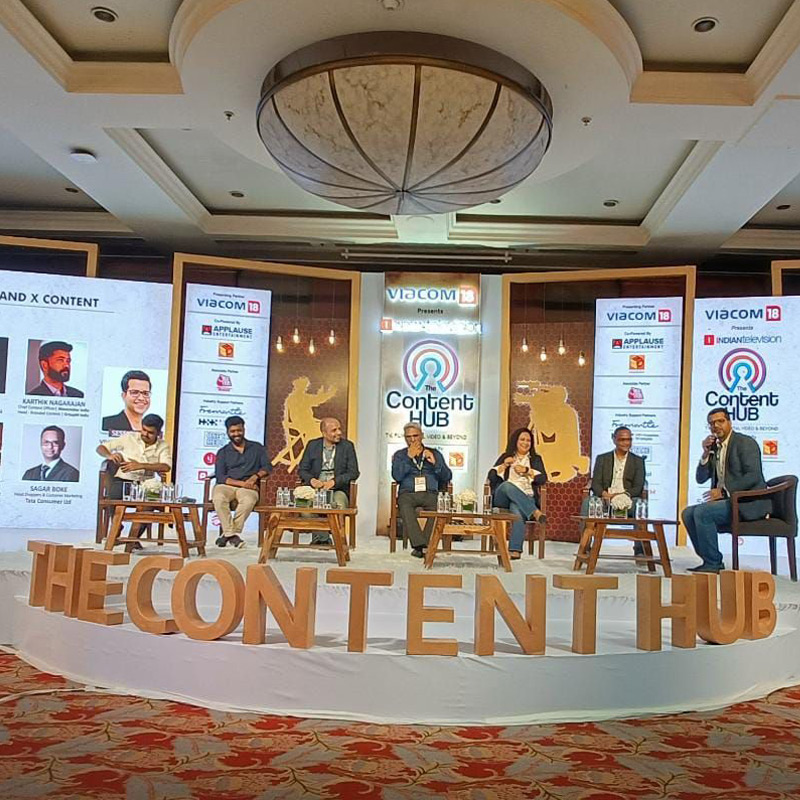
Mumbai: There’s a lot of content available to consumers that is vying for their attention. Brands are finding it difficult to leave a deeper mark on the consumers’ minds with plain vanilla advertising. The mode of brand storytelling has evolved from 30 seconders and one-minute advertisements to creating owned media platforms and content to form an association with the consumer which lasts.
Brands cannot jump blindly into the content-making exercise. First, one has to identify the brand purpose and where the brand is standing with its content. Content is a powerful way to increase the mind share of the brand but if executed poorly it can also go wrong.
At the sixth edition of Viacom18 presents Indiantelevision.com’s The Content Hub Summit 2022 held on Wednesday leading marketers spoke about the role of content in their brand strategy. The session was joined by Dentu international The Story Lab country head Deepak, Godrej Industries and Associate Companies AVP corporate brand and communications Michelle Francis, GroupM India head – branded content and Wavemaker India chief content officer Karthik Nagarajan, Tata Consumer Products head shoppers and customer marketing Sagar Boke, PhonePe director and head of brand marketing Ramesh Srinivasan and OPPO India chief marketing officer Damyant Singh Khanoria. The session was moderated by Viacom18 head branded content Vivek Mohan Sharma.

The industry event is co-powered by Applause Entertainment and IN10 Media Network. Aaj Tak Connected Stream is the association partner. Industry partners are Fremantle India, Hill+Knowlton Strategies, One Take Media, Pratilipi, Pocket FM and The Viral Fever. The Indian Motion Pictures Producers’ Association (IMPPA) is our community partner.
“We have a smartphone launch every second week. When you need to make the consumer realise the unique features of each product there’s a lot of content creation that needs to happen,” remarked OPPO’s Damyant Singh Khanoria. “We solved this problem by enabling creation in the larger community of creators and influencers.”
Another aspect that OPPO realised was to stop looking at its brand ambassadors as celebrities who are endorsing a product but rather as actors to leverage in a storytelling narrative.
“I think it is important to have a healthy appetite for risk as a brand. We started commissioning projects that break the artificial boundaries of how we advertise,” said Khanoria.
OPPO had partnered with the infotainment channel National Geographic to create a series called OPPO Superfactories that turned out to be an excellent piece of branded content, he added. “We want content to be natural and authentic to our brand. An ad is no longer about showing a consumer visiting a store, asking about a product in a three-minute film.”
When Godrej wanted to change its perception to be associated with lifestyle, the challenge, observed Godrej’s Michelle Francis, was that it was perceived as a legacy brand that had been around for many decades. “We thought that we needed to build a community that would advocate for the lifestyle brands of the Godrej group. That’s how we came up with Godrej L’affaire.”
The platform launched a nine-episode web series with actor and comedian Jamie Lever with a seamless integration of Godrej brands. “The content was so authentic that it did not look at branded content in terms of integration,” said Francis.
Whether a brand decides to create its own content is not an either, or question, explained Tata Consumer Products Sagar Boke. He believes it depends on the object and life cycle of the brand. There are advantages to branded content which takes a bit more time to build but connects deeply with the audience. “If you want to build a community around your brand, there’s nothing better than building your own content,” he said. “If you use someone else’s content or a celebrity, it is not going to work.”
Boke further said that if data is part of a brand strategy, then building your own platforms makes a lot of sense to gather first party data on your consumer. This helps the brand create more targeted and sharper advertising communication.
PhonePe’s Ramesh Srinivasan concurred with Boke stating “As a brand we’re trying to cater to India at large. That means we need to be placed where India is in terms of culture. Branded content captures the consumers’ mind space when they want to consume communication. It creates the right context which is key.”







Starting a business is one of the most financially demanding transitions a person can make. In the early months, expenses are immediate and often unpredictable, while revenue streams may take time to stabilise. For first-time entrepreneurs, securing small business loans can feel like a paradox: lenders expect a clean financial track-record before approving a loan, but the business cannot establish that track record without funding. Understanding the start-up lending environment in India and knowing the realistic funding options make this process far less daunting, allowing entrepreneurs to plan strategically.
Why Traditional Business Loans Are Harder for Start-ups
Most financial institutions require a minimum business vintage of 2 to 3 years before approving a term loan. This is because the first two years of operations carry the highest risk of failure. For start-ups less than 12 months old, traditional loan options are limited, and lenders often ask for substantial collateral to mitigate risk.
The vintage requirement is not arbitrary. Businesses that have survived their first two operating cycles demonstrate market viability, which significantly lowers the lender’s risk. Until this milestone is reached, entrepreneurs often rely on bootstrapping, personal savings, or alternative financing to build a stable business foundation. Understanding this reality helps first-time entrepreneurs set practical expectations when seeking funding.
Government-Linked Schemes for Startups
India offers several government-backed schemes to support first-time entrepreneurs. One such scheme is the Pradhan Mantri Mudra Yojana (PMMY), which provides collateral-free loans for micro and small enterprises in three categories:
● Shishu: up to Rs. 50,000
● Kishore: Rs. 50,000 to Rs. 5 lakh
● Tarun: Rs. 5 lakh to Rs. 10 lakh
These loans are available through eligible lending institutions, making them suitable for early-stage businesses. For first-time entrepreneurs, a Mudra loan not only provides initial working capital but also helps establish a credit history. Repaying a Mudra loan on time strengthens the entrepreneur’s profile and increases the chances of securing larger loans in the future.
Using Personal Loans to Fund Early-Stage Needs
When business loan eligibility is not yet established, a personal loan can serve as bridge funding. These loans are assessed on the individual’s credit profile and income rather than the business’s financial history, making them accessible to salaried individuals or those with a strong personal credit record.
Personal loans have limitations: the loan amount is capped based on personal income, and the interest rate is typically higher than secured business loans. Nevertheless, taking out a personal loan during the first 12 to 18 months can provide crucial support as the start-up builds its financial profile. It is especially useful for covering immediate expenses such as inventory, marketing, or office setup costs.
Alternative Financing Options for Startups
For start-ups that are not yet eligible for traditional business loans, other financing options are available through financial institutions. Many lenders offer startup-focused or small-business loans designed for early-stage businesses. These loans evaluate the entrepreneur’s personal credit profile, business plan, and projected revenue rather than relying solely on business vintage. Financial institutions such as Tata Capital provide these loans with minimal documentation and fast disbursal, enabling entrepreneurs to manage operational expenses, purchase equipment, or fund early growth initiatives without pledging collateral.
Some lenders also offer flexible loan amounts, quicker approvals, and streamlined processes, making them well-suited for first-time entrepreneurs. Exploring these options early allows start-ups to access working capital while gradually building a credit history that will support larger loans in the future.
Building the Right Financial Profile Before Applying
For entrepreneurs planning to apply for a business loan in 12 to 18 months, the preparation period is critical. Key steps include:
● Filing Income Tax Returns (ITRs) consistently and accurately from the first year
● Maintaining a clean current account with regular deposits and no overdraft patterns
● Keeping the promoter’s CIBIL score above 750
Lenders assess start-ups by examining these signals. Entrepreneurs who maintain financial discipline from the start will have stronger loan applications after two years. Additionally, tracking cash flow and avoiding irregular withdrawals can further enhance the business’s credibility.
Collateral-Based Options for Larger Requirements
Startups requiring larger amounts beyond government schemes can consider loans against property. These loans allow entrepreneurs to access larger amounts of funding at lower interest rates, as the property secures the lender’s risk.
This option carries significant risk: using personal or family assets as collateral can result in a loss if the business does not perform as expected. Such loans should be considered only when the business plan is validated, the entrepreneur has clear cash flow projections, and the repayment strategy is realistic. Careful assessment of risk versus reward is essential before pledging assets.
Practical Steps to Strengthen Your Loan Application
To maximise the chances of approval, entrepreneurs should:
● Maintain accurate financial statements, bank records, and GST returns.
● Avoid over-borrowing; apply for realistic amounts that match business needs.
● Keep personal and business credit profiles in good standing.
● Explore lenders that offer startup-friendly products.
● Be transparent and complete in all documentation.
Taking these steps early ensures a smoother and faster loan process when the business is ready for formal financing. A well-prepared application reduces processing delays and demonstrates professionalism to the lender.
Conclusion
First-time entrepreneurs often face a funding gap in the early stages, but it is usually smaller than it appears. Maintaining clean banking records, filing ITRs consistently, and exploring personal loans, government schemes, and alternative financing options help build a strong financial profile. Entrepreneurs who plan systematically from day one are better positioned to access formal credit sooner, giving their start-ups financial stability through small business loans.
The ideal time to start building a credit-worthy business profile is the very first month of operations, not when applying for a loan. By understanding available funding options and acting proactively, first-time entrepreneurs can confidently apply for a business loan and set their businesses on a path to long-term growth.






