Brands
Tata Mumbai Marathon 2026: 10 industry leaders who took the run beyond the boardroom


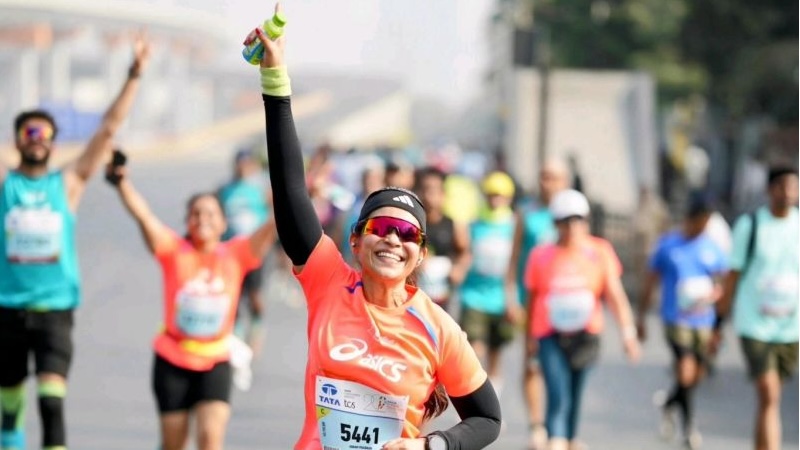
MUMBAI: The Tata Mumbai Marathon has long been more than a test of endurance, it’s a rare meeting point where India’s corporate corridors collide with the city’s streets. Last weekend, alongside elite athletes and first-time runners, several of India’s most recognisable industry professionals laced up their running shoes, swapping boardrooms for bib numbers and early-morning alarms for the thrill of the finish line.
From CXOs and founders to marketing leaders and media veterans, these professionals didn’t just run for medals: they ran for causes, personal milestones, and the sheer discipline the marathon demands. As they took to LinkedIn to reflect on sore muscles, mental grit and the quiet triumph of showing up, their posts offered a glimpse into what leadership looks like beyond office hours.
Here’s a look at the top industry names who ran the Tata Mumbai Marathon this year and what the race meant to them.

Neha Chouksey, vice-president, Agile Delivery, BNY Mellon
For Neha Chouksey, marathon running isn’t a side hobby, it’s an extension of how she leads. The Pune-based vice-president at BNY Mellon completed her second Tata Mumbai Marathon this weekend, marking her fifth full marathon overall, and approached the race with the same calm pragmatism she brings to enterprise-scale agile transformation.

“Mumbai isn’t a city. It’s a vibe,” Chouksey wrote after the run, capturing both the electric crowds and the unpredictability of race day. While the scenic route and encouragement from strangers powered her forward, the brutal humidity forced constant recalibration. This, she noted, wasn’t a day for chasing perfection but for adapting in real time—mentally and physically.
A special mention went to the Greater Mumbai Police for what she called “flawless execution” in a city that never slows down. But the bigger takeaway was philosophical: preparation may get you to the start line, she reflected, but mindset is what carries you to the finish. Progress isn’t always linear—consistency, however, always wins.
Afifa Ansari, brand equity and innovations, Tata Consumer Products
For Ansari, the Tata Mumbai Marathon was less about the stopwatch and more about soaking in the atmosphere. Making her marathon debut this weekend, the Tata Consumer Products marketer described the experience as “pure motivation,” powered by an electric mix of runners, cheering crowds and the unmistakable buzz of Mumbai.

Already active with regular tennis and now easing into running, Ansari called the marathon the perfect catalyst to stay committed. From the scale of participation to the energy lining the route, the race delivered exactly what she had hoped for and more.
A note of gratitude followed for Tata Consumer Products, which she credited for enabling a smooth, seamless experience. Judging by her post-race enthusiasm and talk of “stronger miles” and chasing the runner’s high, this first Tata Mumbai Marathon is unlikely to be her last.
Sonam Pradhan, head of media and digital marketing – South Asia, Kellanova (Kellogg’s)
For Sonam Pradhan, the Tata Mumbai Marathon was a quiet but powerful affirmation of discipline. Completing her second full marathon, the Kellanova media and digital marketing leader summed up the journey with characteristic restraint, moving from “can I?” to “I did—again.”

A certified sports nutritionist and long-time fitness enthusiast, Pradhan treats endurance as both a physical and mental practice, one that mirrors her approach to leadership and long-term brand building. The marathon, she suggests, isn’t about spectacle but about consistency: showing up, putting in the work, and trusting the process.
Parul Bajaj, managing director and partner, Boston Consulting Group
Parul Bajaj didn’t just run the Tata Mumbai Marathon: she dismantled a limit she hadn’t even allowed herself to imagine. Returning to running in 2024 after a five-year break, her only aim was consistency. No targets, no timelines, just the discipline of showing up.

That mindset shifted after a strong 2025 season, when her coach suggested a sub-two-hour half marathon was within reach. It was a belief Bajaj borrowed before she could own it herself. On race day, a last-minute route change and the addition of Mumbai’s coastal road forced runners to adapt mid-stride: a test not of speed, but composure.
She crossed the finish line in 1 hour 59 minutes and 40 seconds, a personal best, placing 12th in her category. For the BCG leader, the achievement went far beyond the clock. The race became a live lesson in how assumed boundaries, whether in leadership, strategy or life are often far more elastic than they appear.
Her takeaway was as sharp as it was reflective: breaking this barrier didn’t just change how she runs, it changed how she thinks about what’s possible. The only question now, she says, is which mental ceiling comes next.
Neelotpal Sahai, director, Indian equities and head, offshore advisory, HSBC asset management
For Sahai, the Tata Mumbai Marathon was less about a perfect run and more about honest progress. He finished the race knowing he had missed his personal target by a couple of minutes, but also with the quiet satisfaction of running strong, steady and controlled till the end.

The numbers still told a powerful story. Compared with last year, Sahai shaved off 19 minutes from his timing. It was the kind of improvement that doesn’t shout, but reshapes confidence mile by mile.
The day threw up an unexpected moment of joy too: Sahai found himself featured during the official telecast, a fleeting clip that felt surreal even to him. “Life has a better imagination than I do,” he reflected, with characteristic understatement.
His takeaway from the run was simple and resonant: “progress doesn’t always announce itself loudly, but when it’s built patiently and consistently, it quietly expands what you believe is possible.”
Sakshi Yadav, marketing manager, Publive
Sakshi Yadav crossed a defining personal milestone at this year’s Tata Mumbai Marathon, completing her first full marathon: 42.2 kilometres that tested resolve as much as endurance. The race, she admits, wasn’t kind from the start. Discomfort arrived early, turning every subsequent kilometre into a conscious decision to keep going.

What mattered most, though, was not ease or pace, but grit. Yadav finished strong, refusing to quit even when the body pushed back. Somewhere along the route, she discovered an unexpected coping strategy: smiling through the pain. It lightened the load, reminding her that resilience is as much mental as it is physical.
One of the race’s most emotional moments came at the finish line, where runners received two medals: one for themselves and one for their inspiration. Yadav’s second medal was always destined for her parents, both former marathon runners, whose example made this ambition feel achievable long before race day.
For Yadav, the marathon mirrored life and work alike: growth doesn’t come from perfect conditions, but from showing up on hard days and staying the course. In her words and her run, it was a clear reminder that progress, personal or professional, is always a marathon, never a sprint.
Meghraj W, national head collections, Tata Tele Business Services
For Meghraj W, the Tata Mumbai Marathon is no longer a novelty: it’s a ritual. Clocking his third appearance at the race, Meghraj took on the 21 kilometre half marathon once again, treating the distance less as a number and more as a personal statement.

His run unfolded against a very Mumbai backdrop: early morning streets, the sea breeze pacing alongside, and crowds that refused to let fatigue have the final word. Each kilometre, he notes, carried the imprint of disciplined training, sore legs, and the quiet conviction that limits are designed to be challenged.
What stands out in Meghraj’s reflection is a shift in focus: from speed to substance. This race, for him, was about consistency, resilience, and the willingness to show up year after year, even when the body protests. The half marathon has become a measure of growth, proof that strength compounds with persistence.
Three Tata Mumbai Marathons later, Meghraj sees the finish line not as closure but as confirmation: that beginning, again and again, is where real progress starts.
Lallit Sharrma, executive producer and CEO, Colosceum Media
For Lallit Sharrma, the Tata Mumbai Marathon is not a weekend pursuit, it’s a long-standing life practice. An athlete since childhood, Sharrma first turned to running in 2010, using the city’s toughest race as a way to steady himself amid Mumbai’s relentless pace. He has returned to the marathon year after year since.

Early morning runs, he says, offer clarity; long distances become meditative. Over nearly 17 years, marathon running has served as his most consistent teacher, instilling perseverance, patience and discipline: qualities that mirror the demands of building shows, teams and creative businesses in the entertainment industry.
Ashita Mittal, head of quality – South Asia, Unilever
The Unilever supply chain leader completed the 10 kilometres alongside Sumit, a partially blind runner whose journey, marked by medical setbacks, adaptation and grit, turned the race into a masterclass in resilience.

Crossing the finish line in 99 minutes, Mittal described the experience as gaining “100 plus inspirations”, spotlighting the quiet heroism that often defines the marathon’s most powerful stories. From daily yoga and high-altitude treks to running through nerve pain and preparing for eye surgery, Sumit’s determination reframed what endurance truly means.
For Mittal, whose career spans nearly two decades across Unilever, Nestlé and Johnson & Johnson, the run echoed a familiar leadership truth: progress is built not just on efficiency and systems, but on empathy, inclusion and the ability to show up for others, even when the odds are uneven.
Taken together, these runs reveal why the Tata Mumbai Marathon continues to resonate far beyond sport. For India’s industry leaders, the race became a rare equaliser: where titles dissolved, routines were disrupted, and progress was measured not in quarterly outcomes but in kilometres earned the hard way.
Whether chasing personal bests, running for inclusion, or simply showing up despite fatigue and doubt, each story echoed the same truth: leadership is built through consistency, resilience and the willingness to stay the course when conditions are imperfect. In a city that never slows down, the marathon offered a reminder that the most meaningful wins: on the road or in the boardroom are the ones that demand patience, discipline and heart.





Brands
Dunkin’ Donuts to exit India as Jubilant FoodWorks ends 15-year franchise deal
The quick service restaurant giant is ending a 15-year franchise partnership with the American doughnut chain, even as it renews its Domino’s agreement for another 15 years

NOIDA: Dunkin’ is done in India. Jubilant FoodWorks Ltd, the country’s leading quick service restaurant operator, has decided not to renew its franchise agreement with the American coffee and doughnut chain, and will wind down its Indian stores in a phased manner before December 31, 2026, bringing a 15-year partnership to a quiet, loss-laden close.
The decision, approved by JFL’s board on March 30, 2026, ends a relationship that began with a Multiple Unit Development Franchise Agreement signed on February 24, 2011. JFL will now evaluate and undertake what it described in a regulatory filing as the “rationalisation and/or cessation of certain operations and/or sale, transfer or disposal of assets and/or assignment or transfer of franchise rights,” all in consultation with Dunkin’s brand owners and strictly within the terms of the original agreement.
The numbers tell the story bluntly. In the financial year 2024-25, Dunkin’ India posted a revenue of Rs 37 crore against a loss of Rs 19 crore — a haemorrhage that was always going to test the patience of a parent company recording revenues of Rs 6,104 crore and a profit of Rs 194 crore in the same period. Doughnuts, it turns out, were never going to move the needle.
The contrast with JFL’s handling of its other marquee franchise could hardly be sharper. Even as it walks away from Dunkin’, the company has just doubled down on Domino’s, signing a fresh Master Franchise Agreement on March 31, 2026, granting it exclusive rights to develop and operate Domino’s Pizza stores in India for 15 years, with an option to renew for a further 10.
JFL, incorporated in 1995 and promoted by the Bharatia family, operates a network of more than 3,500 stores across six markets — India, Turkey, Bangladesh, Sri Lanka, Azerbaijan and Georgia. Its portfolio includes Domino’s and Popeyes on the global side, and two home-grown brands: Hong’s Kitchen and COFFY, a café brand in Turkey.
For Dunkin’, India was always a stretch. The brand never quite cracked the cultural code in a market where filter coffee and chai command fierce loyalty and where the doughnut remains, at best, an occasional indulgence rather than a daily habit. Fifteen years, mounting losses and a parent with better things to spend its capital on was always going to be a difficult equation to solve.
The doughnut has had its last day. The pizza, however, is staying.






