Brands
Tata.ev’s ‘Perry Powerful Punch’ award breaks the internet

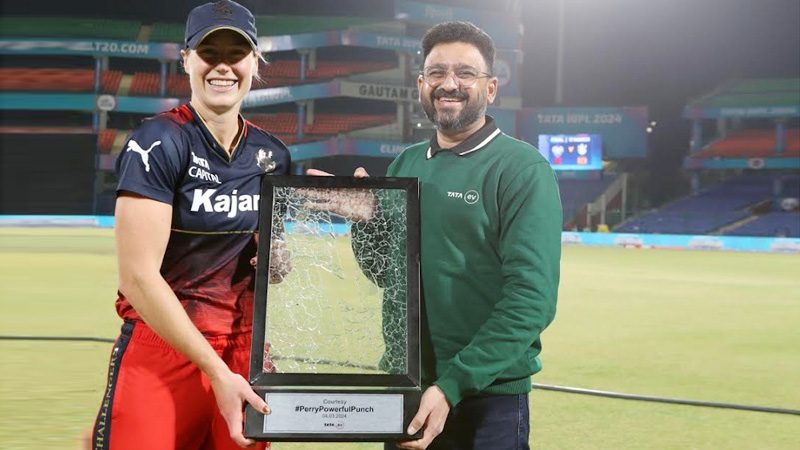
Mumbai: While the Women’s Premiere League reached great heights in shattering biases in the world of cricket, we saw Ellyse Perry of Royal Challengers Bangalore (RCB) shatter not only stereotypes about women in the sport, but also the window of the title sponsor’s display car, the TATA.ev.
Perry’s sixer broke the car’s glass window on 4 March.
FCB Kinnect & Tata.ev decided to take this moment of brouhaha and turn it into a memorable triumph for the cricketer, by bestowing her with the ‘Perry Powerful Punch’ award – which also carried the date on which she broke the glass.

What’s special about this award is that it was carefully crafted with the shattered glass of the very window that Perry broke.
The internet was in awe of the gesture by the brand, which made headlines in several sports and other publications.
Taking to social media, the brand said, “You did what every kid playing cricket on the streets, dodging parked cars, dreams of doing but never actually dares. Breaking that display car wasn’t just a jaw-dropping moment; it was a sweet, sweet nod to the mischievous joy hidden in the heart of every cricket lover. Cheers to you, the window-breaking warrior of the #TATAWPL 2024!”
Tata.ev encouraged Perry to never break her spirit for anything, and especially not over broken glass.
FCB Kinnect national creative director Kartikeya Tiwari said, “Contemporary brands are built as much on unplanned moments, as on planned ones. The WPL is bigger than just a cricket tournament – it’s a celebration of resilience and talent. This incident was the perfect epitome of how women in India are shattering the glass ceiling. We simply wanted to immortalise this by giving Perry her flowers and not taking the genuineness out of this moment.”







Brands
KKR sixes to power EV charger rollout under VIDA campaign
Cricket meets clean mobility as big hits spark India’s charging growth
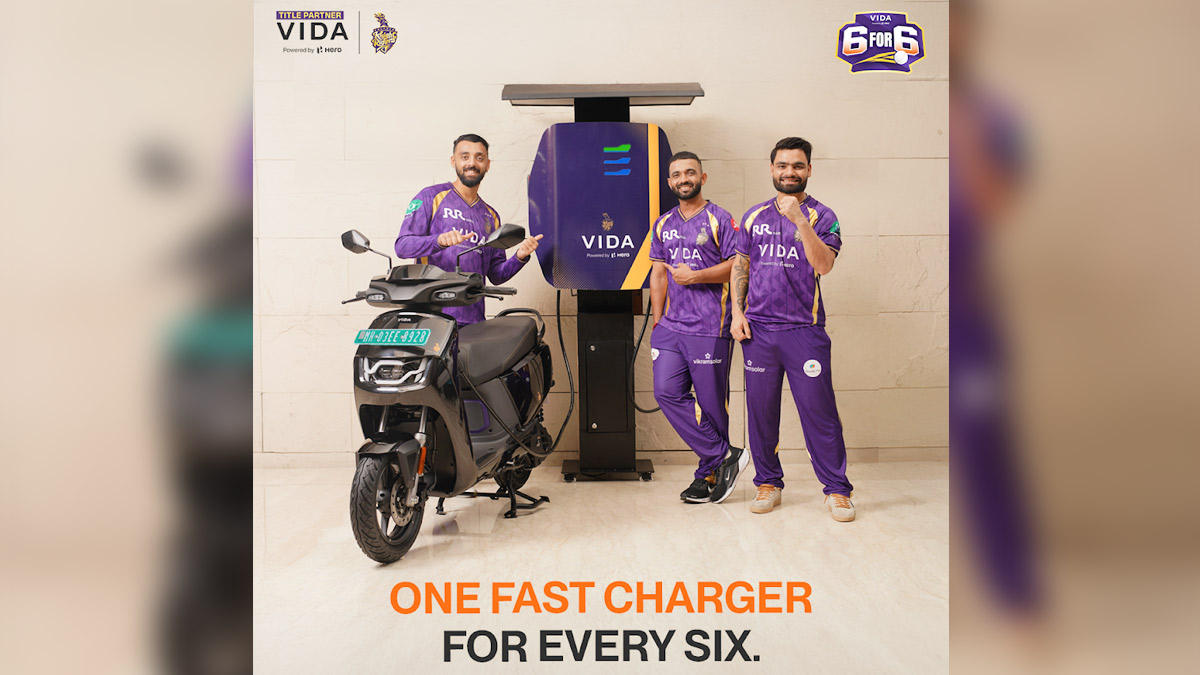
NEW DELHI: VIDA, the electric mobility arm of Hero MotoCorp, has teamed up with Kolkata Knight Riders to launch a campaign that turns cricketing flair into real-world impact.
Titled ‘6 for 6’, the initiative promises to install a 6kW fast EV charger for every six hit by KKR during the ongoing Indian Premier League season. The idea is simple but powerful, as each big hit on the field contributes directly to expanding India’s fast-charging infrastructure.
The campaign builds on VIDA’s growing network, which already spans over 5,300 fast-charging points across more than 430 cities. With EV adoption gaining pace, the brand is using cricket’s mass appeal to accelerate both awareness and infrastructure growth.
Explaining the thinking behind the move, Hero MotoCorp emerging mobility business unit chief business officer Kausalya Nandakumar said, “Cricket has an incredible ability to unite and inspire millions across the country. With the ‘6 for 6’ campaign, we are turning every big hit on the field into a step towards a cleaner and a more accessible mobility future.”
She added that VIDA’s expanding fast-charging network and removable battery technology are designed to make EV ownership more convenient and practical for everyday users.
From the franchise’s side, the campaign is also about giving on-field moments a larger purpose. Kolkata Knight Riders chief executive officer Venky Mysore said, “The ‘6 for 6’ campaign exemplifies the potential of sport as a platform for meaningful, real-world impact. By linking every six to the expansion of EV charging infrastructure, this partnership transforms fan excitement into tangible progress.”
As part of the rollout, VIDA has introduced co-branded charging stations in KKR’s signature colours, with a flagship installation unveiled alongside team players. The chargers are designed for quick top-ups, powering VIDA scooters from zero to 80 percent in about an hour, while also being positioned along key highways to support longer journeys.
The initiative also taps into VIDA’s removable battery system, which allows users to charge using standard household plug points, adding flexibility to the charging ecosystem.
By blending the thrill of cricket with the urgency of clean mobility, VIDA and KKR have found a neat way to make every six count twice, once on the scoreboard and again on India’s road to an electric future.








