MAM
TAM spots changes in digital landscape

MUMBAI: The television broadcasting landscape is set to change in India as consumers tend to pay for the channels they like to watch. Kids, sports and general entertainment channels will provide television networks the entry points into television homes as India shifts to digital delivery across the country.
“Kids, sports and GECs will be the staple entry points into homes,” said L V Krishnan, CEO of TAM Media Research, while releasing the findings and learnings from the implementation of the first phase of digitisation in the four metros of Mumbai, Delhi, Kolkata and Chennai.
Niche and smaller channels will be beneficiaries and long tail channels will come into play. “There is an opportunity for small and niche channels. Marketing and sticky content will be key,” said Krishnan.

Network channels will have a distinct advantage in the digital play as they can “cross-pollinate” their individual channels through their other channels. Standalone channels would be at a disadvantage as they do not have a platform to cross promote through network usage.
“The independent channels will want to join a network. The trend will be for channels to bunch up,” said Krishnan.
Dwelling on some trends around the digitisation deadline, Krishnan said television viewing remained stable during the period the data was not published but digitisation led to a spike in the time spent on television. Niche and smaller channels gained from digitisation.
How does the digital universe pan out?
According to the TAM survey conducted in the four metros, 93 per cent of television homes in Mumbai have been digitised (up from 35% when TAM and industries suspended reporting on ratings for nine weeks), 97 per cent in Delhi (from 26%) and 70 per cent in Kolkata (18%). The digitisation in Chennai has remained at 26 per cent (16%) as the Madras High Court had initially stayed digitisation in Chennai and will be hearing further arguments on petitions against digitisation in the last week of this month.
“Chennai is a peculiar case as digitisation has not moved up. We don‘t know what the situation look like. But overall, there has been a massive stride into digitisation. Mumbai and Delhi have a small portion left but this is because of non availability of set-top boxes,” explained Krishnan.

Krishnan said the universe of television homes shrinking on account of some TV homes not being digitised is estimated to be 5 per cent in Mumbai, 3 per cent in Delhi and 10 per cent in Kolkata. The total cable and satellite TV homes in Mumbai are 4.5 million, in Delhi 3.8 million, in Kolkata 3.2 million and in Chennai 1.9 million.
TAM has installed its peoplemeters in 525 television homes in Mumbai, 470 in Delhi, 370 in Kolkata and 280 in Chennai. Starting Q1 2013, the panels in Mumbai and Delhi will see an additional fresh recruitment of 400 homes in SEC AB segment. Other centre’s – Bangalore, Kolkata, Hyderabad and Chennai – together will add another 250 homes in SEC AB segment.
Krishnan said,, “The concentration on Sec AB is probably because that is the segment the advertisers are interested in. Since the advertisers are looking at the topline, the broadcasters are doing that too, and thus, that is where research is headed.”
The second phase of digitisation is already showing an upward swing. Markets like Bangalore, Hyderabad, Punjab, Gujarat and Kerala are seeing increasing penetration. “We will capture this when we release our update on digitisation across the country in the first week of January,” Krishan said.
TAM‘s reporting to resume
TAM, India‘s sole television measurement ratings agency, had suspended reporting of viewership data for a period of nine weeks starting from 7 October (week 41) and ending on 8 December (week 49), as the government implemented the digitisation deadline of 1 November in the four metros. The data for this period would be released on 19 December along with the data for 9-15 December (week 50).
TAM will not be reporting viewership data on analogue homes in Mumbai, Delhi and Kolkata from now on (areas where digitisation falls in first phase. Non-metropolitan areas in Mumbai and Kolkata do not fall in this phase and will continue to get ratings data on analogue systems), but continue to provide the data from Chennai where analogue television signals continue to be delivered to television homes.
Channel Viewing Changes:
- Small or niche channels were net gainers of share following digitisation at the cost of bigger channels.
- Nearly 60 per cent of channels with a pre-DAS share between 0 and 0.5 per cent had about 4 per cent net share gain, while bigger channels lost more than 2 per cent share in Mumbai.
- Delhi channel share movement is very similar to that of Mumbai but ‘net share‘ distribution sharper at the ends.
- 255 channels in Mumbai have some non-zero viewership in at least one of the two periods (pre and post DAS).
- Around half the channels both in Mumbai and Delhi have gained share.
MUMBAI

DELHI





Brands
KKR sixes to power EV charger rollout under VIDA campaign
Cricket meets clean mobility as big hits spark India’s charging growth
NEW DELHI: VIDA, the electric mobility arm of Hero MotoCorp, has teamed up with Kolkata Knight Riders to launch a campaign that turns cricketing flair into real-world impact.
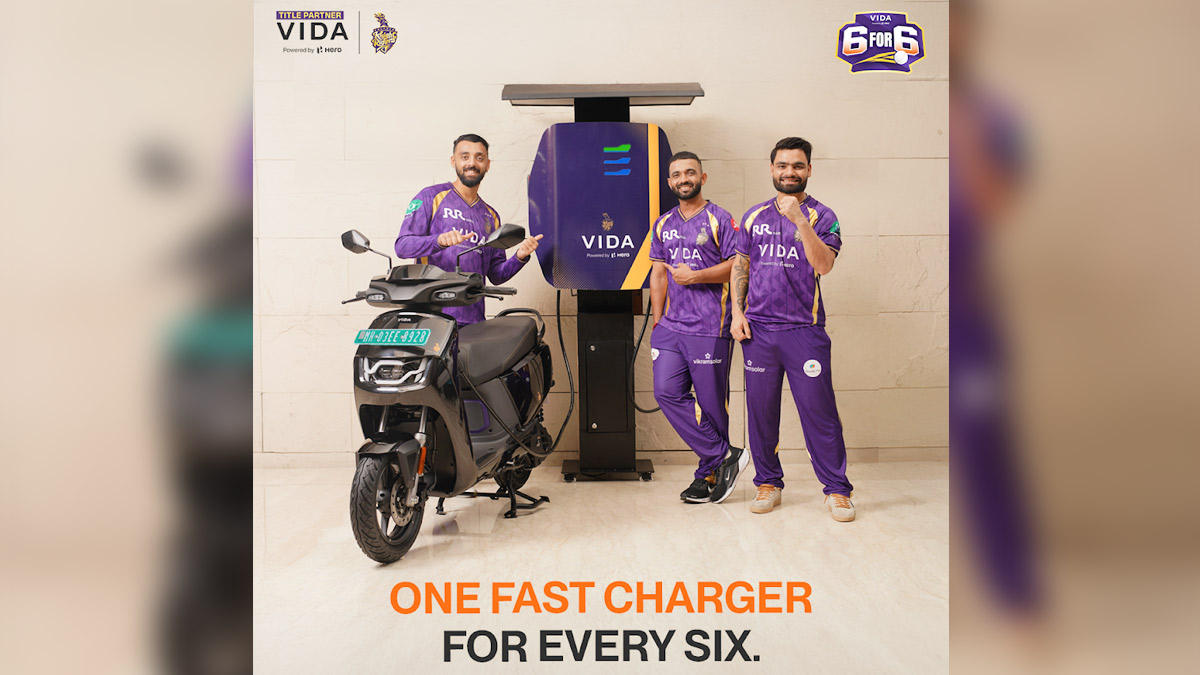
Titled ‘6 for 6’, the initiative promises to install a 6kW fast EV charger for every six hit by KKR during the ongoing Indian Premier League season. The idea is simple but powerful, as each big hit on the field contributes directly to expanding India’s fast-charging infrastructure.
The campaign builds on VIDA’s growing network, which already spans over 5,300 fast-charging points across more than 430 cities. With EV adoption gaining pace, the brand is using cricket’s mass appeal to accelerate both awareness and infrastructure growth.
Explaining the thinking behind the move, Hero MotoCorp emerging mobility business unit chief business officer Kausalya Nandakumar said, “Cricket has an incredible ability to unite and inspire millions across the country. With the ‘6 for 6’ campaign, we are turning every big hit on the field into a step towards a cleaner and a more accessible mobility future.”
She added that VIDA’s expanding fast-charging network and removable battery technology are designed to make EV ownership more convenient and practical for everyday users.
From the franchise’s side, the campaign is also about giving on-field moments a larger purpose. Kolkata Knight Riders chief executive officer Venky Mysore said, “The ‘6 for 6’ campaign exemplifies the potential of sport as a platform for meaningful, real-world impact. By linking every six to the expansion of EV charging infrastructure, this partnership transforms fan excitement into tangible progress.”
As part of the rollout, VIDA has introduced co-branded charging stations in KKR’s signature colours, with a flagship installation unveiled alongside team players. The chargers are designed for quick top-ups, powering VIDA scooters from zero to 80 percent in about an hour, while also being positioned along key highways to support longer journeys.
The initiative also taps into VIDA’s removable battery system, which allows users to charge using standard household plug points, adding flexibility to the charging ecosystem.
By blending the thrill of cricket with the urgency of clean mobility, VIDA and KKR have found a neat way to make every six count twice, once on the scoreboard and again on India’s road to an electric future.








