Ad Campaigns
Swiggy Dineout unveils “Sharma Ji Ki Beti” campaign

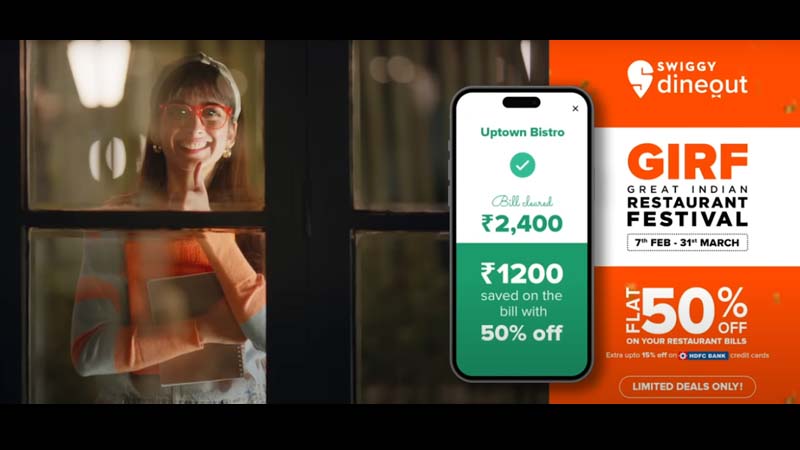
Mumbai: Swiggy Dineout recently launched its latest campaign, “Sharma Ji Ki Beti,” aimed at revolutionising the dining-out experience for Indian consumers. The campaign was conceptualised by Toaster India, a leading independent creative agency, for Swiggy Dineout. The campaign’s inception aligns with Swiggy Dineout’s strategic initiative to amplify its presence during the Great Indian Restaurant Festival (GIRF), one of the brand’s flagship events of the year.
At its core, the “Sharma Ji Ki Beti” campaign embodies a fresh narrative designed to foster a deeper connection between Swiggy Dineout and the dining-out culture in India. With an overwhelming majority of dining transactions occurring offline, the campaign presents an opportunity to seamlessly integrate Swiggy Dineout into the Indian dining lexicon. Beyond facilitating transactions, the campaign aspires to embed Swiggy Dineout into the fabric of the Indian dining-out ritual. The overarching goal is to position Swiggy Dineout as the go-to platform for pre-dining-out considerations, emphasizing early decision-making moments. The creative narrative of the campaign draws inspiration from the timeless Indian parental practice of comparing children, encapsulated in the colloquialism “Sharma Ji Ki Beti.” This resonant cultural insight serves as the springboard for Swiggy Dineout’s innovative approach to dining-out validation.
Swiggy VP, marketing Aparna Giridhar said, “This creative route plays up a new social validation of using Swiggy Dineout before stepping out as the right way to eat out, especially during our biggest annual festival. By humorously portraying this, we encourage users to emulate ‘Sharma ji ki Beti’ for seeking the best dining benefits in town. Building on our core mission of providing unparalleled convenience to consumers, this campaign highlights Swiggy Dineout’s proposition of seamless & joyful dining with maximum savings.”

The campaign debuts alongside Swiggy Dineout’s flagship offering of flat 50% off on dining bills at select premium brands during the Great Indian Restaurant Festival. Subsequent quarters will witness the rollout of multiple films, solidifying “Sharma Ji Ki Beti” as the cornerstone of Swiggy Dineout’s communication strategy.
“Swiggy Dineout is a dream client for any creative team and we’re so kicked we got to collaborate and create a campaign with them. Humour and a strong insight are given with a brief like this and we hope to do a lot more with Sharmaji ki beti as a character” said Toaster India chief creative officer Ira G.
Swiggy Dineout’s “Sharma Ji Ki Beti” campaign marks a paradigm shift in dining-out experiences, urging consumers to explore new culinary horizons with Swiggy Dineout as their steadfast guide. The campaign’s resounding success is evident with over 2.9 million views on YouTube, reflecting its widespread resonance among audiences.




NATIONAL: Amazon Ads has laid out a sharply tech-led vision for the advertising industry in 2026, arguing that artificial intelligence, streaming TV and creator partnerships will combine to turn brand building into a more precise, performance-driven business.
At the heart of the shift, the company says, is the fusion of AI with Amazon’s vast trove of shopping, browsing and streaming signals, allowing advertisers to move beyond blunt reach metrics to campaigns designed around real customer behaviour.
“The future of advertising is not about reaching more people, but the right people with messages that resonate,” said Amazon Ads India head and vice president Girish Prabhu. “By combining AI with deep customer insights, we help brands move from broadcasting campaigns to having meaningful conversations wherever audiences spend their time.”
One of the biggest changes, according to Amazon Ads, will be the collapse of the wall between media planning and creative development. Retail media, powered by first-party data, is increasingly shaping everything from brand discovery to final purchase, pushing marketers to design campaigns around audience insight rather than internal instinct.
AI is also moving from a support tool to a creative engine. Agentic AI, which automates and accelerates production, is expected to make high-quality creative accessible even to small businesses, compressing weeks of work into hours and giving challengers the ability to compete with larger brands on speed and scale.
Behind the scenes, AI-driven analytics will take on a bigger role in campaign optimisation, identifying patterns, spotting opportunities and recommending actions that would previously have required teams of analysts.
Streaming TV is another big battleground. With India’s video streaming audience now above 600 million and connected TV users at 129.2 million in 2025, advertisers are set to treat streaming not just as a branding channel but as a performance engine, measured increasingly by sales, sign-ups and bookings rather than just reach.
Finally, Amazon Ads sees creators and contextual advertising reshaping how brands tell stories. Creators will act less like influencers and more like long-term partners, while scene-aware ads on streaming platforms will allow brands to insert hyper-relevant offers into the flow of what viewers are watching.
Taken together, Amazon Ads argues, these shifts mark a move towards advertising that is both more human and more measurable, where AI handles the complexity, and creativity does the persuading.






