MAM
Sunil Gupta lectures AI’s transformative role at IAA Conversations

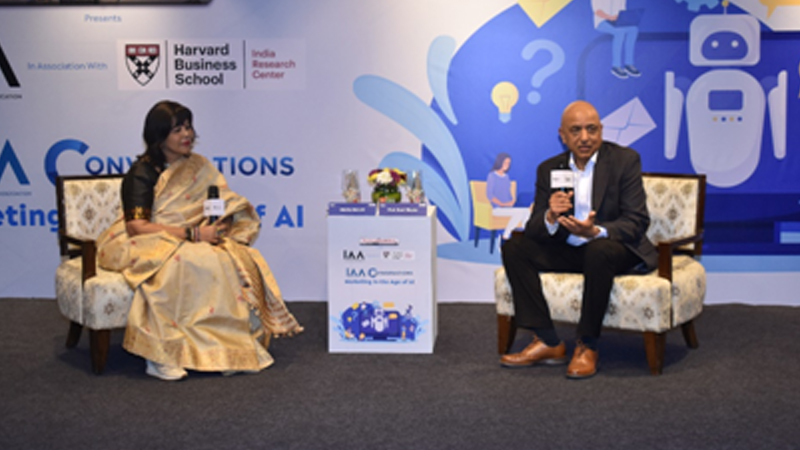
MUMBAI: Artificial intelligence isn’t just a buzzword anymore—it’s shaping the way industries think, act, and innovate. At the recent IAA Conversations in Mumbai, Harvard Business School Edward W. Carter professor of business administration, Sunil Gupta delved into AI’s transformative power in marketing, branding, and beyond. The event, titled ‘Marketing in the Age of AI’, was moderated by VML India CEO and an IAA Mancom member, Babita Baruah and organised in association with Harvard Business School.
The session kicked off with Gupta highlighting the disruptive nature of AI and how businesses across sectors are adapting to leverage it. “Almost every business, not just advertising, is thinking about AI and how it will affect their operations,” he noted.
He outlined three ways AI is transforming industries:

1 Augmenting and automating tasks to increase efficiency.
2 Expanding and growing capabilities with innovative tools.
3 Disrupting and experimenting, encouraging businesses to push creative boundaries.
Gupta cited tech giants like Facebook and Google, explaining their use of AI to automate ad creation, audience targeting, and budget allocation.
Gupta emphasised the unprecedented access to consumer data in today’s digital age. “It’s not just about what they buy or search for. It’s also about what they do on social media or why they contact a call centre,” he observed.
AI, he argued, offers the ability to synthesise qualitative and quantitative data to create a 360-degree view of consumers. It enables brands to map customer journeys, uncover pain points, and even predict behaviours. “AI can act as a smart research assistant, helping brands connect the dots across vast datasets,” he added.
Gupta also introduced the concept of synthetic consumers, personas created using past data to simulate market research scenarios. This approach offers quick insights at early product development stages.
Gupta didn’t shy away from discussing the hurdles of AI adoption. “The use of AI will increase competition as it lowers entry barriers, making it easier for anyone to experiment and innovate,” he said.
However, he flagged the risk of short-term thinking in advertising. “With AI’s ability to experiment and fine-tune ROI, there’s a danger that brands might focus too much on immediate results and lose sight of long-term brand building. And advertising is all about building brands,” he cautioned.
Addressing how organisations should approach AI, Gupta urged companies to embrace the technology actively. “You can’t learn to swim by watching someone else. You need to dive into the pool yourself,” he remarked.
He recommended dedicating time to understanding AI’s potential and limitations, noting that no technology has ever reduced workload—it has only shifted it. “Jobs don’t go away, tasks do. AI will eliminate non-value-added tasks, allowing professionals to focus on more impactful work,” he asserted.
On a closing note, Gupta reminded attendees of the importance of starting with the problem, not the technology. “Sometimes, we get so caught up in the technology that we forget the problem we’re trying to solve,” he said, adding that copyright and IP protection will remain critical concerns in an AI-driven world.
IAA India Chapter president, Abhishek Karnani underscored the event’s relevance, “At the India Chapter of the International Advertising Association (IAA), we take pride in being the only body in the industry that brings together creative agencies, media agencies, and media under one roof. This year, our focus is clear—Conversations, Skilling, and Artificial Intelligence—all aimed at preparing us for the opportunities and challenges ahead.”
Organised with support from Free Press Journal as the presenting partner, the IAA Conversations event highlighted the intersection of technology, creativity, and strategy, offering a forward-looking perspective on how AI is reshaping industries.




MAM
Beacon Group appoints Dr Rajesh Patel as Group CEO
36-year healthcare veteran to lead Beacon Diagnostics, Vector Biotek, Biogeny.
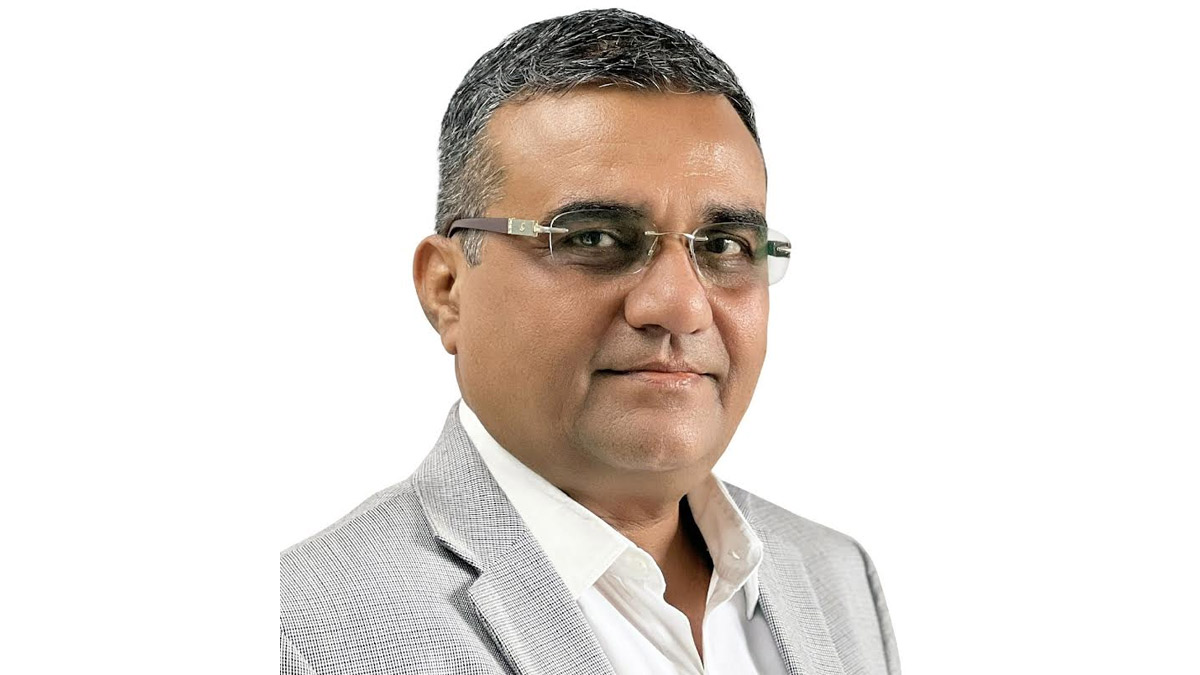
MUMBAI: A new chief, a fresh diagnosis and a sharper prescription for growth. Beacon Group has appointed Dr Rajesh Patel as its Group Chief Executive Officer, effective April 1, 2026, signalling a decisive push to scale its presence in the diagnostics and IVD space. Patel steps into the role with 36 years of experience across the healthcare and diagnostics industry, bringing a career shaped by leadership roles spanning sales, marketing, business development and operational strategy. His mandate is both expansive and precise: to steer the group’s overall strategic direction while tightening coordination across its three core entities Beacon Diagnostics, Vector Biotek and Biogeny Diagnostics.
In practical terms, that means driving cross-company synergies, accelerating market expansion and strengthening organisational capability areas increasingly critical as diagnostic players compete for scale in a fragmented yet rapidly evolving healthcare ecosystem. The group is positioning itself to capture unmet demand across chain laboratories, key accounts and standalone labs, segments that remain underserved despite growing diagnostic needs.
The appointment comes at a time when the In Vitro Diagnostics (IVD) sector in India is entering a more competitive and innovation-led phase, with companies focusing not just on product pipelines but also on service delivery, integration and customer-centric models. Beacon’s leadership appears to be betting that Patel’s execution-focused approach can help translate ambition into operational momentum.
Welcoming the appointment, Chairman Dr D K Joshi described Patel’s induction as a strategic move aligned with the group’s long-term vision, emphasising the role of leadership depth in navigating the next phase of growth.
For Beacon Group, the message is clear, in a sector where precision matters, leadership is the new differentiator—and this appointment is intended to set the tone for what comes next.






