MAM
Stayfree launches bold new campaign with Kiara Advani


MUMBAI: Feminine hygiene brand Stayfree has unveiled its latest advertising campaign for Stayfree Secure XL featuring Hindi film star Kiara Advani.
The campaign challenges the societal expectation that women should ‘act normal’ during menstruation despite physical discomfort and anxiety about leakage.
In the film, Advani reflects on how her acting career began not on screen, but during her first period when she pretended to feel comfortable. The narrative highlights common struggles experienced by millions of women, including maintaining cheerful appearances despite constant worry about staining and coping with skin irritation from sanitary products.

The campaign promotes Stayfree Secure XL’s LeakLock technology and clinically tested non-irritant cover, which offers up to 12 hours of protection. Its central message—”When pads are comfortable, periods are comfortable”—aims to free women from the burden of pretending during menstruation.
Stayfree maker Kenvue vice-president marketing Manoj Gadgil said: “Girls and women put up an act braving through their days as normal. It is a period reality we acknowledge, and that’s why we are committed to offering superior products that provide comfort and long-lasting protection.”
Creative directors Harshada Menon and Siddhesh Khatavkar from DDB Mudra explained the campaign concept: “We used the creative device of an actor talking about acting on periods to deliver a strong message.”
Advani, who serves as the brand ambassador, added: “I still remember my first period—it was a new chapter in my life, but it also meant learning to ‘act’ like everything was normal despite the discomfort.”
The campaign launches on 25 February across television networks and social media platforms including YouTube and Meta, with versions available in multiple regional languages.
Stayfree is owned by Kenvue, the world’s largest pure-play consumer health company, whose portfolio includes brands such as Aveeno, Johnson’s, Listerine, Neutrogena and Tylenol.
Campaign credits:
Credits:
* Brand – Stayfree
* Agency – DDB Mudra Group
* Creative – Rahul Mathew, Harshada Menon, Siddhesh Khatavkar, Jyotsna Mohanty, Baskar Thevar Subbiah, Jena Shah, Kanchi Undevia, Darshika Kapadia
* Business – Saad Khan, Pooja Mehta, Snehal Wasnikar, Kanchan Joshi
* Strategy – Shashank Lanjekar, Atreyi Nag, Tanvi Agrawal
* Films – Jay Gaikwad, Alisha Dsouza
* Production House – The Magic Box
* Director – Abhishek Verman
* Producers – Srikanth Kumar, Mayur Patel
* Associate Producers – Neeraj Saini
* Editor – Utsav Bhagat
* Associate Editor – Ankit
* DOP – Satchit Paulose
* Production Designer – Amrita Singh
* Music Director – Rahul Pasi (Jamroom)
* Post Producer – Shiv Shankar Yadav
To watch the Kiara Advani acting Stayfree napkin TVC click here:
https://www.youtube.com/watch?v=Xq-6bxG9sro&t=5s







MAM
Beacon Group appoints Dr Rajesh Patel as Group CEO
36-year healthcare veteran to lead Beacon Diagnostics, Vector Biotek, Biogeny.
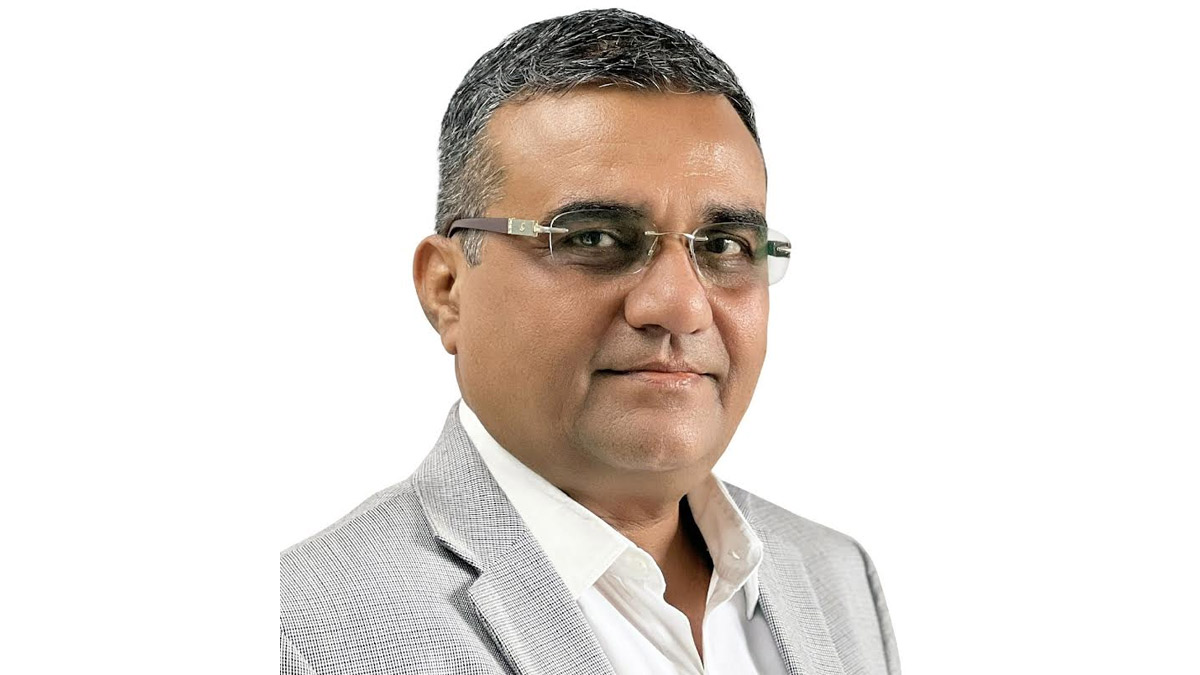
MUMBAI: A new chief, a fresh diagnosis and a sharper prescription for growth. Beacon Group has appointed Dr Rajesh Patel as its Group Chief Executive Officer, effective April 1, 2026, signalling a decisive push to scale its presence in the diagnostics and IVD space. Patel steps into the role with 36 years of experience across the healthcare and diagnostics industry, bringing a career shaped by leadership roles spanning sales, marketing, business development and operational strategy. His mandate is both expansive and precise: to steer the group’s overall strategic direction while tightening coordination across its three core entities Beacon Diagnostics, Vector Biotek and Biogeny Diagnostics.
In practical terms, that means driving cross-company synergies, accelerating market expansion and strengthening organisational capability areas increasingly critical as diagnostic players compete for scale in a fragmented yet rapidly evolving healthcare ecosystem. The group is positioning itself to capture unmet demand across chain laboratories, key accounts and standalone labs, segments that remain underserved despite growing diagnostic needs.
The appointment comes at a time when the In Vitro Diagnostics (IVD) sector in India is entering a more competitive and innovation-led phase, with companies focusing not just on product pipelines but also on service delivery, integration and customer-centric models. Beacon’s leadership appears to be betting that Patel’s execution-focused approach can help translate ambition into operational momentum.
Welcoming the appointment, Chairman Dr D K Joshi described Patel’s induction as a strategic move aligned with the group’s long-term vision, emphasising the role of leadership depth in navigating the next phase of growth.
For Beacon Group, the message is clear, in a sector where precision matters, leadership is the new differentiator—and this appointment is intended to set the tone for what comes next.






