Brands
Startup OYO features in LinkedIn’s Top Attractors List

MUMBAI: India’s branded network of hotels OYO has become the youngest Indian startup to be included in the LinkedIn Top Attractors list for India in 2016. Ranked at number 16 overall and 6th in the rank of home-grown Indian companies, OYO is the only hospitality company among the 25 companies featured. The list also features biggies such as Amazon, Google and Flipkart.
Speaking about the achievement, OYO CEO and founder Ritesh Agarwal, CEO said, “We are ecstatic at being recognized as a top attractor by LinkedIn. People and technology form the crux of our operations and this survey along with its methodology represents the best convergence of the two. OYO is a preferred employer on account of being an agent of transformation. In the very short time since our launch, we have driven positive impact in the hospitality sector as well as the experience of lakhs of Indian travellers. The OYO DNA is all about being innovative, agile and responsive. This recognition further validates our belief in our vision of becoming the most-loved hotel brand in the world.”
The Top Attractors list is the first ranking of its kind to be based entirely on actions of LinkedIn users. According to LinkedIn, the 25 companies featured on the list are the best in India at attracting and keeping top talent. OYO pipped eCommerce companies such as MakeMyTrip and Zomato, and veterans such as Cisco, Reliance and Accenture, that are also featured in the same list.

Globally, the list featured companies such as Apple, Facebook and Uber. LinkedIn partnered with Censuswide Research to carry out an online survey of 6,266 workers between 18 May and 23 May 2016. The countries surveyed were Australia, Brazil, France, India, UK and USA.
The list comprises companies where people most eagerly want to land jobs, and stay in them, as determined by 12 metrics that measure online actions taken by LinkedIn’s members. Among those metrics are the number of views and applications per job posting on LinkedIn and other career sites, the number of views of a company’s career page, and employee retention statistics as measured through profile updates.
In just three years since its inception, OYO says that it has managed to expand its network to include 70,000 rooms in 180 Indian cities, with 2.3 million room-nights booked in the first quarter of 2016. CB Insights has cited OYO as one of the top 50 startups most likely to next reach unicorn status.
OYO’s vision is to become the world’s most preferred and trusted hotel brand. It is backed by the world’s leading investors including the SoftBank Group, Greenoaks Capital, Sequoia Capital and Lightspeed India.
OYO has partnered with IRCTC, Airtel, Samsung, Lenovo, Biotique, Cleartrip, Itzcash, FreeCharge, Mobikwik, Peppertap and Grofers to deliver a seamless and standardized experience to guests.







Brands
Wellbeing Nutrition ropes in Malavika Mohanan as brand ambassador
Actor fronts Marine Collagen and Skin Fuel Glutathione portfolio.
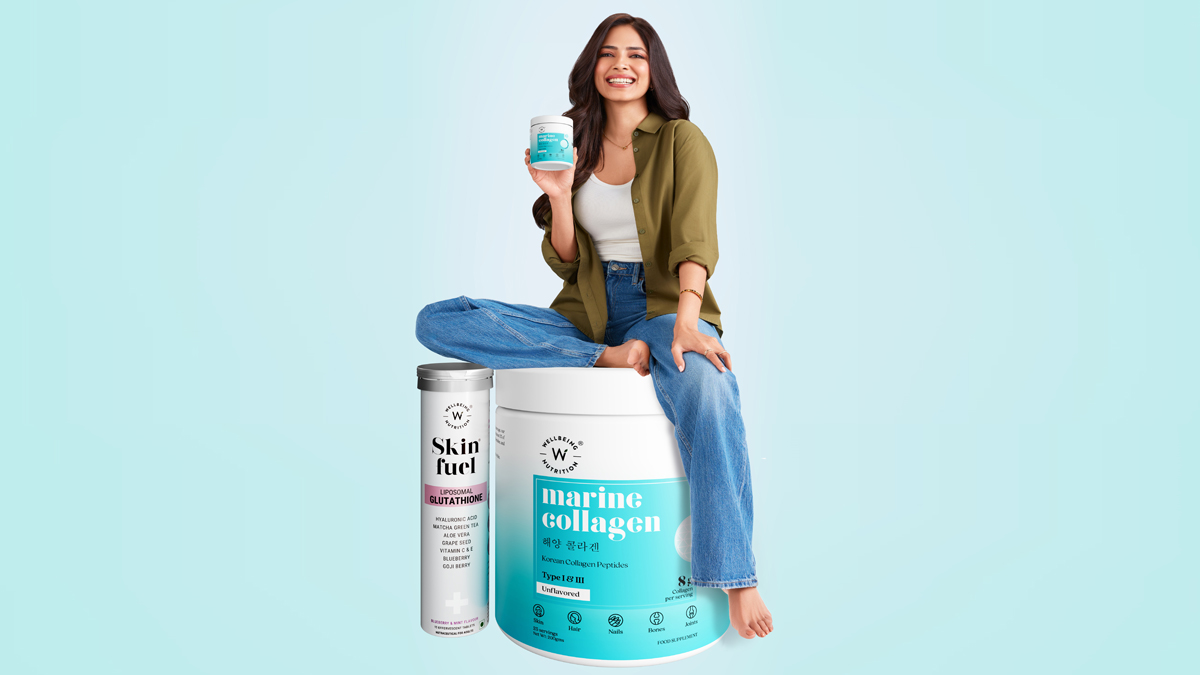
MUMBAI: Malavika Mohanan just became the face of inner glow because when your skincare starts in the bottle instead of the jar, even beauty gets a glow-up from the inside out. Wellbeing Nutrition has appointed acclaimed actor Malavika Mohanan as brand ambassador for its premium Korean Marine Collagen and Skin Fuel Glutathione range. The move signals a deliberate shift in the Indian ingestible beauty segment from surface-level routines to foundation-level nutrition that supports skin health from within.
The campaign positions collagen as the essential “beauty protein” that maintains elasticity and firmness, with daily supplementation reframed as a consistent ritual rather than a quick cosmetic fix. It aims to simplify the science behind collagen and build awareness around long-term skin nourishment.
Wellbeing Nutrition co-founder Saurabh Kapoor said, “In India, collagen is still largely viewed through a cosmetic lens, associated with glow and quick fixes. In reality, it is the primary structural protein of the skin, and we begin losing nearly 1 per cent of it every year in the late 20s. Yet a significant number of consumers remain unaware of its foundational role in long-term skin health. Our goal is to shift the conversation from fixing visible signs to feeding the foundation.”
Malavika Mohanan added, “For me, skincare has always been about consistency and taking care of myself in ways that go beyond just what I apply on my skin. I love the idea of supporting skin health from within, and that’s what drew me to Wellbeing Nutrition’s Marine Collagen and Skin Fuel Gluta.”
The Korean Marine Collagen uses nano-hydrolyzed peptides for better bioavailability, while Skin Fuel Glutathione complements the inside-out approach. The portfolio targets structure, brightness and resilience over time, backed by clinical research.
The ambassador announcement kicks off a broader collagen-focused roadmap for the brand, with planned innovations across formats and functional blends.
In an era where beauty routines are getting deeper than skin, Wellbeing Nutrition isn’t just selling supplements, it’s selling the quiet power of feeding your glow from the inside, one daily scoop at a time.







