MAM
Star Sports campaign for Oz series focuses on new Team India

MUMBAI: As the India-Australia series approaches, Star Sports has launched a full-fledged campaign, with the core theme ‘Asli Test Baaki Hai‘, to promote the India-Australia Test series which gets under way in Chennai on 22 February.
McCann Worldwide Tag Ideation has designed the campaign for the series called as Border-Gavaskar Trophy. The television ads in the campaign have been shot by Red Ice Films.
The campaign is based on the concept that for Indians to idolise next generation of cricketers they need to prove their mettle on field with the Test series against Australia. It highlights the fervour of budding cricketers who would not take anything lying down.

The advent of new stars like Pujara, Ashwin, Kohli, Maxwell, Starc and Pattinson ensure that the series still remains a stern test of cricketing excellence. Hence the campaign line – ‘Asli Test Baaki Hai‘.
Star India COO Sanjay Gupta said, “Through the BCCI season we have been focusing on a new team India with its new set of heroes. While we applaud the new talent we are also cognizant that in the future they will have to face a lot of stern tests before they can truly become world beaters. The overarching creative thought comes out from this – ‘True heroes only emerge from the toughest battles‘.”
The sports broadcaster has also lined up an expert panel of cricketing stars for commentary as well as studio analysis on every match day in English (Star Cricket and Star Cricket HD) and Hindi (Star Sports). The commentary line-up includes legends like Sunil Gavaskar and Allan Border.
“We‘re delighted to welcome VVS Laxman on board the Star Sports commentary, presentation and analysis team. He is famous for his prolific record against the Aussies,” Gupta added.
MWG Tag chief creative Ashish Chakravarty said, “The idea of the campaign is to highlight the increasing expectations of the viewers from the new team India. It is time for them to step up and showcase the nation that they can stand up to their expectations. In their unique and simple way, Red Ice Films translated this vision to reality.”
Red Ice Films‘ owner and founder Gary S said, “This campaign was challenging as it was an attempt to bring out the mindset of the audience. That they need to choose the first among equals, so the trick was to communicate that without passing a judgement on any talent.”





Brands
KPMG names Gary Wingrove as global chairman and CEO from October
Record Gmada bids signal rising demand as Rs 1,000 crore bet reshapes Tricity skyline
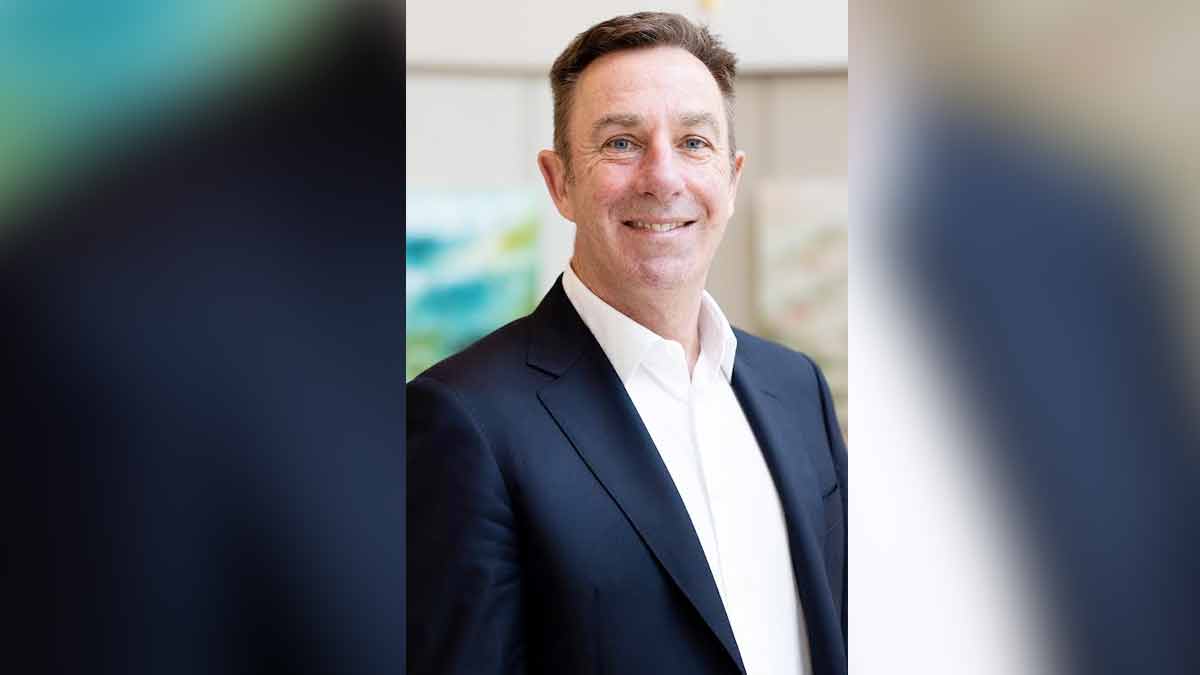
MUMBAI: KPMG has chosen continuity with a forward tilt. The firm has announced that Gary Wingrove will take over as global chairman and CEO of KPMG International, beginning a four year term from 1 October 2026. Currently serving as global chief operating officer, Wingrove steps into the top role after being nominated by the global board and elected by the global council.
A KPMG veteran with over 25 years at the firm, Wingrove has been closely involved in shaping its recent trajectory. As global COO, he has helped drive the firm’s Collective Strategy, focusing on operational integration, global investments and the steady expansion of the KPMG Delivery Network. He has also been at the forefront of KPMG’s digital push, including the rollout of AI enabled solutions across its global operations.
Before his global role, Wingrove served as CEO of KPMG Australia for nearly a decade, where he led a period of strong growth, almost doubling revenue, profitability and headcount while steering a cultural reset.
He succeeds Bill Thomas, who has led KPMG since 2017 and will work alongside Wingrove over the next six months to ensure a smooth transition.
Thomas leaves behind a firm that looks markedly different from when he took charge. Under his leadership, KPMG’s global revenues have risen by 55 per cent, and its workforce has expanded to more than 276,000 people. He also unified the network of member firms under the Collective Strategy, aligning priorities and strengthening governance.
His tenure saw heavy investment in technology and partnerships, with alliances spanning Microsoft, Google Cloud, SAP, Oracle and ServiceNow. These collaborations, along with platforms like KPMG Clara, have helped the firm scale its AI-led offerings and sharpen its competitive edge.
Beyond growth, Thomas also pushed improvements in audit quality and sustainability. Initiatives such as a multiyear global sustainability strategy and the Our Impact Plan have aimed to embed long term thinking into the firm’s operations and client services.
For Wingrove, the brief is clear but evolving. He has signalled a focus on agility, deep expertise and technology driven solutions as clients navigate an increasingly complex business landscape. He also emphasised KPMG’s identity as a people first organisation, supported by technology and unified through its global network.
The timing of the leadership change comes as KPMG continues to grow, reporting a 5.1 per cent rise in global revenue in FY25, with gains across tax and legal, audit and advisory services. Growth was recorded across all regions, despite a challenging macro environment.
As Wingrove prepares to take charge, the firm appears set on a familiar path with a sharper digital edge. Same playbook, perhaps, but with a renewed focus on speed, scale and smarter solutions.