MAM
Sportskeeda CTO Sankalp Sharma exits after 10 years at the helm

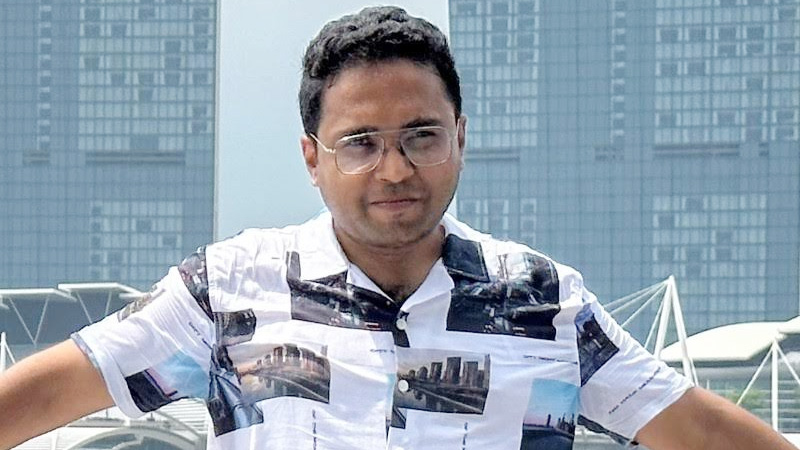
MUMBAI: You can’t spell Sportskeeda without code. And for the last decade, Sankalp Sharma has been the man behind the machine, the chief technology officer who took a broken codebase, a skeletal team, and a laundry list of experiments, and turned it into a battle-hardened platform serving millions of sports fans worldwide. Now, after 10 years and 7 months, Sharma is moving on, leaving behind a tech legacy etched into the site’s DNA.
Sharma’s tenure has been one of audacious scale. From six hot codebases and a dozen services, his lean team engineered a system that now handles a billion API calls a day with near-million concurrency. As CTO since December 2020 (after stints as VP of technology and tech lead), he not only scaled from “0 to 1, 1 to 10, and on to 100” but also reshaped how Sportskeeda approached experimentation, reliability, and growth.
Reflecting on his philosophy, Sharma describes his approach as “going wide, going deep, and going around” spotting unnoticed patterns, rolling up his sleeves to refine systems, and navigating future goals through the fog of war. Along the way, he fostered a culture of curiosity, killed fluff projects early, and championed open-source contributions. His earlier career saw roles at Essencemediacom, Mindshare, VML, Foxymoron, TCS, and even a freelance stint helping startups and Fortune 500 companies alike.

From one-click deployments to site reliability engineering, from streamlining legacy microservices to mentoring LGBTQIA+ professionals and startup founders, Sharma’s playbook has been as much about people as it was about platforms. As Sportskeeda now looks ahead to its next growth chapter, it does so with a tech foundation built on Sharma’s decade-long vision of harmony amid chaos.






MAM
Lego brings Messi, Ronaldo, Mbappé, Vinicius together
Campaign clocks 314 million views ahead of FIFA World Cup 2026 buzz.
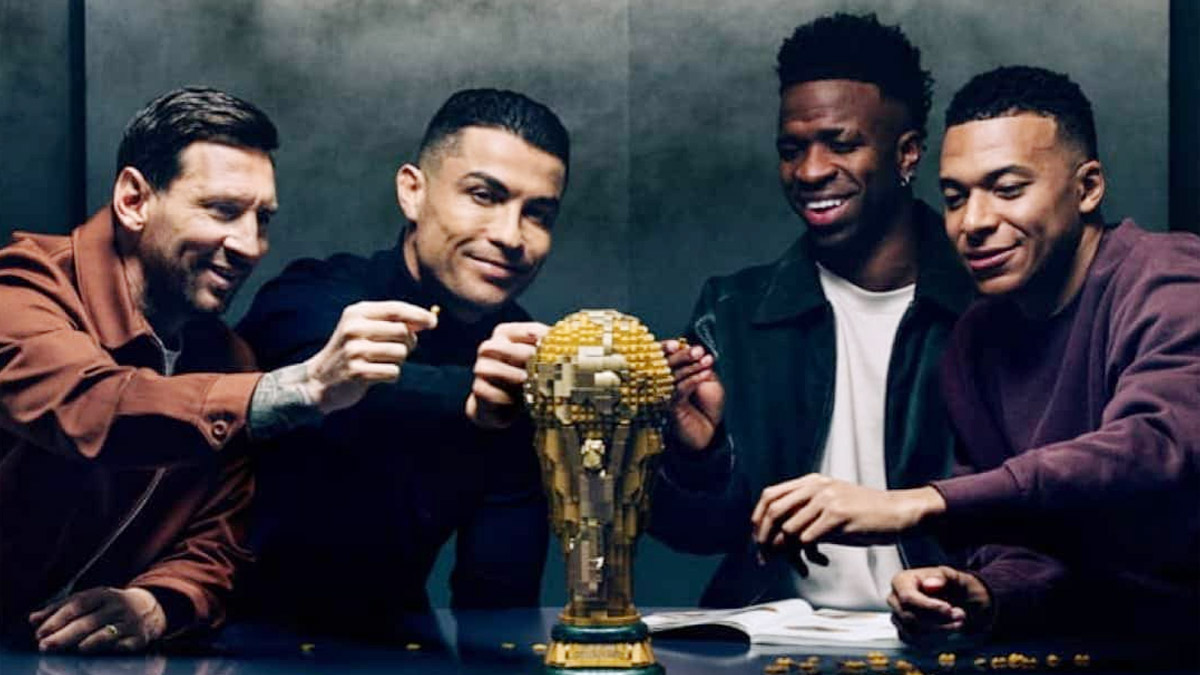
MUMBAI: Four legends, one frame and not a single tackle in sight. Lego has pulled off a crossover few thought possible, uniting Lionel Messi, Cristiano Ronaldo, Kylian Mbappé and Vinícius Júnior in a single campaign ahead of the FIFA World Cup 2026 only this time, they’re building dreams brick by brick.
Titled “Everyone wants a piece”, the campaign features the quartet assembling a Lego version of the World Cup trophy, before placing miniature versions of themselves atop it, a playful nod to football’s ultimate prize. Shared widely across social media, the ad carries a pointed disclaimer: it is not AI-generated, a subtle but telling signal in an era where even reality is often questioned.
The numbers tell their own story. The campaign has already crossed 314 million views on Instagram across the players’ accounts, with fans hailing it as a rare, almost nostalgic moment particularly for the reunion of Messi and Ronaldo, whose last shared campaign ahead of the 2022 World Cup became one of the platform’s most-liked posts.
Beyond the film, Lego is extending the play with exclusive, player-themed sets tied to each of the four stars, part of a broader football-led programme designed to ride the global momentum building towards 2026. The idea, as echoed by the players themselves, leans into the parallels between football and play experimentation, creativity, failure, and triumph.
Messi described the sets as a way to bring on-pitch moments into an imaginative, hands-on world, while Ronaldo called the transformation into a Lego figure a rare honour, blending sport with storytelling. Vinícius, meanwhile, struck a more personal note, recalling childhood moments of building with Lego and framing creativity as a universal language that transcends borders.
The timing is no accident. With the 2026 World Cup set to run from June 11 to July 19 across the United States, Canada and Mexico, and featuring an expanded 48-team format, global anticipation is already building. Argentina, led by Messi, will enter as defending champions, adding another layer of intrigue.
For Lego, the campaign does more than celebrate football, it taps into its mythology. Because when icons become figurines and rivalries turn into play, the beautiful game finds a new kind of pitch. one built, quite literally, by hand.






