MAM
Spice Media Vision Announces Five Regional Movie Projects


Strengthening its hold in regional Cinema in Tamil, Telugu, Bengali, Marathi and Bhojpuri.
Mumbai, 1st April, 2006: Spice Media Vision, in association with Pen & Camera International proudly announced their Five regional movie projects at a press meet held at Time & Again, Andheri West, on 31st March ’06 in the presence of the Directors and Star Cast of the movies. Continuing its commitment to provide good, meaningful, Spice Media Vision, aims to produce the best form of entertainment in every Genre, Language and subject, the project are:
1) Screenplay Films Pvt. Ltd. in association with Spice Media Vision’s “ANURANON” (Bengali Movie) is a beautiful modern story on relationships between two couples and on urban loneliness in the society today. Directed by Aniruddha Roy Choudhury, it has Rahul Bose, Rituparno Sengupta, Rajat Kapoor and Raima Sen as main artists. Sunil patel, who has earlier done movies like Hum Tum & Salaam Namaste is the cameraman for this project. The story travels from London to Kolkatta, to eastern Himalayas, exploring various facets of human relationships with its twists and turns and the society’s outlook towards it.

2) DIL DIWANA TOHAR HO GAYIL: Presented by Spectrum Media. This PEN and Camera Intl’s project is 100% complete. Directorial debut by noted Bollywood choreographer Saroj Khan. This bhojpuri movie has been shot extensively in London with all time-hit jodi of Ravi Kissen and Nagma. The tremendously popular bhojpuri pair has delivered huge hits and immense business for the earlier two projects. Other artists in the movie include Lovy Rohatgi, Kamaal, Vinod Tripathi and Asif Khan.
3) MUNNA PANDEY BEROJGAR: This movie is directed by Manish Jain. Lead artists from the movies include the Super Hero of Bhojpuri movies,Manoj Tiwari. Bipin Bahar, singer who has to his credit several music albums by T Series, maken his acting debut in the second lead. Bollywood Popular Villian of yester years, Ranjeet also makes his debut in Bojpuri movies with this film. Other artists include Rani Chatterji, Brajesh Tiwari, Abha Parmar, Purvi, Rohail and Surendra Pal. Munna Pandey Berojgar” is a comic satire on unemployment, youth frustrations and their problems. An emotional representation of unemployed youth who are mislead and how small mistake can ruin their entire life. Unlike the typical Bhojpuri films which are family centric, this movie marks a new beginning for Bhojpuri Cinema.
4) SATAON VACHANWA NIBHAYIB HUM: Directed by Manish Jain with popular Bhojpuri star Manoj Tiwari and Rinku Ghosh in the lead role, this movie is more than Fifty percent complete. Presented by SPICE MEDIA VISION in association with OK INTERNATIONAL, this family drama is based on a real life story.
5) LAAGI CHHUTE NA: OK INTERNATIONAL presents this along with PEN & CAMERA INTERNATIONALS, being launched today. Directed by Sanjay Jha, it has the hit jodi of Ravi Kishan and Nagma in the lead. A thriller based on a kidnap in Lolndon. It revolves around the kidnapping scene in Bihar and the Bihar Mafia. A renowned Bollywood star will also act in the project.
Speaking on the occasion, Ragini Sona of Spice Media Vision said, “ With Chocolate, Spice has proved its capability of producing multi-starrer (big names) big budget movie. Tamil and English movies has already been our forte and very shortly we will be announcing spate of Hindi films. We are not deviating from our original objective of making Hindi movies but on a more holistic note we are looking at promoting good, meaningful cinema in every genre and language that will create cinema with a difference.”
She also added, “With the increased focus on regional cinema, it makes good business sense to produce movies in Bengali, Marathi, Tamil, Telegu and Bhojpuri as well. There will be a Special Purpose Vehicle (SPV) for each regional movie under the umbrella of Spice Media Vision. And spice will always strive to create cinema with a difference. We have Sunil Shetty starrer AMAR JOSHI SHAHEED HO GAYA ready for release, a Marathi movie with Sachin Pilgaonkar, a Telegu movie to be finalized shortly. Apart from these few Hindi Projects with renowned Directors like Vikram Bhatt, Aditya Dutt, Lawrence D’Souza etc are in the pipeline.”
Mehmood Ali of PEN and Camera Internationals, who has earlier released the multi-starrer Bhojpuri film “BABUL PYARE” said, “Currently, in a year around hundred Bhojpuri films are produced with every second producer in Bollywood announcing a Bhojpuri Project, we are proud to announce 4 Projects with the biggest names in Bhojpuri Cinema as Manoj Tiwari, Ravi Kissen and Nagma. Leading Bollywood stars are producing and acting in Bhojpuri films, which only indicates the attraction and profitability of this growing industry.
For Further Details Contact:
Svetlana / Riniki
Perception Managers
9867184309/ 26784640/ 41/ 42
PERCEPTION MANAGERS
503,Rushabh Apts,
Veera Desai Road,
Andheri west, Mumbai -53
Tel: 55702361/26784640/41/42/30
Cell: 9867184309/9820022491
media@perceptionmanagers.net
/press@perceptionmanagers.net



Digital
GUEST COLUMN: How AI is restructuring distributor and retailer motivation models
From incentives to intelligence, AI is redefining how brands engage channel partners
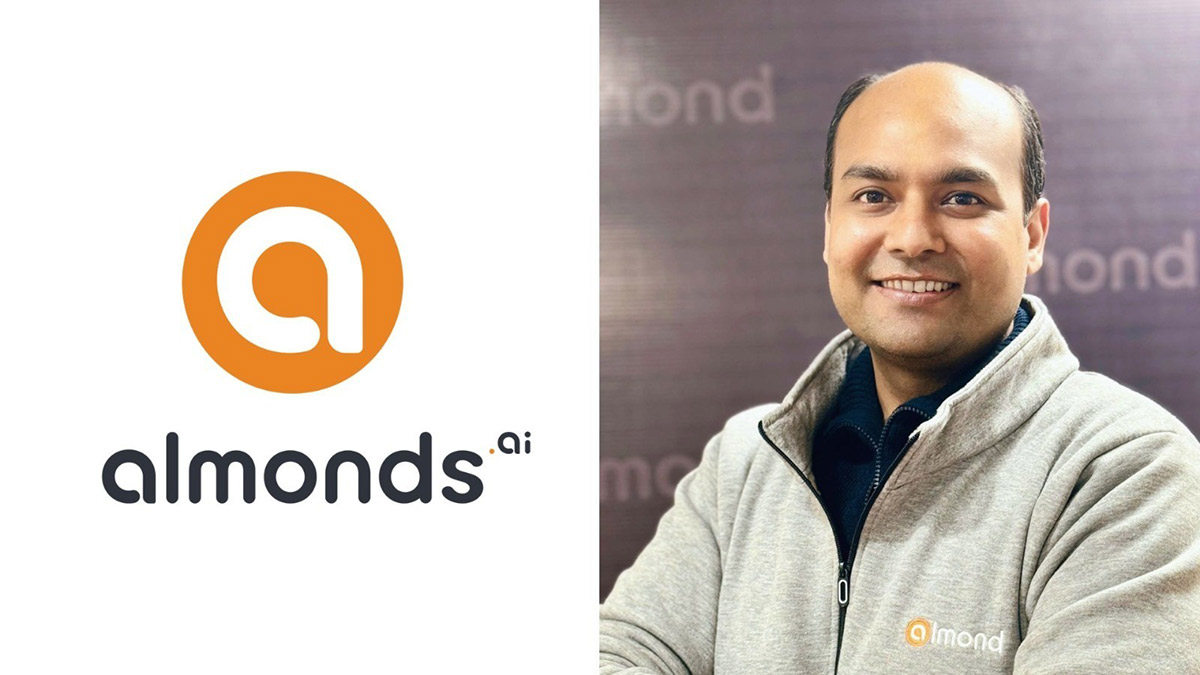
MUMBAI: Artificial intelligence is rapidly transforming how brands engage with their most critical yet often overlooked stakeholders: distributors, retailers, and last-mile influencers. For Abhinav Jain, co-founder and CEO of Almonds Ai, this shift marks a fundamental departure from traditional, transaction-led incentive models toward behaviour-driven, data-intelligent ecosystems. In this piece, Jain examines how AI is enabling brands to decode partner motivations, predict engagement patterns, and deliver personalised, scalable experiences—ultimately redefining channel relationships from transactional exchanges to long-term growth partnerships.
Across many sectors, there is increasing recognition that motivating those who bring products to market (distributors, retailers, last-mile influencers) poses a growing challenge.
Brands continue to invest significant marketing and digital resources to consumers, yet in many countries and the vast majority of emerging economies, these types of consumer-focused investment areas have had little impact on ultimate product delivery. Rather, it is still the case that traditional retail continues to make up most products sold.
So why is it that the systems built around motivating these channels have yet to evolve?
For decades, distributor and retailer engagement revolved around static schemes – quarterly targets, volume-based rewards, and occasional trade promotions. These programs were designed around transactions, not behaviour. The assumption was simple: if incentives increase, performance will follow.
Now, with the advent of artificial intelligence, the definition of performance is being challenged.
With the development of artificial intelligence, businesses can move beyond simply creating loyalty based on transactional-based models and toward models built on behaviours, the behaviours of channel partners that are intrinsic to their motivations in engaging with particular brands. As a result, the means by which businesses develop relationships within their distribution network are starting to evolve; thus, ultimately changing how brands interact with those within their distribution network.
Assessing engagement: Transitioning from transactional- to behavioural intelligence
Traditional loyalty systems refer to transactional activity (sales data). Although this data is valuable and important, it only provides a partial view of engagement across the channel partner.
For example, a retailer may have a high frequency of sales of a product, but their lack of engagement with the manufacturer would not reflect that they have true loyalty toward that brand. Conversely, a retailer who actively participates in training programmes, acts as brand advocates, and is engaged in learning with the supplier would exhibit more profound levels of loyalty but would have been invisible based on historical incentive programmes.
Artificial intelligence allows for the identification of behaviours that help to address this gap. Brands are able to use a variety of engagement data points, participate in learning programs, respond to communications, redeem behaviour and track platform use behaviour in order to identify motivation through behaviour.
McKinsey has stated that companies that leverage advanced analytics for their sales and distribution functions can achieve as much as a 15-20 per cent increase in productivity due to increased awareness of their behavioural trends throughout their networks.
This visibility of behavioural patterns within channel ecosystems can be transformational to brands as they can now view how partners engage on their path to purchasing products, instead of just measuring the sales revenue generated by those purchases.
Predicting motivations, not just measuring performance
Possibly, the largest contribution of Artificial Intelligence (AI) to helping brands engage with partners via channel ecosystems is its ability to predict future engagement versus simply measuring past performance.
Traditionally, brands only realised that a partner was disengaged (not likely to purchase products) once their sales performance had already declined. By then, the brand would have to use significant amounts of incentives or aggressive promotional activities to recovery their partner’s engagement level.
AI models can help organisations to detect early signs that a partner is becoming disengaged, such as declining participation in learning modules, declining interaction via the platform, or slower reward redemption rates. These indicators can help organisations to proactively engage with their partners before their sales performance begins to decline.
The practical application of AI and predictive analytics gives brands the ability to re-engage with their partners prior to their sales performance declines. For example, instead of developing and implementing broad-reaching incentive programs that provide a “one size fits all” incentive to all partners in an ecosystem, brands are able to develop targeted, engaging re-engagement programmes. This is how personalisation can be done on a large scale, such as across global distribution and retail networks.
The vast majority of distributor and retailer channels have thousands, if not millions, of individual channel partners. Historically, providing personalisation to such a large number of businesses has not been feasible.
However, with the advent of AI, personalisation at scale is becoming a reality.
Brands can now create tailored engagement journeys for all their partners, based on their partner profiles, through some combination of machine learning models and behavioural segmentation. For example, high-performing distributors might receive higher levels of leadership-based recognition and greater incentives to continue to grow. Emerging retailers, on the other hand, might be supported with training, onboarding rewards, and measurable performance milestones.
The shift towards personalisation of partner engagement echoes the direction that consumer marketing is already moving towards.
According to Salesforce’s report, over 70 per cent of customers expect personalisation in the way that brands engage with them. As such, there is a growing expectation for B2B ecosystems to have these same types of expectations from their channel partners.
Gamification and continuous engagement
AI is also radically changing how brands will engage with their channel partners through the use of gamification.
Many traditional incentive-based contests and leaderboards would spark temporary engagement among their participants, but they struggled to sustain engagement over time. With the use of AI, gamification mechanics are evolving dynamically based on historical and evolving participation patterns by their channel partners.
Challenges, rewards, and recognition structures can be modified continuously in order to sustain engagement with all of a brand’s partner segments. This will provide a greater opportunity to move away from episodic campaigns towards ongoing, continuous engagement experiences.
When channel partners receive motivation as part of their daily business activities through recognition, learning, and tracking their performance, long-term loyalty will be achieved.
Aligning motivation to broader impact
There is a growing trend within the channel ecosystem to integrate sustainability and socially responsible behaviours into the channel partner programmes of brands.
Increasingly, brands are motivating their partners to use sustainable practices in their operations, participate in sustainable practices like sustainability-related knowledge programmes, or promote products that are in line with their sustainability objectives.
Brands can use AI to monitor and measure these types of behaviours and incorporate them into their incentive frameworks so that brands can align their commercial objectives with broader social and environmental outcomes.
A shift in the way brands view their channel partners
AI is having the most significant impact on the way that brands are now viewing their channel partners, as it relates to the underlying philosophy of those fundamental relationships.
For the past several decades, many brands have viewed their channel partners as intermediaries in the supply chain. More and more brands are now beginning to view their channel partners as key ‘partners-in-growth,’ and their actions can have a direct impact on market performance.
In fact, all the channel ecosystems are using behavioural engagement platforms to design new models that reward not just transactional behaviour, but also create continuous engagement journeys for their partners, where their partners can receive recognition for their participation, learning, and continued engagement, thereby reinforcing long-term loyalty to the brand.
The future: Intelligent channel ecosystems
As we consider what the next phase of channel engagement may look like, many believe that it will be based on intelligent ecosystems, using AI to continuously monitor and adjust the engagement strategies used to engage their channel partners, in real time and based on the behaviours of those partners.
For brands operating in complex distribution networks, the ability to perform well will be determined both by whether products are available to their customers, as well as by the enthusiasm, expertise, and loyalty shown from each channel partner that represents the brand each and every day that they are working on behalf of the brand.
While AI clearly does not eliminate the human aspect of a brand’s relationship with its channel partners, it does allow brands to better understand and nurture that relationship.
In markets where the last mile will determine whether a sale is made, how one leverages the intelligence gained by using AI will ultimately be the difference between gaining a new, sustainable competitive advantage versus losing one.






