MAM
Span wins Rs 2 bn global media mandate for Incredible India, Ministry of Tourism

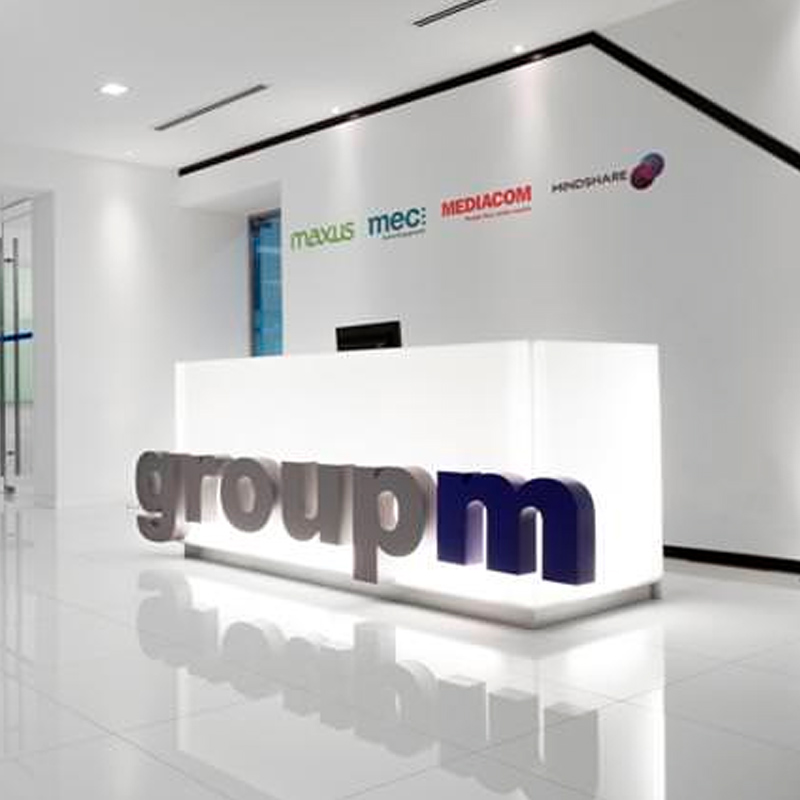
MUMBAI: Span Communications has won the global media mandate of Incredible India, Ministry of Tourism.
The size of the business is estimated to be around Rs 2 billion.
A multi-agency pitch was called in May this year. Thirteen leading media agencies including GroupM, OMD, Ogilvy India, MPG, Mindshare, Maxus Global, ZenithOptimedia, Omnicom Group, Crayons Advertising, Prabhatam Advertising, Integrid Media, Allied Media (Percept), Purnima Advertising, Carat Media, Sterling Advertising, ITDC, TDI International India Ltd and Span Communications had taken part.

The mandate involves handling global television and print campaign for Ministry of Tourism in America, South East Asia, Europe, Africa, Australia, Japan, China and a host of other countries. Span Communications has been handling the Incredible India account for more than 5 to 6 years now.
Talking about the mandate, Span Communications CEO Naresh Kheterpal said, “Incredible India is one of the most respected Indian brands globally and it is indeed a matter of pride and prestige for us to win this campaign again. At the same time, it is a testimony to our excellent media skills and the confidence that the client has placed on us. The campaign is slated to begin soon and would encompass all mediums focusing on the American, European and Asian markets.”
Span has a large number of leading corporate, government and PSU clients like G‘Five Mobiles, Ansal Group, SRS, Goa Coastal Resorts, State Bank of India, IndianOil, Oriental Bank of Commerce, Central Bank of India, Delhi Government, ESIC, India Post, Andaman Tourism, Election Commission, Bureau of Energy Efficiency, Ministry of Civil Aviation and National Commission for Women among others.







MAM
8PM Packaged Drinking Water named Lead Trouser Sponsor for Sunrisers Hyderabad
Brand partners with IPL team for 2026 season with campaign ‘Rise in Orange, Celebrate with Black’.
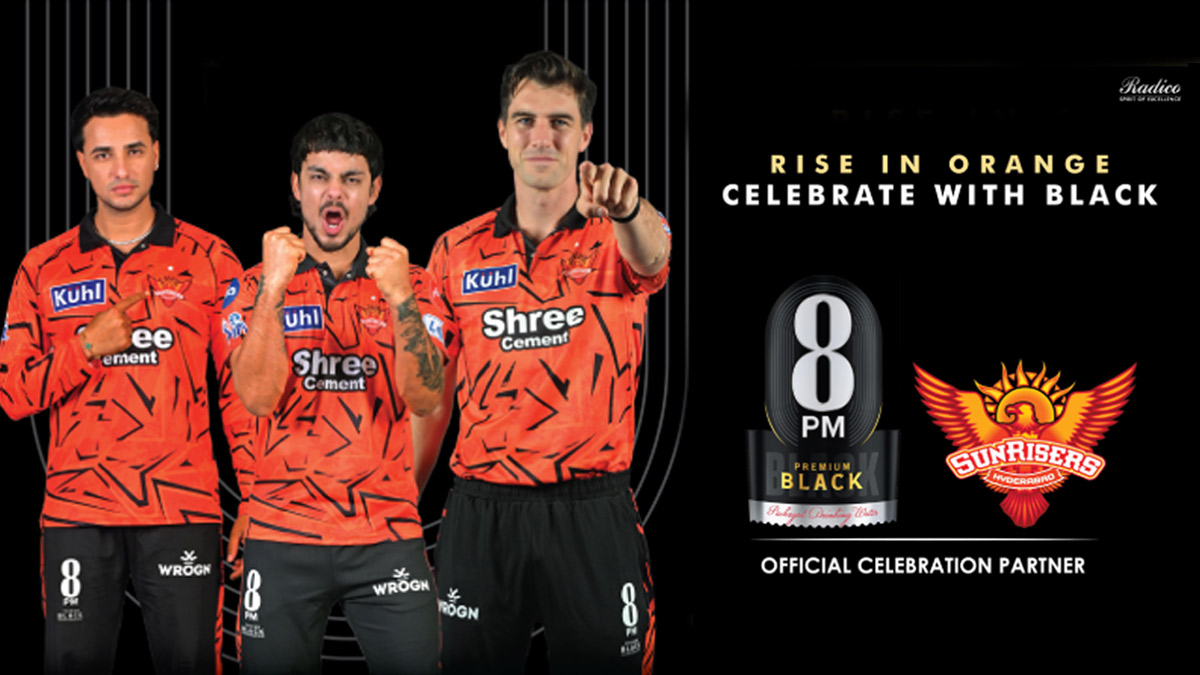
MUMBAI: 8PM Packaged Drinking Water has found a clever way to stay in the game by hitching its wagon to one of cricket’s most exciting teams. The brand from Radico Khaitan Limited has announced its association with Sunrisers Hyderabad as the Lead Trouser Sponsor for India’s Premier Cricket League 2026. The partnership will see 8PM Packaged Drinking Water gain prominent visibility during the high-energy tournament.
To mark the collaboration, the brand has launched the campaign thought “Rise in Orange, Celebrate with Black.” The idea cleverly links the on-field intensity of Sunrisers Hyderabad’s iconic orange jersey with the off-field celebrations powered by 8PM Premium Black Packaged Drinking Water.
Radico Khaitan Limited chief marketing officer Kunal Madan said, “We are delighted to be associated with Sunrisers Hyderabad for the 2026 season. With the league’s unmatched reach and the team’s strong fan following, this is a great opportunity to connect meaningfully with consumers across the country.”
Sunrisers Hyderabad enters the season with a formidable lineup featuring players such as Abhishek Sharma, Ishan Kishan, Travis Head, and Pat Cummins, making it one of the most watched teams this year.
A spokesperson from Sunrisers Hyderabad added, “We are pleased to welcome 8PM Packaged Drinking Water to the Sunrisers family. This association brings together shared values of energy, resilience, and excellence.”
The partnership underscores Radico Khaitan’s strategy of aligning with marquee sporting platforms to build contemporary, consumer-centric brands. By tapping into the emotional connect and massive viewership of the league, 8PM aims to deepen engagement and strengthen brand affinity during the cricket season.
In the fiercely competitive world of Indian cricket sponsorships, 8PM has chosen to play it smart, pairing the thrill of orange with the cool refreshment of black. As Sunrisers Hyderabad prepare for another exciting season, the brand is set to ride the wave of passion, performance, and celebration.







