Digital
“Social media is a cornerstone of elevating brand visibility within digital advertising”: Digidarts’s Siddhartha Vanvani

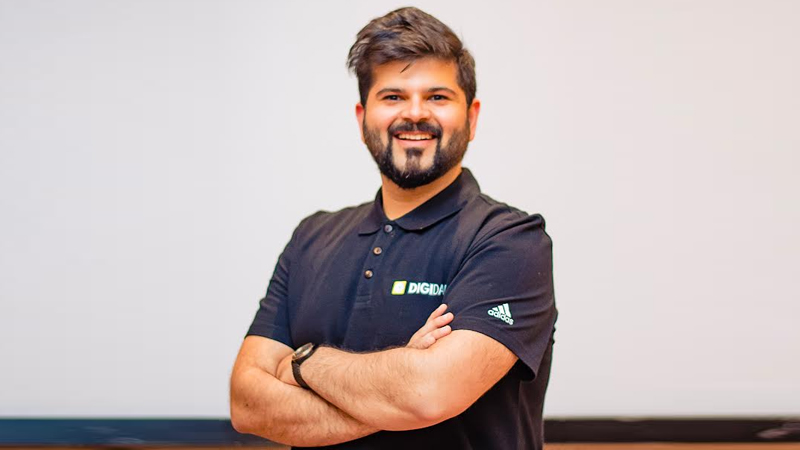
Mumbai: DigiDarts is one of India’s leading digital marketing agencies. Founded by Siddhartha Vanvani in 2014, with eight years of experience that connects with customers through innovation-led insightful growth strategies. As a Google Premier Partner & Meta Partner, they excel in boosting performance and enabling growth by offering holistic performance marketing solutions including Branding, Creative Storytelling, Organic & Content Marketing, Marketing Automation, Media Planning & Buying, etc.
They have a client list including Meesho, DealShare, Boddess, Industry Buying, GlobalBees, Gromo, Birkenstock, ASICS, Bombay Shirt Company, Swiss Beauty, Toms, and many more.
Indiantelevision.com caught up with Vanvani, to know more about the ever evolving digital marketing landscape.

Edited excerpts
On strategies Digidarts employ to stay up-to-date
We actively engage in meaningful dialogues with esteemed partners like Google, LinkedIn, Apple, Taboola, Snapchat, Hotstar, CRED, and Meta ads. Our approach involves active participation in webinars, seminars, workshops, and conferences that are exclusively tailored to the dynamic landscape of digital marketing. We stay informed and inspired by following distinguished digital marketing authorities, influencers, and thought leaders across various platforms including social media, blogs, and podcasts.
Our commitment to growth is highlighted through our attendance at industry-centric networking events, both in the virtual realm and offline, creating valuable connections with peers, potential mentors, and collaborative allies. Furthermore, we uphold an ongoing practice of benchmarking against competitors across diverse verticals, ensuring we maintain a pulse on industry trends and remain proactive in our strategies.
On Digidarts measuring the effectiveness and ROI of its digital marketing campaigns?
Our approach is assessing effectiveness and ROI involves key strategies. Firstly, we prioritise SMART goal-setting as the foundation of our measurement efforts, encompassing objectives from website traffic to sales growth. Secondly, we employ robust tracking tools like Google Analytics, Google Tag Manager, CAPI (Conversion API) by Meta, and Facebook Pixel for meticulous user interaction analysis. In e-commerce, we utilise specialised tracking monitors for sales, order values, and conversions. A/B tests are done to refine strategies by comparing ad creatives and landing pages. We perform comparative analysis to benchmark campaign performance against industry standards, thus revealing the market position. To summarise, our comprehensive methodology includes SMART goals, advanced tracking, e-commerce metrics, A/B testing, and comparative analysis, capturing campaign effectiveness and ROI holistically.
On the role social media plays in enhancing brand visibility in digital advertising
Social media is a cornerstone of elevating brand visibility within digital advertising, which enables transforming the process into an authentic and relatable experience. It’s like a bustling marketplace where brands don’t just showcase products but also share their stories, values, and aspirations. This dynamic platform fosters a sense of connection and community, bridging the gap between brands and their audience. Through engaging content, real-time interactions, and even behind-the-scenes glimpses, social media paints a vivid picture of the brand’s personality.
Moreover, the power of sharing can’t be underestimated. When users resonate with content, they willingly share it, creating a ripple effect that extends the brand’s reach beyond initial expectations. This peer-to-peer endorsement enhances credibility and trust, nurturing a loyal following.
On data privacy regulation impacting personalised digital marketing practices
Data privacy regulations in India have ushered in a new era of consideration and respect for individuals in personalised digital marketing endeavours. These regulations, such as the Personal Data Protection Bill, 2022, recognize the importance of safeguarding personal information and empowering users with control over their data. This shift has prompted marketers to adopt more transparent and ethical practices.
While these regulations impose stricter requirements on data collection and usage, they encourage a more meaningful approach. Marketers now need to forge genuine connections with consumers, seeking explicit consent and providing clear explanations about data utilisation. This human-centric shift necessitates a departure from invasive tactics towards value-driven engagement.







Digital
Content India 2026 opens with a copro pitch, a spice evangelist and a £10,000 prize for Indian storytelling
Dish TV and C21Media’s three-day summit puts seven ambitious projects before an international jury, and two walk away with serious development money
MUMBAI: India’s content industry gathered in Mumbai this March for Content India 2026, a three-day summit organised by Dish TV in partnership with C21Media, and it wasted no time making a statement. The event opened with a Copro Pitch that put seven scripted and unscripted television concepts before an international panel of judges, and by the end of it, two projects had walked away with £10,000 each in marketing prize money from C21Media to support development and international promotion.
The jury, comprising Frank Spotnitz, Fiona Campbell, Rashmi Bajpai, Bal Samra and Rachel Glaister, evaluated a shortlist that ranged from a dark Mumbai comedy-drama about mental health (Dirty Minds, created by Sundar Aaron) to a Delhi coming-of-age mystery (Djinn Patrol, by Neha Sharma and Kilian Irwin), a techno-thriller about a teenage gaming prodigy (Kanpur X Satori, by Suchita Bhatia), an investigative crime drama blending mythology and modern thriller (The Age of Kali, by Shivani Bhatija), a documentary on India’s spice heritage (The Masala Quest, hosted by Sarina Kamini), a documentary on competitive gaming (Respawn: India’s Esports Revolution, by George Mangala Thomas and Sangram Mawari), and a reality-horror competition merging gaming and immersive fear (Scary Goose, by Samar Iqbal).
The session was hosted by Mayank Shekhar.
The two winners were Djinn Patrol, backed by Miura Kite, formerly of Participant Media and known for Chinatown and Keep Sweet: Pray & Obey, with Jaya Entertainment, producers of Real Kashmir Football Club, also attached; and The Masala Quest, created and hosted by Sarina Kamini, an Indian-Australian cook, author and self-described “spice evangelist.”
The summit also unveiled the Content India Trends Report, whose findings made for bracing reading. Daoud Jackson, senior analyst at OMDIA, set the tone: “By 2030, online video in India will nearly double the revenue of traditional TV, becoming the main driver of growth.” He noted that in 2025, India produced a quarter of all YouTube videos globally, overtaking the United States, while Indians collectively spend 117 years daily on YouTube and 72 years on Instagram. Traditional subscription TV is declining as free TV and connected TV gain ground, forcing broadcasters to innovate. “AI-generated content is just 2 per cent of engagement,” Jackson added, “highlighting the dominance of high-quality human content. The key for Indian media companies is scaling while monetising effectively from day one.”
Hannah Walsh, principal analyst at Ampere Analysis, added hard numbers to the picture. India produced over 24,000 titles in January 2026 alone, with 19,000 available internationally. The country now accounts for 12 per cent of Asia-Pacific content spend, up from 8 per cent in 2021, outpacing both Japan and China. Key exporters include JioStar, Zee Entertainment, Sony India, Amazon and Netflix, delivering over 7,500 Indian-produced titles abroad each year. The top importing markets are Saudi Arabia, the UAE, Egypt, the United States and the Philippines. Scripted content dominates globally at 88 per cent, with crime dramas and children’s and family titles performing particularly strongly.
Manoj Dobhal, chief executive and executive director of Dish TV India, framed the summit’s ambition squarely. “Stories don’t need translation. They need a platform, discovery, and reach, local or global,” he said. “India produces more movies than any country, our streaming platforms compete globally, and our tech and creators win international awards. Yet fragmentation slows growth. Producers, platforms, and tech move in different lanes. We need shared spaces, collaboration, and an ecosystem where ideas, technology, and people meet. That is why we built Content India.”
The data, the pitches and the prize money all pointed to the same conclusion: India is not waiting for the world to discover its stories. It is building the infrastructure to sell them.







