MAM
Skip Maurice

MUMBAI: Recording a holiday message for his employees is a tradition for Publicis Groupe CEO Maurice Lévy. And complying with the tradition, that’s just what he did this year too… ’cept this year’s holiday greeting video from Lévy found a wider audience amongst netizens, with its witty take on skippable advertisement.
To the television audience, advertisement breaks are an excuse to flip through channels and look for a different entertaining program. When Video On Demand (VOD) platforms gained traction amongst digital audience, the ‘Skip Ad’ feature soon became a popular one, with YouTube taking the lead.
Being an advertising agency itself, it is ironic how the company’s CEO took to ‘Skippable Ads’ to deliver his message to employees. The idea was to bank on everyone’s habit of skipping ads to go to the content and do exactly the opposite! Confused? Don’t be… Read on…

“Times are too tough to play around so don’t expect anything funny or any technological tricks. I’ve long suspected that only a handful of you are actually paying attention to what I have to say. Although it’s often tempting to skip the ads and get to the content, this time you should be glad to skip me and watch some ads,” says a poker faced Lévy in a YouTube video.

However, 28 seconds into the video the humour quotient is just about to hit the roof as instead of the traditional ‘Skip Ad’ button that one is used to seeing on the video screen, there’s a… wait for it… ‘Skip Maurice’ button! However, this is “just a ploy” as Lévy continues his speech while crashing each ad spot and it must be said that for a septuagenarian, he totally rocks and how!
Should you choose not to skip Maurice, he’ll continue his address from behind his desk. But if you’re the inquisitive kind (like us) then you would’ve definitely ‘skipped Maurice.’

And therein lies all the fun! Watch him play cameo, especially in a shampoo advertisement, which adds to the comic relief of the entire concept. From spoon feeding yoghurt to a woman, washing his shirt, starring in a shampoo commercial a la L’Oreal (touché), cleaning his teeth in a toothpaste ad to appearing inside a sink for a liquid cleanser ad, Lévy enthrals the audience while also highlighting the company’s plans to enhance the power of one in the coming year.

In this 2:55 minute video titled ‘The Skippable Wishes,’ Lévy takes us through the agency’s benchmarks in 2015, through a series of advertisement, which he spontaneously crashes in.
“2015 has been a kind of bumpy ride. It’s been kind of tough for us. Nevertheless, we’ve fared pretty well in some of our operations and the most difficult part is behind us. More importantly, we have set ourselves up for a promising future,” he starts, as he talks about the company’s expectation from their Sapient acquisition, the “media palooza of which we have won more than we have lost,” the Cannes Lions wins and the highlights of the agency’s San Francisco seminar.
It must be added here that Publicis recently lost Procter & Gamble’s media planning and buying account in North America to Omnicom as well as the L’Oréal media account in North America to WPP. Hence, for Lévy to say that 2015 has been a “bumpy ride,” would be nothing but an understatement.

But these losses aside, Lévy goes on to say that 2016 will be a great year and that the agency has all the ingredients for it. “We will leverage the power of one across the group and our teams are excited about it. 2016 will the year of no silo, no solo, no bozo,” he says emphasising that there will be more transparency within the different departments and implementation of united effort within the company.
“All the group’s leadership is in line and is already putting this into action. We have seen the fruit of this approach through the outstanding creative achievements and campaigns. I’m counting on you. I can’t wait to fast forward to 2016 to show our clients the potential of the transformed Publicis Group and the power of one,” he says.
As was reported earlier by Indiantelevision.com, Publicis recently undertook a major client-centric restructuring for 2016, wherein the agency will be breaking down its disciplines into four distinct ‘solution hubs’ with each client that will be led by a chief client officer. And that’s exactly what Lévy speaks about here.
He concludes the video by dedicating his wishes to the victims of Paris terrorist attacks on 13 November.
At the time of filing this report, the video on Publicis’ website was almost nearing 50,000 hits. If innovation and disruption is the name of the game, then this latest salvo from the agency’s CEO himself wins it hands down.
PS: There’s a strategically placed coffee mug on his desk, which says, “Yes I am the BOSS!”
Well, Mr Lévy, after watching this video, we have absolutely no doubts about that!






MAM
Beacon Group appoints Dr Rajesh Patel as Group CEO
36-year healthcare veteran to lead Beacon Diagnostics, Vector Biotek, Biogeny.
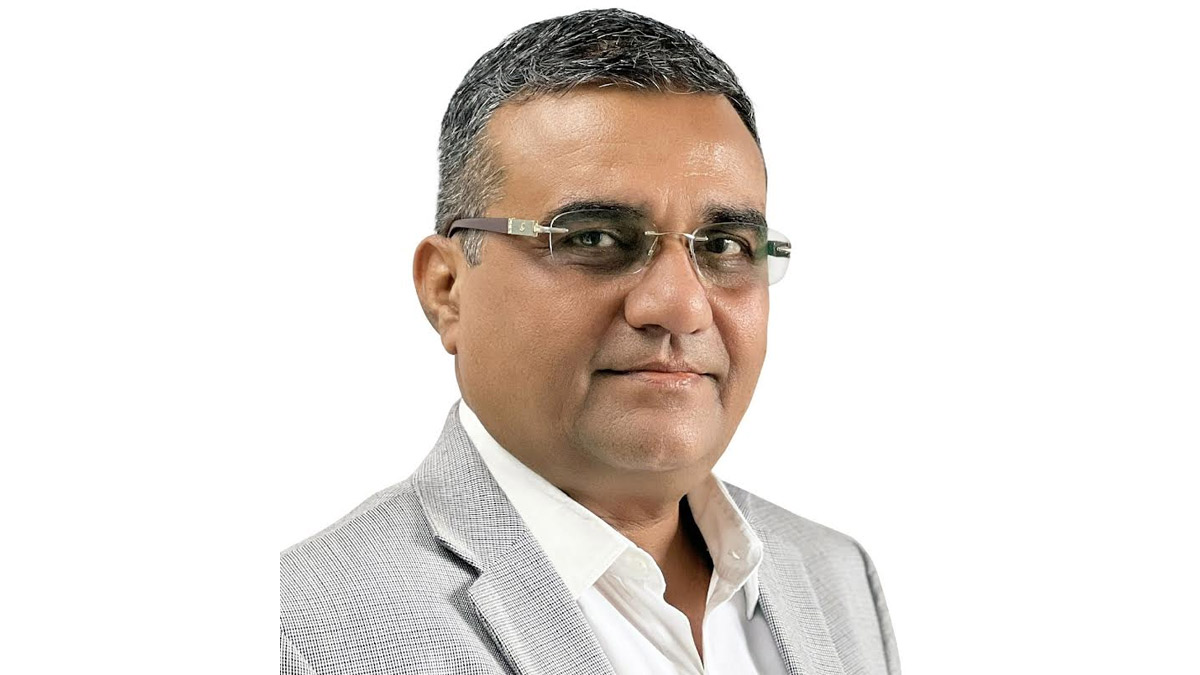
MUMBAI: A new chief, a fresh diagnosis and a sharper prescription for growth. Beacon Group has appointed Dr Rajesh Patel as its Group Chief Executive Officer, effective April 1, 2026, signalling a decisive push to scale its presence in the diagnostics and IVD space. Patel steps into the role with 36 years of experience across the healthcare and diagnostics industry, bringing a career shaped by leadership roles spanning sales, marketing, business development and operational strategy. His mandate is both expansive and precise: to steer the group’s overall strategic direction while tightening coordination across its three core entities Beacon Diagnostics, Vector Biotek and Biogeny Diagnostics.
In practical terms, that means driving cross-company synergies, accelerating market expansion and strengthening organisational capability areas increasingly critical as diagnostic players compete for scale in a fragmented yet rapidly evolving healthcare ecosystem. The group is positioning itself to capture unmet demand across chain laboratories, key accounts and standalone labs, segments that remain underserved despite growing diagnostic needs.
The appointment comes at a time when the In Vitro Diagnostics (IVD) sector in India is entering a more competitive and innovation-led phase, with companies focusing not just on product pipelines but also on service delivery, integration and customer-centric models. Beacon’s leadership appears to be betting that Patel’s execution-focused approach can help translate ambition into operational momentum.
Welcoming the appointment, Chairman Dr D K Joshi described Patel’s induction as a strategic move aligned with the group’s long-term vision, emphasising the role of leadership depth in navigating the next phase of growth.
For Beacon Group, the message is clear, in a sector where precision matters, leadership is the new differentiator—and this appointment is intended to set the tone for what comes next.






