MAM
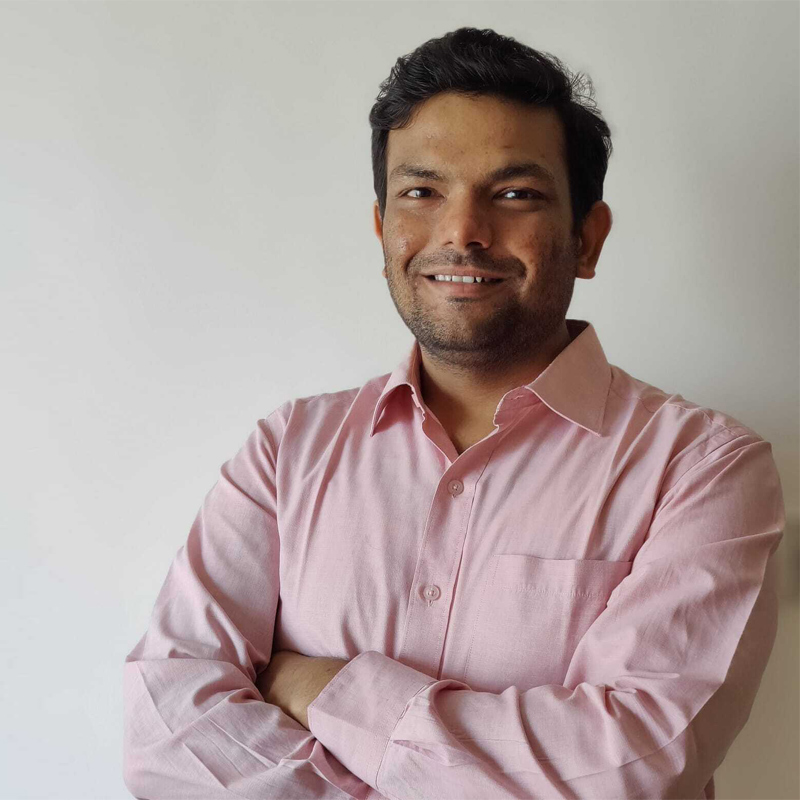
“ShareChat & Moj are focused on building robust creator economy in India”: Senior director Shashank Shekhar

Mumbai: Social media company ShareChat which was founded back in 2015, became a unicorn in April 2021. It has raised several funding rounds over the years, most notably in 2021 as it scales up rapidly. Earlier this year, it raised $255 million from Google, Times Group, and Temasek. It is now valued at $5 billion after this multi-tranche funding round.
In the first part of the round, ShareChat raised $266 million in December 2021 from Alkeon Capital, Temasek, HarbourVest, Moore Strategic Ventures, and India Quotient. Twitter, Tiger Global, and Snap are among the other investors of ShareChat.
ShareChat’s parent company is Mohalla Tech. ShareChat, besides its app, also runs short-form video content platforms Moj and TakaTak. It had acquired Takatak from MXMedia earlier this year. The platforms cater to over 400 million users.

Indiantelevision.com caught up with ShareChat & Moj senior director of content strategy and operations, Shashank Shekhar. Among other things, he shed light on how the company has built diversified monetisation avenues beyond advertising in areas like virtual gifting and video commerce.
He leads content operations for the organisation and focuses on driving the growth of the user and creator communities across all languages. In his role, he manages the content operations, creator growth and management, feed and product operations, and the overall app experience. Prior to joining ShareChat, Shashank was an entrepreneur. He founded Circle Internet, an Indian language hyperlocal content platform in 2018, and Elegart Solar Technologies, a company focused on offering outdoor solar lighting solutions in 2014. Shashank also briefly worked with Grabhouse as category head-commercial in 2015.
He is a BTech graduate in Material Science and Engineering from the Indian Institute of Technology, Kanpur. He is fluent in two languages—Hindi and English—and enjoys exploring all content related to social media.
Edited excerpts:
On the monetisation strategy for ShareChat
Shashank: We opened ShareChat to monetisation through advertising in early 2020. We have been building ShareChat’s ad platform for over two years now. We personalise ads using machine learning and AI algorithms as this enables marketers to target their customers more effectively and makes advertisements feel very organic to the consumer. As a result, we can improve revenue yield while keeping customer retention rates high.
As several brands want to collaborate with us to tap into regional markets with their large-scale campaigns, we are helping micro-influencers monetise their content through native brand endorsements.
Last year, we launched virtual gifting on ShareChat Live Audio Chatrooms. This year we rolled out video commerce. We are the only platform in India that offers all three avenues of monetisation-brand collaboration, gifting, and commerce-to creators in a consolidated bouquet.
We also introduced a self-serve advertising platform, ShareChat Self Serve Ads, a few months ago that enables SMBs to create highly targeted multilingual advertisements. So far, it has supported more than 1,500 SMBs in posting highly targeted advertisements on ShareChat.
On the content creators and remuneration
Shashank: More than 32 million creators use the ShareChat app, and nearly 50 million creators use Moj. A passion for creating content no longer fuels the creator ecosystem. It’s a lucrative career option, and creators are equipping themselves with the right tools, skills, and technology to stay ahead of the curve. ShareChat and Moj are focused on building a robust creator economy in India.
To enable creator growth, Moj recently launched the ‘Moj For Creators’ programme to build a path of accelerated growth for talented creators at different stages. With plans to facilitate creator earnings worth Rs 3,500 crore by 2025, we have several revenue sources for creators on the platform—virtual gifting, influencer marketing, and video commerce. These avenues will help creators across India earn a sustained livelihood and pursue a full-time career as content creators, thereby fuelling the creator economy.
Virtual gifting is among the successful revenue models for monetising the Live Audio Chatroom feature on ShareChat. The feature enables users to send virtual gifts in the form of digital tokens to the hosts or the chatroom creators, making them feel valued. We are one of the largest Indian virtual gifting platforms in the country right now. We have generated more than Rs 390 crore in annualised earnings through virtual gifting on ShareChat and have recently launched it on Moj, witnessing a similar trajectory of growth.
On the live and video commerce partnership with Flipkart
Shashank: Our Live and Video Commerce partnership with Flipkart has also been a key development. While enriching the viewing experience on the platform by providing convenient access to products that content creators are showcasing, it also allows creators to share their curated tastes with their community and opens a revenue stream for them. In recent months, Moj has also become a key social commerce platform in the country through its partnership with Flipkart.
On trends being seen when it comes to user generated content
Shashank: In the last two years, we have seen the growing popularity of live streaming content across both our platforms. ShareChat Live Audio chatroom has emerged as India’s largest voice-based hangout destination with 12 million+ MAUs. Users from across the country are joining the chatrooms to connect with like-minded people and express themselves. We have seen interesting use cases of our community organising birthday parties, satsangs, sermons, discussing movies, celebs launching songs and products, connecting with astrologers, jamming together through this feature.
We recently announced the launch of live video streaming on Moj, giving creators from across the country access to create highly engaging content across different creative formats such as live talk shows, live game streaming, jam sessions, stand-up comedy, shayari, cooking, astrology, and much more. Since its beta launch, Moj LIVE is already witnessing one million daily active users watching live content on the platform.
On the whitespace that exists
Shashank: Of late, we have witnessed a growing preference for shorter video content from both the creator and viewer perspectives. Most of our user community prefer watching short videos that are less than 30 seconds, and are also inclined towards long format videos that are less than three minutes long.
Users these days are looking for quick doses of entertainment and infotainment that can be consumed on the go. While comedy and challenges are the most popular content categories, infotainment content, where information is presented innovatively, in a fun manner, has a higher chance of getting more engagement. Moreover, we have seen an increase in interest in lifestyle content categories like food, fashion, beauty, and grooming, and e-gaming content is also getting popular amongst teenagers.
On the languages that people prefer for content consumption
Shashank: By virtue of the large number of creators and users of that language in our country, Hindi content is consumed the most across our platforms. In the southern regions of India, regional languages like Tamil, Telugu, Malayalam, and Kannada take precedence. Other Indian languages are also gaining high traction among our users.
On the plan to go deeper in terms of language offerings
Shashank: Today ShareChat is India’s leading homegrown social media platform that operates in 15 Indian languages, which include Hindi, Marathi, Gujarati, and Punjabi. Kannada, Malayalam, Bengali, Tamil, Telugu, Odia, Assamese, Haryanvi, Bhojpuri, Rajasthani, and Urdu.
We are already present in the major languages of our country, and the short-term focus is to go deeper within them and deliver an unparalleled social experience for our community.
On the challenge in scaling up rapidly
Shashank: The ecosystem of social media and short videos has experienced rapid growth. Users have a wide range of options, and there is fierce competition. Only businesses with a strong retention engine—i.e., those with a high percentage of users who frequently use the app—will succeed in this market. The keys to ensuring users and creators continue to be dedicated to the apps are and will be constant innovation and product enhancement.
The delivery of a user-specific content stream will largely depend on sophisticated recommendation engines. Most social media businesses are working to tackle the significant problem of hiring AI expertise and developing these networks.
On the challenge posed by other platforms
Shashank: With over 650 million Indians on the internet, there is a lot of ground to cover for all. Consumers stick to a particular platform if it is highly personalised to their interests. Both Moj and ShareChat exclusively focus on Indian users and customise the product based on their needs.
Our goal is to make Moj and ShareChat the top two social media platforms in India. We have observed interaction overlaps between our platforms and US-based global social media platforms. This indicates that ShareChat and Moj are fulfilling certain needs of Indian audiences with their capability to reach out to language-first audiences.





Brands
HP launches Smart Champs learning game show with JioStar for students
Sanya Malhotra hosts quiz series blending fun, learning and prizes
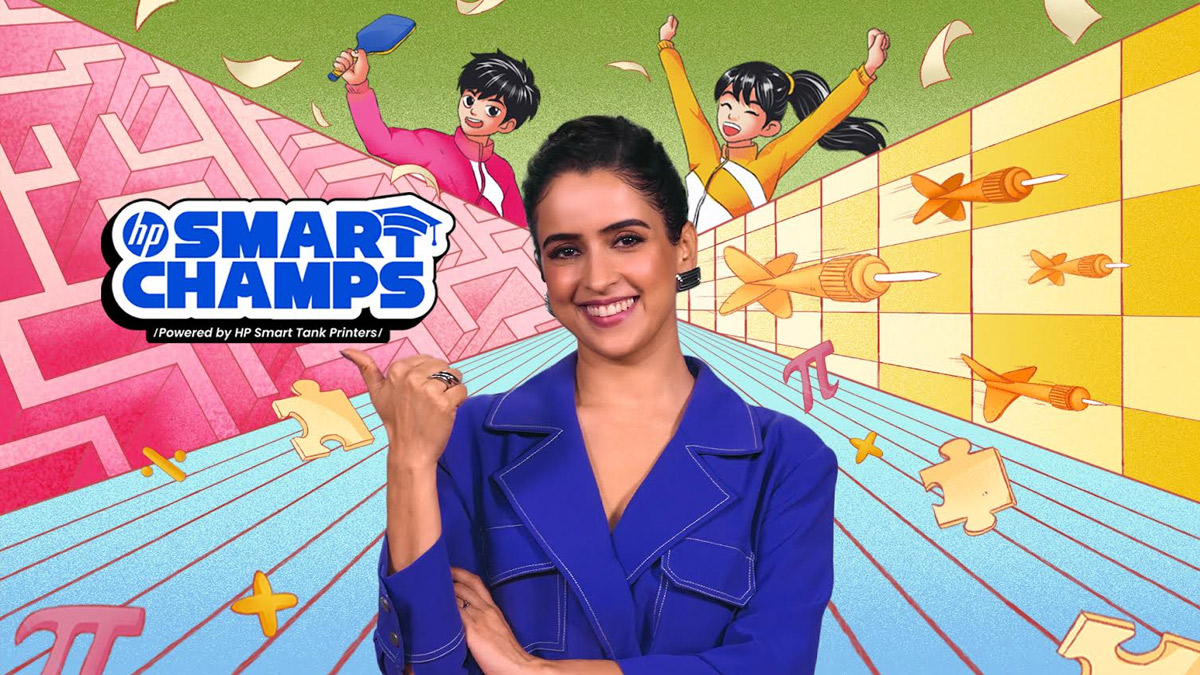
NEW DELHI: HP India has teamed up with JioStar to launch HP Smart Champs, a new learning-based game show designed to make education engaging for school students across the country.
Hosted by Sanya Malhotra, the 10-episode series brings together students from Grades 5 to 9, who compete in teams through quiz and puzzle-based challenges that test knowledge, logic and teamwork. The show will begin streaming on JioHotstar from April 11 and will premiere on Nick on April 18, with weekend episodes airing at 7 PM.
Powered by HP Smart Tank printers, the format integrates print-based learning into the gameplay, using worksheets, clues and visual problem-solving tools to encourage hands-on participation. The idea is to move students beyond rote memorisation and towards more applied, curiosity-led learning.
The competition promises high stakes, with winners set to receive a cash prize of Rs 10 lakh, while runners-up will take home Rs 5 lakh. Additional rewards include HP AI laptops, Smart Tank printers and accessories, while the winning school will be awarded an HP Smart Tech Lab.
Speaking about the initiative, HP India managing director Ipsita Dasgupta said, “At HP, we believe nurturing India’s youth is key to the country’s progress, and technology plays a foundational role in enabling this. With HP Smart Champs, we wanted to create something beyond traditional learning, a fun-filled platform where curiosity, creativity and critical thinking take centre stage.”
On the show’s reach, JioStar head entertainment sales Mahesh Shetty said, “HP Smart Champs reflects how children today learn through exploration and experience. With Nick and JioHotstar, we are creating a multi-screen approach that is both engaging and meaningful.”
Highlighting the role of print, HP India senior director print Satish Kumar said, “The show brings print-based learning to life in an engaging format, helping students develop deeper understanding through hands-on experiences.”
The journey to the finale began with participation from over 1,000 schools across 26 cities, narrowing down to 34 finalists who will compete in a studio showdown in Mumbai.
With its blend of entertainment, education and technology, HP Smart Champs is positioning itself as more than just a quiz show. It is a nationwide push to make learning interactive, accessible and, above all, a lot more fun.







