MAM
Schbang owns up to its mistakes on Mental Health Day

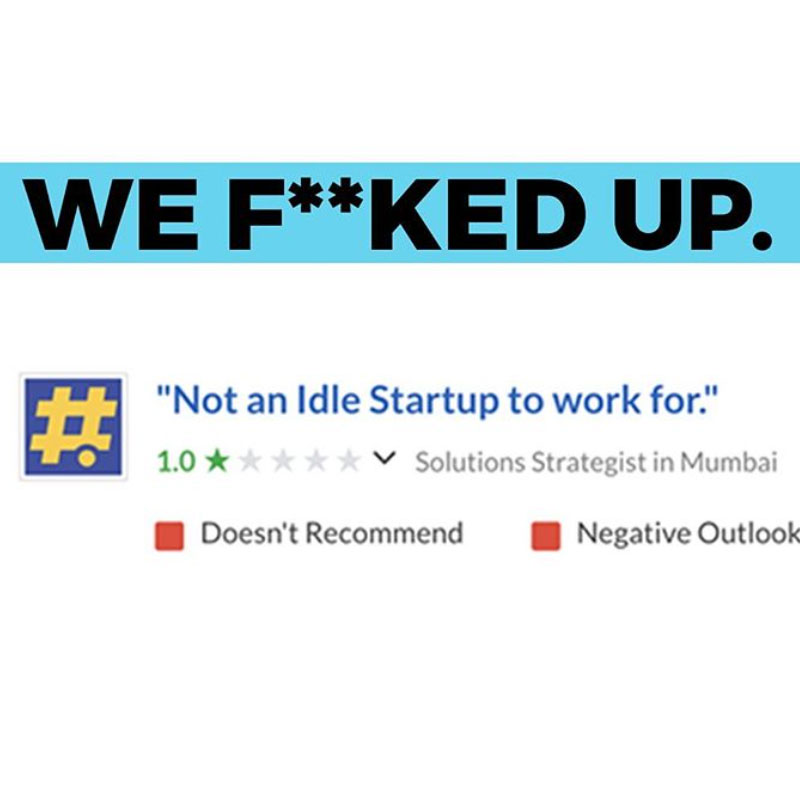
NEW DELHI: As the world celebrates Mental Health Day, marketing solutions agency Schbang acknowledged the negative feedback it has received on its work culture and vowed to make changes through proactive initiatives.
The agency put up a carousel post on Instagram with the first slide reading, “We F**ked Up”. On the next slide, one can read some of the negative testimonials the company has received for its demanding work culture, long working hours, and less work-life balance.
The post also had a personal message from the agency: “Mental Health > Everything else. Time to acknowledge and be the change, start a conversation, because we all deserve better.”

Admitting its mistakes, the agency elaborated on five solutions that they have devised to make Schbang a more positive and mental-health friendly place. These include: ramped up hiring (they had hired 150+ new employees during the lockdown); getting an in-house therapist for employees; additional two mental health wellness leaves; enabling managers to have honest conversations with clients on work-load, briefs, and deliverables; and training managers to get full clarity on briefs before they start the work.
The two-day mental health leaves can be availed during a calendar year, and are carried forward, like other leaves, for three years in case one doesn’t take them.
The post was met with mixed reactions in the comments section. While many lauded the agency for making the bold move of owning up to its mistakes and taking serious corrective measures, other questioned whether this was just a marketing gimmick. One commenter also suggested that the agency should set some rules and guidelines for clients too, for the initiative to work.







MAM
Sleepwell unveils nationwide sleep study on World Sleep Day
79 per cent use screens before bed, 36 per cent of 18–25-year-olds sleep ≤5 hours.
MUMBAI: Sleepwell just dropped the pillow truth bomb because when India’s sleeping less and scrolling more, even the mattress wants to stage an intervention. On World Sleep Day 2026, Sleepwell released its nationwide Sleep Study, painting a stark picture of India’s escalating sleep crisis. The findings show that 79% of Indians use screens right before bed, fuelling restless nights and drowsy days. Alarmingly, 36% of young adults aged 18–25 sleep five hours or less making them the country’s most sleep-deprived group.
The study also busts the myth of “catch-up sleep”, 65% of respondents actually sleep even later on weekends, pointing to increasingly irregular patterns that spill fatigue into the working week. Mattress discomfort emerged as a frequently overlooked culprit behind late-night wake-ups and constant leak-anxiety checks.
To drive the message home, Sleepwell’s CMO Puneet Gulati appeared on Zee Business, stressing that quality sleep isn’t a luxury, it’s foundational health. He highlighted how the right mattress can transform restless nights into restorative ones.
The brand doubled down with clever late-night activations, partnering with a quick-commerce platform to serve contextual ads between 11 pm and 3 am, gently nudging bleary-eyed scrollers to consider mattress discomfort as the reason they’re still awake and pointing them to the nearest Sleepwell store. Digital influencers and creators also shared relatable stories of how poor sleep fuels impulsive late-night behaviour.
In a nation that celebrates hustle but quietly pays for it in lost rest, Sleepwell isn’t just selling mattresses, it’s selling the radical idea that sometimes the bravest thing you can do is close your eyes and actually sleep well.







