Connect with us

MAM

Scarecrow bags Anchor Electricals’ creative account

Published

on

MUMBAI: Anchor Electricals, a Panasonic Group company, has appointed Scarecrow Communications as its creative agency.

Anchor Electrical director sales and marketing Dinesh Aggarwal said, “We were looking for an agency which will understand our transformation and growth need. I believe that Scarecrow does and we look forward to working together on our stated objectives.”

Scarecrow Communications, the full-fledged advertising agency provides creative, media, PR, digital as well as design services.

Advertisement

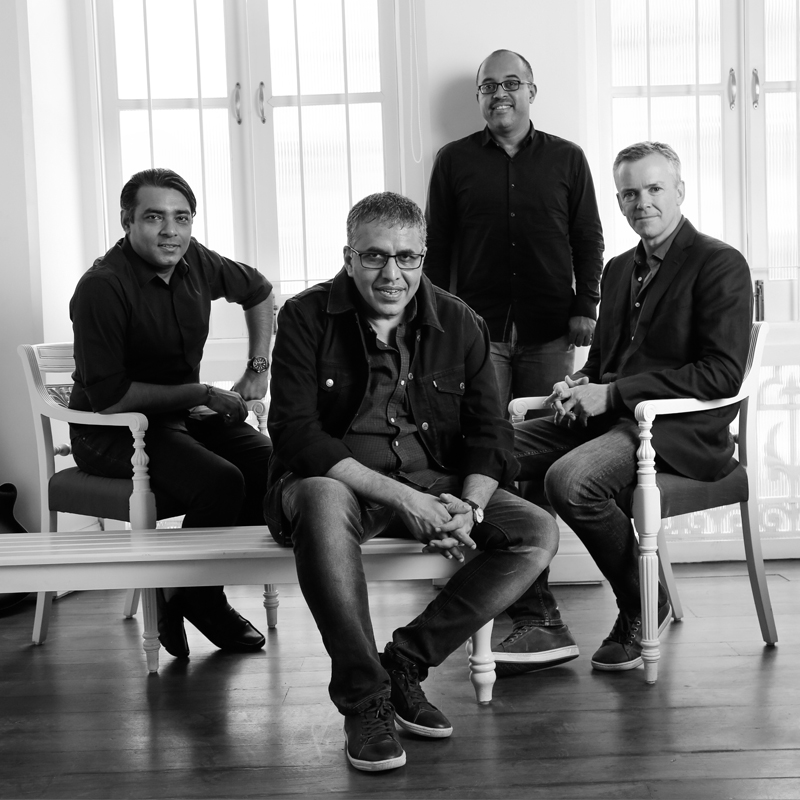
Scarecrow Communications founder director Raghu Bhat said, “It‘s a source of personal and professional pride to be associated with a brand like Anchor. The electrical product sector is highly unorganised. And there is a genuine opportunity to create interventions at multiple levels through the power of creativity.”

Scarecrow Communications founder director Manish Bhatt said, “We have handled Anchor Electricals in our ex-agency and have the highest regard for the management. We are delighted by this opportunity and hope to use our category experience to create impactful creative work that boosts the topline.”

Scarecrow Communications founder director Arunava (Joy) Sengupta added, “The sector is hotting up and it‘s the right time to create consumer pull. We are thankful to Anchor Electricals for reposing trust in us.”

Advertisement

Mumbai headquartered-Scarecrow also has an office in Delhi and handles brands like DLF, Nestle, Future Capital, Religare and Rupa Innerwear.

Anchor Electricals is a market leader in switches and accessories.

Advertisement
Click to comment

Leave a Reply

Your email address will not be published. Required fields are marked *

MAM

The way in which AI is changing the “hidden labor” behind the content of entertainment

Published

on

Artificial intelligence is a topic that is frequently discussed in terms of “spectacle,” and this means that people tend to think about the images that have been produced, the voice that has been generated, and the predictions that have been made about the potential of machines replacing the jobs of creatives.. In reality, one of the most interesting shifts is happening in a less obvious part of the media world. AI is changing the hidden labor behind entertainment content, the practical work that happens before a story, promo, clip, or campaign reaches the audience.

That shift becomes easier to notice when looking at the daily routines inside production and marketing teams. A streaming release, celebrity interview, music launch, or television promo now has to live across many formats at once. Visual preparation, fast editing, asset cleanup, and image adjustments all matter more than they did a few years ago, and this is where tools connected to remove background fit naturally into the conversation. They show how AI has moved into the background of media work, where it helps shape the speed, consistency, and visual language of modern entertainment.

The Entertainment Industry Runs on More Than Big Creative Ideas

Advertisement

The end product that the public consumes is the finished product. They see a poster, a small image, a brief promo video, a still image, or a social media post. They don’t see the behind-the-scenes labor that goes into the preparation of this content. They don’t see the many different versions of the image that have been prepared for different websites, different mobile interfaces, different streaming interfaces, and different press kits.

This is when the practical application of AI comes in. It supports the repetitive visual tasks that used to absorb a large share of time. Background cleanup, subject isolation, formatting assistance, smart resizing, and automated enhancement may sound like small actions on their own, but together they shape how quickly a campaign can move from rough material to public release.

That matters because entertainment now works in overlapping cycles. A trailer leads to social clips. Social clips lead to stills. Stills lead to articles, banners, and platform previews. The same content needs to look strong in many places, often within very short time windows. AI helps teams keep up with that pressure without turning every routine step into a bottleneck.

Advertisement

Why the Real AI Story in Media Is About Volume

One of the least discussed pressures in entertainment media is volume. Teams are not simply making one good piece of content. They are creating families of content. A TV series launch today may require a homepage image, a vertical promo, a YouTube cover, cast portraits, article art, behind-the-scenes visuals, and platform-specific variants for regional distribution.
This is where AI has changed the economics of attention. The issue is not only whether a team can create a polished asset. The issue is whether they can create many polished assets without losing coherence. AI-powered assistance gives production teams more room to handle this expansion.

A few examples make the shift clearer:

Advertisement

● entertainment editors can clean and prepare supporting visuals more quickly
● promo teams can adapt image assets for multiple formats in less time
● digital newsrooms can publish faster when visuals need light processing
● branded content units can prepare sponsor-ready materials with fewer delays

This does not remove the need for designers or editors. It changes how their time is used. Instead of spending long hours on repetitive prep work, they can focus more on visual priorities, campaign tone, and platform fit.

That is one reason AI feels especially relevant in entertainment and media technology. This industry runs on deadlines, but it also runs on repetition. Any tool that reduces friction inside repeated tasks can affect output far more than it first appears.

Advertisement

AI Is Influencing Editorial Packaging

There is another angle that deserves more attention: AI is influencing how stories are packaged, not just how they are produced. In entertainment coverage, presentation has become almost inseparable from editorial reach. A news item about a show launch or creator deal may be accurate and timely, but its visibility often depends on the strength of its supporting visual format.

This means packaging is no longer a secondary layer. It is part of the editorial strategy. This is when the practical application of AI comes in. It is when the “packaging” of the content becomes easier because of the assistance that has been given in the preparation of the images.

Advertisement

The effect is especially strong in areas such as:

● OTT platform announcements
● celebrity and talent coverage
● music releases and promotional campaigns
● television show launches and event-based content

In these spaces, timing and visual readiness often define performance. This is why AI is useful: it helps close the gap between editorial intent and publishable execution.

Advertisement

This is also why AI is becoming part of the normal conversation when it comes to news promos. The discussion is no longer limited to futuristic experiments. It now includes ordinary questions such as how quickly a team can prepare artwork, how many visual versions they can test, and how consistently a campaign can be carried across channels.

What This Means for Smaller Media Players

Large entertainment brands have had access to more people and more production capability for a long time. AI is changing the game for small publishers, small studios, individual producers, and small entertainment brands. It’s providing them with something that will help their output compete from a visual standpoint.

Advertisement

That does not guarantee equal reach, but it does reduce some long-standing disadvantages. A smaller team can now handle certain visual tasks with greater speed and consistency. That makes it easier to maintain a strong publishing rhythm, support stories with polished assets, and react to trends before they fade.

This may be one of the most important consequences of AI in media technology. It opens room for more players to look prepared and credible in environments that once favored only the most heavily staffed organizations.

Still, there is a limit to automation. Taste remains human. Context remains human. Editorial judgment remains human. An AI-assisted asset may be technically clean, yet still feel generic, awkward, or tonally off. Entertainment audiences are sensitive to presentation, and poor visual instinct becomes obvious quickly.

Advertisement

That is why the strongest use of AI in this space is selective. Teams benefit most when they use it to handle structure, repetition, and first-pass execution, while keeping human attention on style, meaning, and consistency.

The Future of AI in Entertainment Will Feel Ordinary

The most lasting technology shifts usually stop feeling dramatic. They become normal. That is likely what will happen with AI across media production and entertainment publishing. Rather than being talked about as a novelty, it will be part of the normal infrastructure alongside editing suites, scheduling systems, media libraries, and content management systems.
The point to note is that AI is already affecting the labor that goes into modern entertainment. It is helping teams deal with scale, speed, and visual fragmentation. It is making it easier to transform one core idea into many usable assets. It is giving production and editorial teams more flexibility in moments when timing matters most.

Advertisement

From the outside, this may seem like a technical adjustment. Inside the industry, however, it is an even larger concept. It alters the way work is distributed, the speed at which ideas are pushed through the system, and the number of finished versions of the story that can exist at any given time. In an entertainment media environment that is characterized by constant publication, such an evolution cannot help but catch the eye.

The conversation about AI and technology in media and entertainment often veers into the realm of hyperbole. Perhaps the most telling approach, however, is the small print. The real revolution is happening behind the scenes, in the workflows, in the preparation of assets, and in the packaging of the work itself.

Advertisement
Continue Reading

Advertisement News18
Advertisement All three Media
Advertisement Whtasapp
Advertisement Year Enders

Copyright © 2026 Indian Television Dot Com PVT LTD

This will close in 20 seconds

×