Ad Campaigns
Savlon uses ‘ID Guard’ to promote hand hygiene among kids

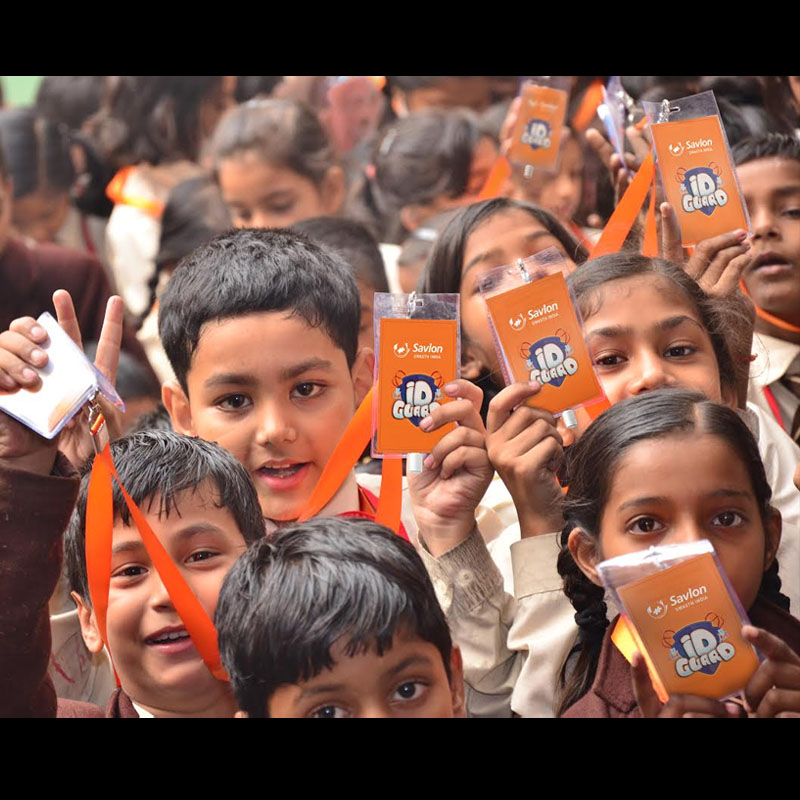
MUMBAI: ITC’s Savlon Swasth India has strengthened its commitment to address the widespread issue of hand hygiene by introducing the unique Savlon ID Guard today. The innovation offers a simple solution to hand hygiene for school children. An ID card is an integral part of a school kid’s daily routine. This has been imaginatively redesigned with a multi-use handwash sachet, thereby introducing the unique Savlon ID Guard.
In line with its proposition of healthier kids, stronger India, Savlon Swasth India Mission was launched last year on Children’s day with the Healthy Hands Chalk Sticks. This year the mission expands its objective of encouraging behavioural change towards washing hands amongst children through various engaging and entertaining educational initiatives in schools. With the invention of the Savlon ID Guard, designed with the unique multi-use Savlon handwash sachet, Savlon Swasth India Mission takes a step forward to become an enabler.

The simple yet effective idea stems from the fact that access to handwash or cleansers like soap is often limited. The inconvenience of carrying a soap or a handwash bottle adds to this limitation especially for children in the primary schools in India. Parents find it very difficult to ensure that children are following proper hand hygiene practices in school too. Savlon ID Guard with the innovative multi-use handwash sachet not only enhances convenience and comfort for parents but also is an effective way to induce children into the habit of washing hands with soap. Savlon ID Guards with 3 refill sachets are designed to take care of hand hygiene for more than a month for all children. The initiative has been piloted in 32 schools and will be rolled out in 1000 schools over the next six months.
Savlon India chief executive of personal care products business Sameer Satpathy says, “Cleaning hands with cleansers like a soap or a handwash needs to become a routine behavioural practice amongst children. Access to a cleanser out of home, at times, is a challenge and could impede efforts to encourage behavioural change. Savlon ID Guard harnesses the power of design-thinking to encourage and enable hand hygiene.”



NATIONAL: Amazon Ads has laid out a sharply tech-led vision for the advertising industry in 2026, arguing that artificial intelligence, streaming TV and creator partnerships will combine to turn brand building into a more precise, performance-driven business.
At the heart of the shift, the company says, is the fusion of AI with Amazon’s vast trove of shopping, browsing and streaming signals, allowing advertisers to move beyond blunt reach metrics to campaigns designed around real customer behaviour.
“The future of advertising is not about reaching more people, but the right people with messages that resonate,” said Amazon Ads India head and vice president Girish Prabhu. “By combining AI with deep customer insights, we help brands move from broadcasting campaigns to having meaningful conversations wherever audiences spend their time.”
One of the biggest changes, according to Amazon Ads, will be the collapse of the wall between media planning and creative development. Retail media, powered by first-party data, is increasingly shaping everything from brand discovery to final purchase, pushing marketers to design campaigns around audience insight rather than internal instinct.
AI is also moving from a support tool to a creative engine. Agentic AI, which automates and accelerates production, is expected to make high-quality creative accessible even to small businesses, compressing weeks of work into hours and giving challengers the ability to compete with larger brands on speed and scale.
Behind the scenes, AI-driven analytics will take on a bigger role in campaign optimisation, identifying patterns, spotting opportunities and recommending actions that would previously have required teams of analysts.
Streaming TV is another big battleground. With India’s video streaming audience now above 600 million and connected TV users at 129.2 million in 2025, advertisers are set to treat streaming not just as a branding channel but as a performance engine, measured increasingly by sales, sign-ups and bookings rather than just reach.
Finally, Amazon Ads sees creators and contextual advertising reshaping how brands tell stories. Creators will act less like influencers and more like long-term partners, while scene-aware ads on streaming platforms will allow brands to insert hyper-relevant offers into the flow of what viewers are watching.
Taken together, Amazon Ads argues, these shifts mark a move towards advertising that is both more human and more measurable, where AI handles the complexity, and creativity does the persuading.