MAM
Sai Nagesh to join Lintas Media Group

MUMBAI: Sai Nagesh to join the Lintas Media Group as a senior position with Insight, its youngest brand that was launched last year, from April 2005.
According to an official communiqué, Sai will be working closely with Insight President Raj Gupta on its next phase of growth. Sai will be at the helm of a key account groups for the brand. Along with this, he will also be a part of the senior team involved in business development.
Sai is a veteran in the media services and planning business and has a varied experience in a career spanning almost a decade and a half. The media release also informs that he joins after a stint with Group M where he was director-marketing and corporate affairs and has also worked extensively on the retail sector in his capacity as an entrepreneur.
Lintas Media Group director Lynn de Souza said,” I believe this is the perfect start to Insight’s next stage of accelerated growth. I’m sure that Sai extensive experience and goodwill will ensure gains across functional areas. I look forward to a positive partnership”. She added, “His recruitment into the family is the first of more”.
Insight president Raj Gupta adds, ” Sai’s association with Insight establishes our intent to expanding the horizon for this brand. He will be a member of our core team involved in assuring Insights market offering is complete and relevant to the business needs of today. I’m also sure that our promise to deliver ‘not just GRP’s but returns’ will be further strengthened with Sai’s efforts”.
Sai Nagesh says,”The name Insight itself is self explanatory. The role and responsibilities that Raj outlined to me is very exciting and I am looking forward to the association.”






Brands
Funskool India crosses US$40 million turnover in FY 2025-26
Toy manufacturer posts steady growth despite global headwinds.
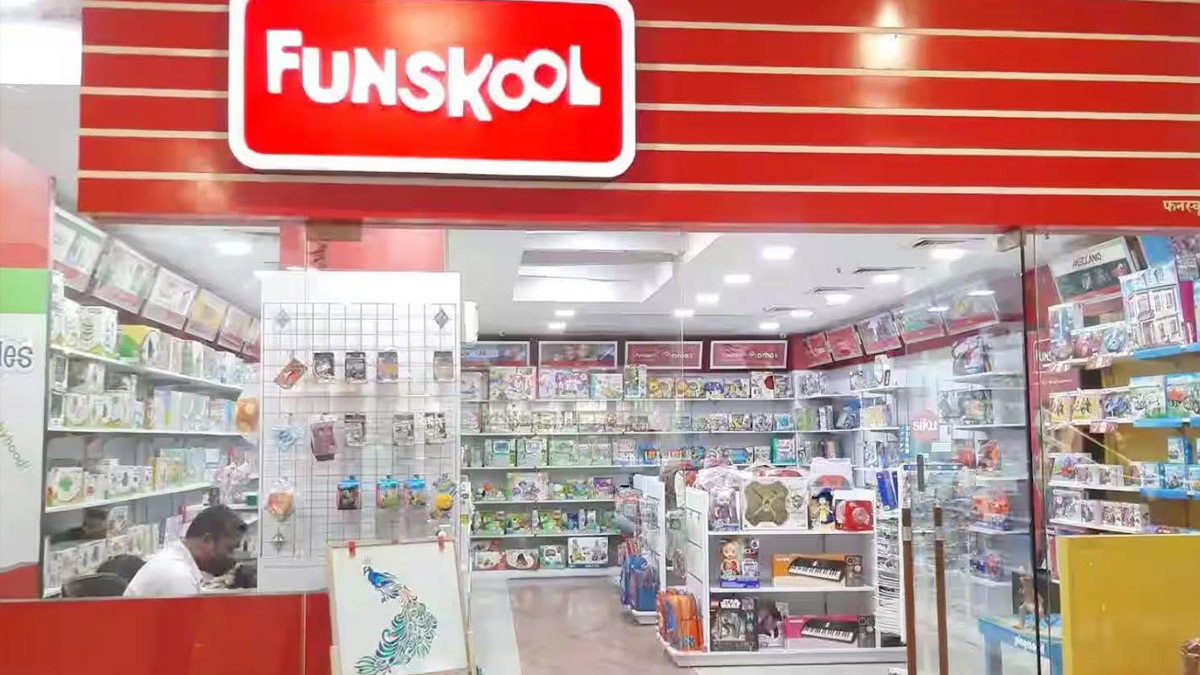
MUMBAI: Funskool India has played its cards well turning challenges into steady growth while keeping the fun alive in the toy business. The country’s leading toy manufacturer has reported a turnover of $40 million in FY 2025-26, demonstrating resilience in a difficult global environment. The company recorded an average growth of 14 per cent over the past two years, with exports growing at a healthy 19% year-on-year.
While domestic business grew at a modest single-digit pace, Funskool saw encouraging traction in key categories such as Fundough (dough) and Handycrafts (arts & crafts).
Funskool India Ltd. CEO K.A. Shabir said, “We successfully navigated the challenges posed by US tariffs last year and continued to grow both our export and domestic businesses. Given the ongoing geopolitical situation in West Asia, we are currently working with a moderate growth outlook of 12–15 per cent, with plans to revisit our targets after Q1 once the situation stabilises.”
He highlighted strengthened partnerships with global companies including Spin Master (Canada), Moose Toys (Australia), Melissa & Doug (USA), Asmodee (France), Learning Resources (USA), and Buffalo Games (USA). The expansion of the company’s Goa plant is progressing and is expected to be completed by the end of the current financial year.
Looking ahead, Funskool expects a significant shift in domestic growth momentum for FY 2026-27, driven by new categories such as friction vehicles under the brand “BlazeTrix”, remote-control cars under “VoltRush”, and the addition of popular licences like Paw Patrol.
In an industry where playtime never stops, Funskool has shown that even in turbulent times, a smart strategy and strong partnerships can keep the business ticking along nicely. As it gears up for the next financial year, the company appears well-positioned to build on its solid foundation and bring even more joy to children worldwide.







