MAM
Republic Day Sales 2026 reveal how India shops now: Unicommerce Analysis

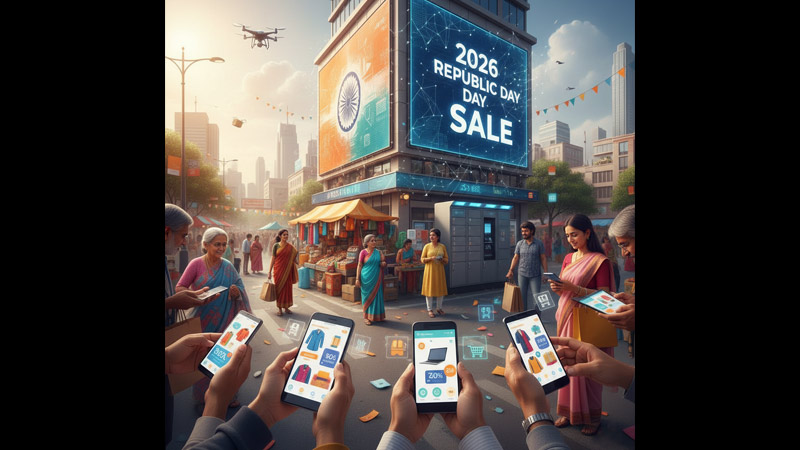
NEW DELHI: If Republic Day Sales were once about loud discounts and one-off splurges, 2026 tells a calmer, more confident story. India’s e-commerce market is growing up and doing so quietly, steadily and far beyond the big cities.
An analysis by Unicommerce, based on over 27 million order items processed on its Uniware platform during the 2025 and 2026 Republic Day sale periods, highlights four clear signals shaping how Indians are shopping today.
The biggest surprise came from smaller cities. Tier 3 markets accounted for nearly 40 per cent of total order items, with volumes growing over 19 per cent year-on-year. Towns such as Kolar, Rohtak, Kamrup, Ernakulam and Khordha led the surge, proving that e-commerce’s next chapter is being written well beyond the metros.

Food and wellness purchases showed especially strong traction. Healthy food volumes more than doubled in Tier 2 cities, while Tier 3 markets contributed around 43 per cent of all food and beverage orders, underlining how online shopping has become part of everyday life in smaller towns.
Growth this year was driven less by higher bills and more by people buying more often. Order volumes rose 16.9 per cent year-on-year, while gross merchandise value grew 11.9 per cent, pointing to repeat consumption as the real engine.
FMCG and agriculture products recorded nearly 80 per cent growth, while beauty and wellness grew about 53 per cent. Shoppers stocked up on dry fruits, millet-based foods, healthy snacks and organic staples, alongside face serums, body washes and grooming essentials. The message is clear: e-commerce is now about routines, not rushes.
Speed continued to shape buying decisions. Quick commerce led growth with a 25 per cent jump in order volumes, followed by brand-owned websites at 23 per cent. Marketplaces still handled the largest share of orders, but brands leaned heavily on automation to manage inventory, route orders and respond to customers in real time.
Artificial intelligence quietly worked behind the scenes to turn interest into orders. Unicommerce’s Convertway platform powered over 2.5 million customer messages across SMS, WhatsApp and RCS, helping brands lift conversion rates during peak days.
Its AI voice agent, Catalyst, made more than 1.2 lakh calls to assist with last-mile order completion. The result was over ten times the revenue compared to the cost incurred, turning AI into one of the most efficient tools of the sale season.
Taken together, these four signals point to a shift in India’s e-commerce story. Growth in 2026 is being fuelled by repeat buying, sharper execution, deeper reach into smaller cities, faster fulfilment and smarter use of AI. The era of noisy spikes is giving way to something more durable and distinctly more mature.





MAM
Lego brings Messi, Ronaldo, Mbappé, Vinicius together
Campaign clocks 314 million views ahead of FIFA World Cup 2026 buzz.
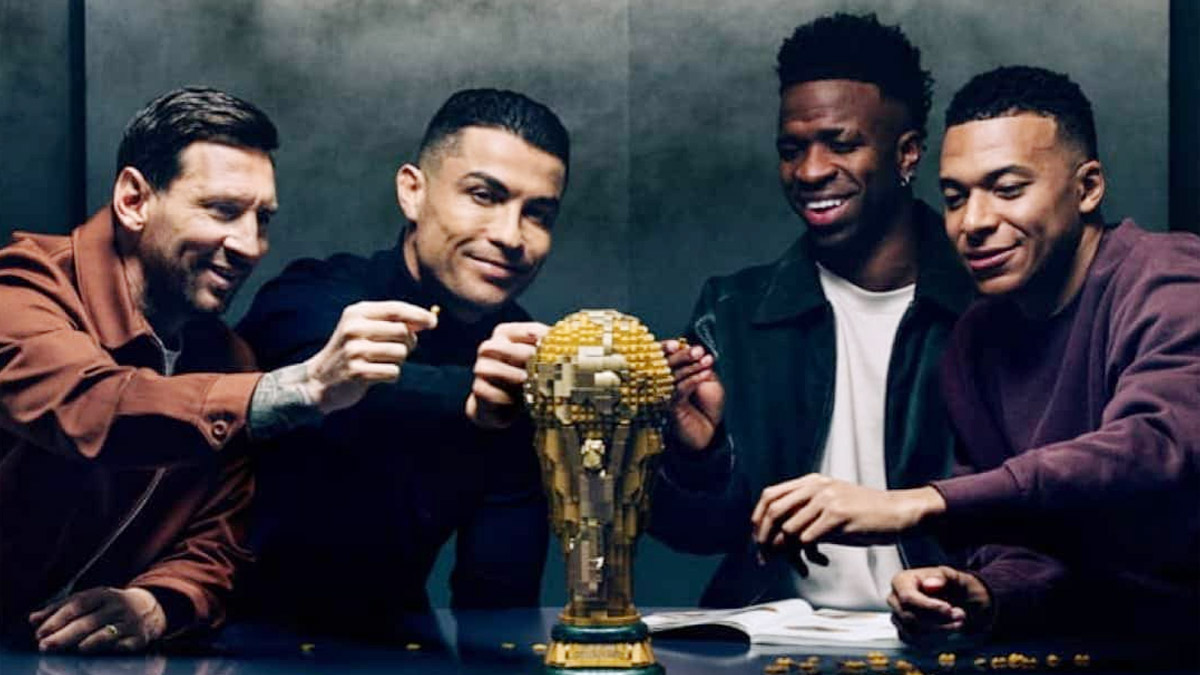
MUMBAI: Four legends, one frame and not a single tackle in sight. Lego has pulled off a crossover few thought possible, uniting Lionel Messi, Cristiano Ronaldo, Kylian Mbappé and Vinícius Júnior in a single campaign ahead of the FIFA World Cup 2026 only this time, they’re building dreams brick by brick.
Titled “Everyone wants a piece”, the campaign features the quartet assembling a Lego version of the World Cup trophy, before placing miniature versions of themselves atop it, a playful nod to football’s ultimate prize. Shared widely across social media, the ad carries a pointed disclaimer: it is not AI-generated, a subtle but telling signal in an era where even reality is often questioned.
The numbers tell their own story. The campaign has already crossed 314 million views on Instagram across the players’ accounts, with fans hailing it as a rare, almost nostalgic moment particularly for the reunion of Messi and Ronaldo, whose last shared campaign ahead of the 2022 World Cup became one of the platform’s most-liked posts.
Beyond the film, Lego is extending the play with exclusive, player-themed sets tied to each of the four stars, part of a broader football-led programme designed to ride the global momentum building towards 2026. The idea, as echoed by the players themselves, leans into the parallels between football and play experimentation, creativity, failure, and triumph.
Messi described the sets as a way to bring on-pitch moments into an imaginative, hands-on world, while Ronaldo called the transformation into a Lego figure a rare honour, blending sport with storytelling. Vinícius, meanwhile, struck a more personal note, recalling childhood moments of building with Lego and framing creativity as a universal language that transcends borders.
The timing is no accident. With the 2026 World Cup set to run from June 11 to July 19 across the United States, Canada and Mexico, and featuring an expanded 48-team format, global anticipation is already building. Argentina, led by Messi, will enter as defending champions, adding another layer of intrigue.
For Lego, the campaign does more than celebrate football, it taps into its mythology. Because when icons become figurines and rivalries turn into play, the beautiful game finds a new kind of pitch. one built, quite literally, by hand.






