MAM
‘red dot award’ extends its scope into design concept

MUMBAI: The internationally renowned ‘red dot design award’, which marks its 50-year jubilee this year, has extended into the area of ‘design concept’. What makes the new “red dot design award: design concept” unique is that instead of centering on products that have already been introduced to the market, the award focuses on concepts in design; on new, creative and exciting ideas and visions.
The ‘red dot award: design concept’ is intended to assess and promote truly creative achievements: designers, agencies, design studios, design professionals, students as well as research departments and inventors worldwide are invited to take part in the “red dot award: design concept.”

All kinds of innovations and design novelties that have not yet been introduced to the market can be submitted. Registration forms and brochures for the same have been made available with the India Representative. Participants can also register online.
Ken Koo is the president of ‘red dot Singapore and India, and red dot is represented by Shashank Nabar – Director, Multiprint Advertising, Mumbai.
The “red dot award: design concept”aims to pay tribute to the high potential and creative energies of young upcoming talent, designers and ambitious design companies – not only in Asia, but also around the world. The new competition will provide the important link between creative designers and companies as well as an opportunity to present their new concepts and creative visions and compete on an international level.
A broad interpretation of the categories is expected. However, the two main categories are, product design and communication design.
The expected submissions in 2005 are more than 3,000 for over 20 countries. The jury will judge the concepts in August, and the highlight of the competition will be the festive award ceremony in Singapore in November. The exhibition of all award-winning concepts within the competition will also be opened on the same evening.
Nabar urges the design fraternity to participate in large numbers, “We Indians have made our mark in various fields internationally. Let’s make our presence felt in design too. Every winner of red dot will make a landmark history for the design fraternity of India. Our response will also decide whether India proves itself a destination for the traveling exhibition that Red Dot plans to take to only two nations in Asia.”

MAM
GUEST COLUMN: How data and adtech are driving OOH growth in India
Data and technology are reshaping OOH and boosting advertiser confidence.
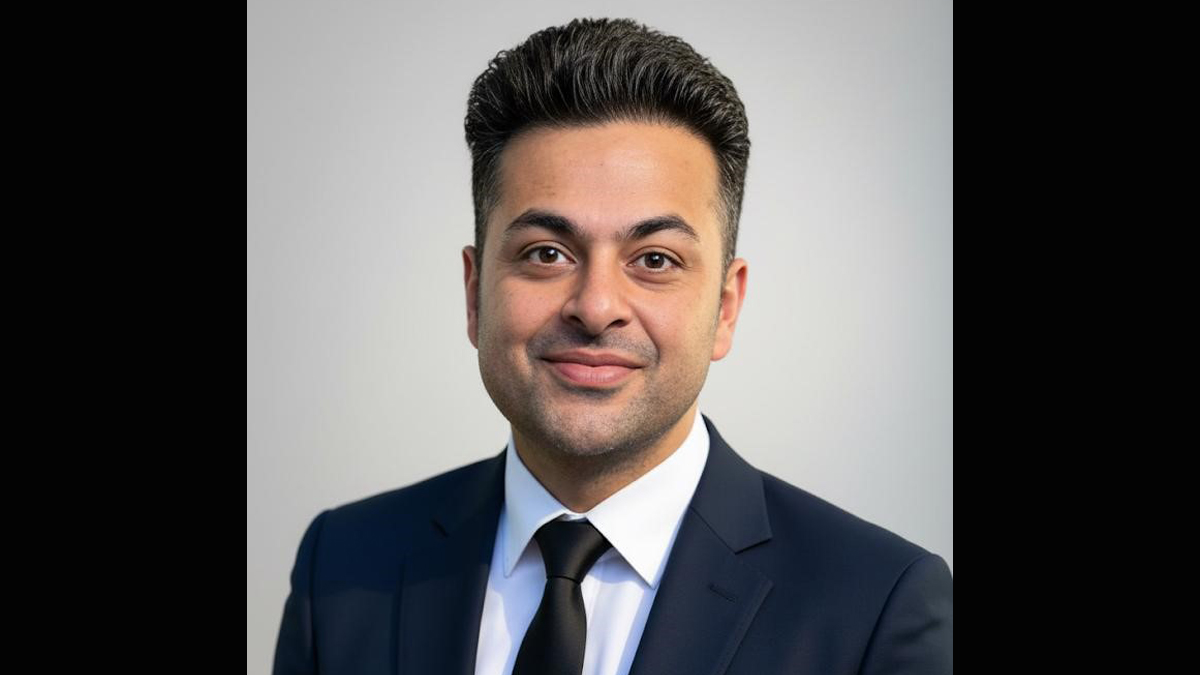
MUMBAI: Out-of-Home (OOH) advertising is evolving from a traditional, location-driven medium into a data-informed channel that blends physical presence with digital intelligence. For Nipun Arora, co-founder of Osmo, this transformation is redefining how advertisers plan, execute, and measure campaigns in India. In this piece, Arora explores how traffic, mobility, and AI-powered data are enhancing site and audience insights, why DOOH is accelerating precision planning, and how authenticity, creativity, and repeat exposure are driving renewed advertiser confidence in OOH.
For years, Out-of-Home (OOH) advertising operated with minimal reliance on data. Site selection was largely driven by visibility, location, and a planner’s understanding of traffic patterns.
That is now changing rapidly.
The first shift came with traffic data, offering basic estimates of vehicular movement. This evolved into mobility data powered by GPS signals, enabling deeper insights into audience movement and behavior. Point-of-interest data further refined this by helping advertisers understand who is likely to be present around a location.
Today, artificial intelligence and computer vision are unlocking an entirely new layer of site and audience intelligence. Together, these data streams are transforming OOH from a real estate-led medium into a data-backed one.
The rise of Digital Out-of-Home (DOOH) is accelerating this shift. Campaigns can now be planned, scheduled, and optimized with increasing precision bringing OOH closer to an adtech model. That said, as a physical medium, OOH still operates within real-world constraints, making this transition gradual rather than absolute.
At the same time, advertisers are returning to OOH with renewed interest.
One of the biggest drivers is authenticity. Unlike digital platforms, OOH offers real-world visibility free from bots, fraudulent impressions, or ad blockers. What you see is what exists.
There’s also growing digital fatigue. Consumers are overwhelmed by constant online advertising, often choosing to skip or ignore it. OOH, by contrast, engages audiences naturally within their environment, without interruption.
Mobility further strengthens its impact. As people move through cities daily, OOH benefits from repeated exposure building recall over time in a way few channels can match.
Add to this the power of creativity. Large formats and contextual executions don’t just capture attention, they often extend beyond the physical space, finding life on social media.
Finally, the increasing availability of data at the planning stage is boosting advertiser confidence. Better insights mean better decisions and more accountability.
As cities grow and movement increases, OOH is uniquely positioned at the intersection of physical presence and data intelligence. Its evolution from billboards to big data isn’t just a technological shift, it’s a redefinition of the medium itself.
Note: The views expressed in this article are solely the author’s and do not necessarily reflect our own.








