MAM
Rajnigandha’s new TVC showing realisation of aspirations


NEW DELHI: The Dharampal Satyapal (DS) Group has launched a new campaign captioned “Stadium” for its mouth freshener brand Rajnigandha with the new punch line “Munh Mein Rajnigandha Dil Mein Hai Duniya”.
The key message of the campaign is “Success that makes a difference evokes admiration”. The campaign is created by McCann Erickson. The campaign embarks by releasing TVC followed by digital, outdoor, and below the line (BTL) and POS medium.
Commenting on the campaign Sr GM (Marketing) Rajeev Jain said, “Rajnigandha has always been a symbol of success, aspiration, stature and a perfect companion for the successful people for last three decades; it will now redefine the leadership aspect as well. The new punchline “Munh Mein Rajnigandha Dil Mein Hai Duniya” is a paradigm shift to a new benevolent and successful India.”

The brand will now not only stand for success but will also mark a difference, by helping others in fulfilling their aspiration. While the earlier Rajnigandha campaign focused more on the success, the new Rajnigandha campaign has a more compassionate, humane and society-friendly approach. The campaign talks about an evolved person who is an equal contributor to the success of his fellow men. The protagonist of the commercial is shown as a successful business magnate, who not only has strong business acumen; but is also concerned for the wellbeing of society at large.
The TVC flows with three investors presenting a blueprint to a young businessman in a field. This is followed by a well-heeled businessman with a calm and serene air around him, who steps out of a stretch Limousine. The elder brother surveys the land and sees few kids playing cricket. The younger brother then excitedly blurts his business plan to create India’s biggest mega mall consisting of theme parks, amusement grounds and 6 multiplexes on that land. A batsman is seen hitting the ball and it strikes the car. The elder brother throws back the ball to the kids and says “Yahan stadium ban-na chahiye”. One of the investors mutters under his breath “ Charity ke bare main soch rahe hain.” Elder brother responds “Kal ki soch rahe hain”. He opens a pack of Rajnigandha, pops in a spoonful and replies “kabhi toh aisa khwab dekhiye, jismain hazaro khwab shamil ho”. Followed by this sequence is a newsperson making an announcement “GR Enterprises ke international stadium ne iss sheher ke logon main garv ki bhaavna aur sports culture ko adbhutt badaava diya hai”.
A cricket team is shown coming out in the stadium, with the same young guy who was batting earlier on the barren piece of land walking in with the cricket team. Recognizing him, younger brother says, “bhaiya yeh toh wahi…” Elder brother flicks the TV and we hear an excited journalist comments “GR Enterprises shares have reached an all-time high”. Elder brother says “Jab dusro ke khwab poore karoge na… toh apna kal bante dekhoge”. Elder brother stylishly pops a spoonful of Rajnigandha into his mouth & offers the same to younger brother and investors. The shot packs over with a voiceover: Mooh mein Rajnigandha. Dil mein hai duniya.
Creative Credits:
Creative Agency: McCann Erickson
Creative Head: Prasoon Joshi
Account management: Rajeev Rakshit, Bhaskar Preenja, Shourabh Verma, Ayesha Mehra
Planning: Jitendra Dabas and Srayan Ghosh
National Creative Director: Nakul Sharma and Tirtha Ghosh
Director (of the film): Rajesh Saathi
Production House: Kerosene Films






MAM
Joy Personal Care rolls out Ubtan Face Wash TVC with Shah Rukh Khan
New film pairs star power with simple skincare pitch for summer glow
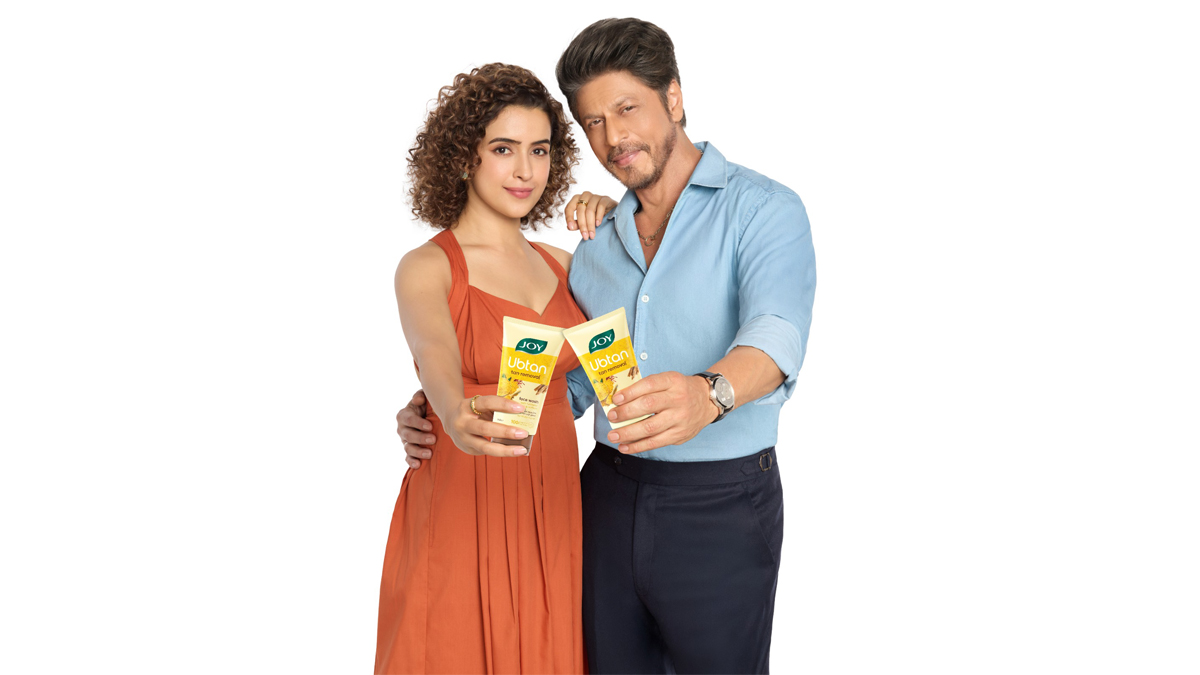
MUMBAI: Joy Personal Care has unveiled a new television commercial for its Ubtan Face Wash, bringing together Shah Rukh Khan and Sanya Malhotra in a light-hearted campaign aimed at simplifying everyday skincare choices.
The film, which marks the product’s television debut, is set in a retail environment where Malhotra is seen navigating a shelf full of options before Khan steps in with his trademark charm to offer a fuss-free solution. The narrative leans on humour and relatability, turning a routine purchase into a playful exchange.
At its core, the campaign promotes the brand’s ubtan-based formulation, which blends traditional ingredients such as turmeric, saffron and sandalwood to address common summer concerns like tanning and dullness. The messaging keeps things simple, positioning the product as an easy addition to daily routines rather than a complicated skincare step.
RSH Global co-founder and chairman Sunil Agarwal said, “As summer sets in and exposure to sun and heat intensifies, skincare concerns like tan and dullness become more pronounced. Consumers today are looking for solutions that deliver visible results while remaining easy to incorporate into daily routines.”
Echoing the consumer-first approach, RSH Global chief marketing officer Poulomi Roy said, “Through this campaign, we have brought that insight to life in a simple and engaging way, showing how Joy Ubtan Face Wash makes traditional skincare easy and effective. Shah Rukh Khan and Sanya Malhotra add relatability and charm, helping the product connect more strongly with audiences.”
Sharing his experience, Shah Rukh Khan said the campaign stood out for its simplicity and everyday appeal, while Sanya Malhotra highlighted the natural chemistry and playful tone of the shoot.
The campaign will be amplified across television, digital and social platforms, signalling a wider push as the brand looks to strengthen its position in the competitive face wash segment.
Part of RSH Global, Joy Personal Care continues to build visibility through celebrity-led campaigns and sports partnerships, including associations with Kolkata Knight Riders, Delhi Capitals and Gujarat Giants.
With familiar faces, a breezy storyline and a focus on everyday concerns, the latest campaign keeps things straightforward. In a crowded skincare aisle, sometimes the easiest answer is also the most effective one.






