MAM
Projections indicate that by 2030, at least half of fortune 500 companies may have a CIO

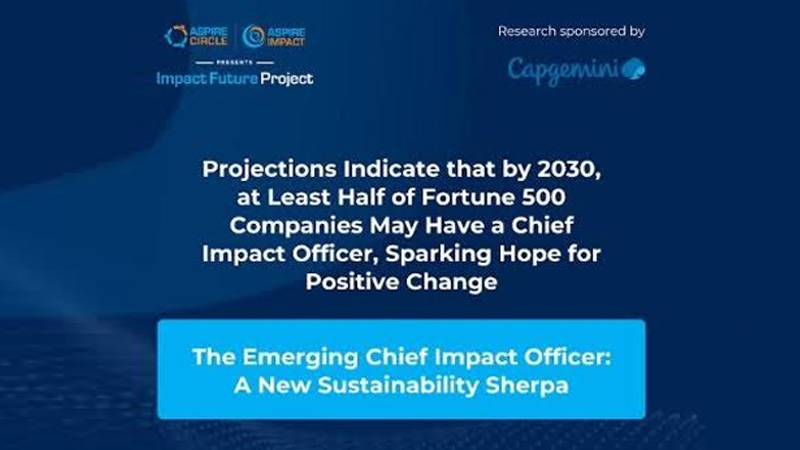
Mumbai: Aspire Impact, under the aegis of the Impact Future Project (IFP), a thought-leadership platform supported by global tech giant Capgemini, has launched a report on the evolving role of chief impact officers and their potential influence on organisations. This research publication is a first-of-its kind effort to understand, define and champion adoption of this crucial C-suite role.
As a comprehensive deep dive into the chief impact officer’s role the report features direct voices and opinions from 25 global ESG, sustainability, and impact leaders from varied organisation types and sectors across 10 countries and 6 continents. The thorough inquiry offered over 12 insights and trends based on responses to an online survey and a series of in-depth interviews which explored the need, readiness, role, skills, key performance indicators, and future prospect of the role.
As we approach pivotal milestones like 2030 and subsequently, the 2050 goals, the role of a chief impact officer emerges as crucial. As each chief impact officer contributes to transformative solutions within their organisations, a network of socially conscious leadership should emerge that is collectively equipped to steer capitalism towards a more responsible and sustainable path.

Organisations must heed the following key implications: Firstly, there is an urgent need for organisations to recognise, prioritise, and formalise the chief impact officer role—an imperative supported by 95 per cent of survey respondents. Secondly, appointment of chief impact officers are driven by an investor-led movement, with a growing demand for transparency and disclosures on ESG, Sustainability and Impact data and its linkage to financial performance. Thirdly, above all else, this role demands collaboration and consensus-building, given the possibility of encountering opposition from other CXOs, an apprehension highlighted by as many as 67 per cent of the participants. Many participants in the research believed in and pressed the necessity to derive authority from the CEO and the Board.
Delving further into the expectations and responsibilities associated with this position, the research reveals a notable transformative trend. 33 per cent of respondents recognise the triple bottom line as a critical focus, with a substantial emphasis (52 per cent) on integrating Impact into corporate values and culture. Chief impact officers play pivotal roles in developing long-term transformation plans for total impact performance, achieving net zero/circularity/SDG targets, and measuring and managing overall impact. The report underscores the imperative for CIOs to possess a profound understanding of the interplay between ESG, Sustainability, and Impact to formulate effective strategies that lead to positive organisational and societal outcomes.
Additionally, the report emphasises the need for extensive research, ample content, and pedagogy to prepare existing CSOs/ESG Heads, enabling them to confidently transition to the role of chief impact officer and guide their boards and corporations into the era of Impact capitalism and impact accounting.
Aspire Impact founder & CEO Amit Bhatia emphasized the urgency of creating the Chief impact officer role, stating, “While 42 per cent of Fortune Global 500 companies have made commitments to reduce emissions by 2030 and 25 per cent have adopted net-zero targets, only a handful have a chief impact officer. There cannot be a better time to push a stronger business case for creating this role and thus a new cadre of protagonists who can catalyse, inspire, integrate, and orchestrate impact.”
Expressing contentment with the research findings. Ecostart and founder CEO of Greenman Black (formerly Partner, head of sustainability & design (ESG) at Infosys Corey Glickman highlighted its particular significance for the Indian corporate landscape saying, “The role of the Chief Impact Officer (CIO) is gaining prominence in the corporate world as companies increasingly recognize the importance of sustainability and social impact. The CIO is responsible for ensuring that the company’s operations align with its social and environmental goals. The evolving role of the Chief Sustainability Officer (CSO) is central to the integration of material ESG issues into corporate strategy. The rise of the CIO role is a natural progression of this trend, as companies seek to create long-term value by aligning their business practices with their social and environmental goals.”
PVR Limited, chief sustainability officer Sangeeta Robinson expressed her delight at being part of this research, said, “Sustainable Value Creation is a journey not a destination. It is a journey of continual improvement. The impact you create in year one becomes your baseline for the next. This is why I believe that leading Sustainability requires not just skills and qualification, but passion too.”
Knowledge Development, Aspire Impact, director and co-author of the publication Harpreet Ghai said, “Those who can proactively negotiate these challenges and conjure up initiatives to create green pathways for their companies, won’t be wizards with magic wands, but 21st century transformation leaders, aka the new Corporate Sherpas, or chief impact officers.”
ESG, Sustainability, and Impact leaders interviewed included Anirban Ghosh, head, Centre for Sustainability, Mahindra University (formerly chief sustainability officer, Mahindra Group); Kumar Anurag Pratap, vice president, CSR, Capgemini Technology Services India Ltd.; Aradhana Lal, senior vice president, Sustainability & ESG, Lemon Tree Hotels; Dr. Arvind Bodhankar, executive director & chief risk officer, Dalmia Bharat; Carlos Enrique Cavelier Lozano, Dream coordinator & president, Alqueria; Carla Duprat, director for Sustainability, Grupo Camargo; Corey Glickman, co-founder and Partner Strategy & Consulting, EcoStart Ventures Inc, and founder, Greenman Black LLC (formerly Partner, head of sustainability & Design (ESG) at Infosys); Denise Hills, Board member, UN SDG Pioneer, ESG and Sustainability Advisor (formerly Global Sustainability director, Natura&Co); Désirée Lucchese, head of ethics and Impact, U Ethical Investors; Ellen Martin, chief impact officer, Circulate Capital; Fernando Cortes McAllister, vice president, CSR, Grupo Bolivar; Giuliana Ortega, sustainability director, Raia Drogasil; Dr. James Robey, executive VP, Global Head of Environmental Sustainability, Capgemini; Jill Weise, vice Chair and managing director, Kroll; João Figueira, chief strategy officer, Betterfly; Jyotin S Kutty, vice president and chief sustainability officer, Tata Motors Ltd.; Milind Mungale, advisor, Information Security and Technology NSDL (formerly EVP & chief impact officer, Protean eGov) ; Nana Yaa Ofori-Koree, head of partnerships, sustainability and CSR, Fidelity Bank Ghana; Octavio Rocha, chief impact officer, New Ventures; Prabodha Acharya, chief sustainability officer, JSW Group; Pratyush Panda, head ESG, LTIMindtree; Sabina Curatolo, senior director impact, Breakthrough Victoria (formerly Partner & head of Impact, Bridges Australia); Sangeeta Robinson, chief sustainability officer, PVR INOX Limited; Viiveck Verma, founder and CEO, Upsurge Global; and Zarmeen Pavri, co-founder and General Partner, SDGx. Guest Contributors included Swapnil Joshi, director, sustainability & design (Smart Spaces), Infosys; and Radha Sule, deputy vice president, corporate sustainability, Tata Capital.
Prominent figures at the launch event who delivered keynote addresses included well-known names like Vineet Rai, Founder, Aavishkaar Capital; Kieron Boyle, chief executive, Impact Investing Institute, UK; Tatiana Glad, executive director, Impact Hub Network; and Kumar Anurag Pratap, vice president & CSR Leader, Capgemini. Capgemini has been dedicated to supporting Aspire in conducting ground-breaking research within the impact economy ecosystem since 2020, showcasing their commitment to advancing research initiatives in this field.







Brands
Tessolve lands a semiconductor veteran to drive its next big push
Ravi Kumar Chirugudu, who started his career at ISRO and has spent 35 years building chips and companies, joins the Bengaluru-based firm as president and chief operating officer
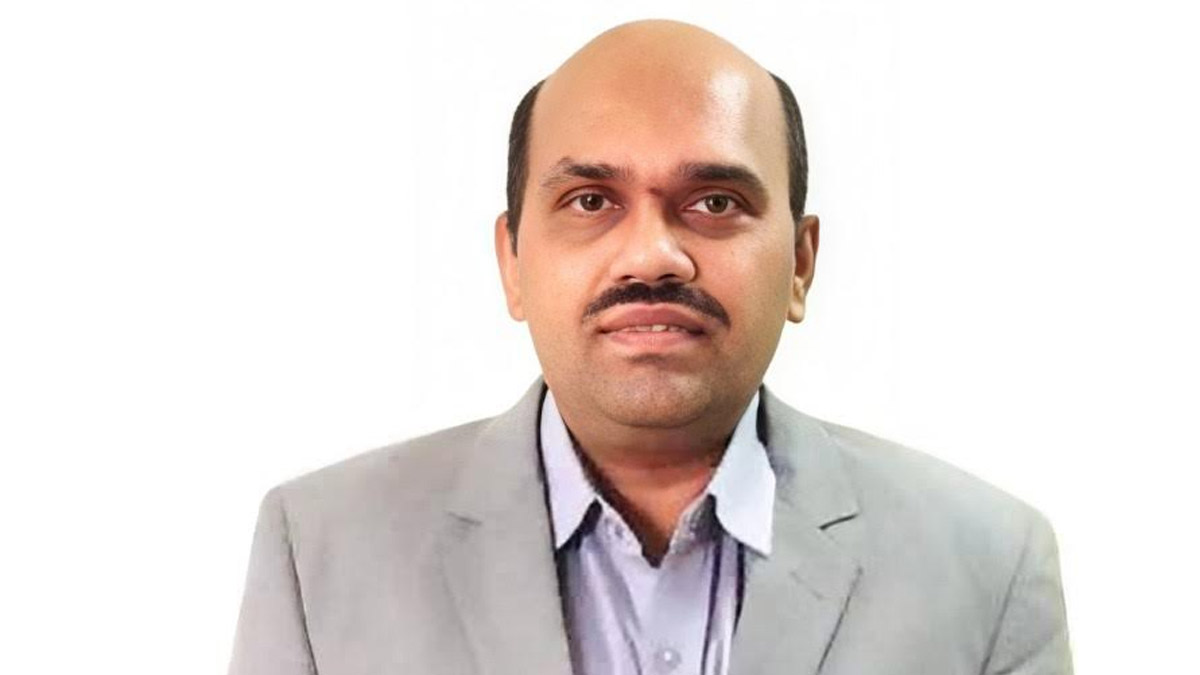
BENGALURU: Tessolve has never been shy about its ambitions. The Bengaluru-based engineering services firm already counts 18 of the world’s top 20 semiconductor companies among its clients, employs more than 3,500 engineers across 12 countries, and last year pocketed a $150m investment from TPG. Now it has hired the executive it believes can turn those assets into something bigger. Ravi Kumar Chirugudu, a 35-year semiconductor veteran who once built satellite payloads for ISRO and has since scaled engineering organisations across three continents, joins as president and chief operating officer, effective immediately.
THE MAN AND THE MANDATE
The appointment is, by any measure, a serious hire. Ravi Kumar Chirugudu comes to Tessolve after senior leadership stints at HCL Technologies, Altran and Wipro, where he managed large profit-and-loss portfolios and oversaw cross-regional teams. Over the course of his career, he has been instrumental in bringing more than 1,000 new products to market across the high-tech, energy and manufacturing verticals. Before the private sector claimed him, he began his working life as a scientist at the Indian Space Research Organisation, contributing to research and development in charge-coupled device technology and satellite payloads, a foundation that shaped everything that followed.
In his new role, he will lead Tessolve’s global growth strategy: expanding its engineering capabilities, deepening customer relationships and accelerating innovation across semiconductor and high-performance computing domains. The brief is broad, but the context is specific. Tessolve operates in the $550 billion global semiconductor market, and its recent moves, the acquisition of Germany’s Dream Chip Technologies and the TPG funding round, have sharpened both its reach and its expectations.
Srini Chinamilli, co-founder and chief executive of Tessolve, is characteristically direct about why Ravi Kumar Chirugudu was the choice:
“As we scale our global semiconductor and system engineering capabilities, Ravi’s appointment marks an important step forward. As global semiconductor demand continues to accelerate across industries, it is creating significant opportunities across the semiconductor lifecycle, from design, packaging, validation and systems integration. Ravi’s deep knowledge and leadership in this ecosystem brings the right mix of industry expertise, customer connect and execution capability, which will play a key role in strengthening our position as a trusted global engineering partner and reinforcing our market leadership.”
THE NEW ARRIVAL SPEAKS
Ravi Kumar Chirugudu, for his part, frames the move in terms of timing and culture, two factors that veteran executives tend to weigh as heavily as title or compensation:
“I am happy to join Tessolve at a time when the industry is rapidly evolving towards more complex, AI-driven systems. What stands out to me is its strong people-first culture and its commitment to bringing value to its customers. The strength of its global team, combined with its deep expertise in semiconductor innovation and next-generation product engineering, creates a solid foundation to build differentiated, scalable solutions. I look forward to working closely with the team to drive strategic growth and strengthen its role in shaping the global semiconductor ecosystem.”
The reference to AI-driven systems is not incidental. The semiconductor industry is in the midst of a structural reshaping, driven by the insatiable compute demands of artificial intelligence. For engineering services firms like Tessolve, which offers end-to-end capabilities from silicon design to packaged parts and invests in high-performance computing, high-speed interfaces, photonics and 5G, the moment is both an opportunity and a test. The company says it is well positioned to capture the next wave of industry growth. Ravi Kumar Chirugudu is now the person who has to prove it.
He came in from outer space, literally, and spent three decades learning how the semiconductor industry works from the inside out. Now Tessolve is betting that accumulated knowledge can help it cross the next frontier. In the $550 billion global chip market, the gap between ambition and execution is measured in engineering hours and leadership quality. Tessolve has just gone shopping for both.






