MAM
Profiling on-air promos – 2

This week the on-air promo (OAP) profile series features the newly launched show on Star Plus, Karma-Koi aa rahaa hai waqt badalney. The weekly show was launched on Friday 27 August and is placed in the 10 pm slot. The first-ever thriller show from the Balaji stable Karma will run 26 episodes.
 The Star’s in-house on-air promo team created the Karma OAP. The brief given to the team was to “present a modern-day saviour, who is a normal human being but is blessed with superpowers. He is the messiah in the fight of good versus evil.”
“Kids, teen and the youth were identified as the core target group of the OAP,” offers a senior Star Plus executive.
The second episode of Karma, telecast on 3 September, has managed to break into the top 100 programmes club (ranked 81) as per the latest TAM ratings (29 August to 4 September C&S 4+ YRS).

The channel unfolded the complete picture of Karma using a four-stage process. The campaign was kicked off with a teaser promo which said “when evil rules the world, God does not leave a vacuum; he sends a saviour…Saviour is coming.” The curiosity was created and next came, again, a teaser promo, which showed silhouettes of the hero. The hero was presented, but the silhouettes made sure that the curiosity remained.
Then in the third stage, the mystery is solved as the hero emerges from the shadows. The promo reveals that saviour is actually a regular guy, but armed with superpowers. Then the final promo has the hero – the saviour – in full glory with the title track in the background.
“Karma has supernatural elements, but it’s not a thriller. So the OAPs were created keeping in mind the basic plot and the creative worked out as per plan,” says the official.
The channel started promoting the show on air five weeks prior to the launch and then had a sustained post-launch campaign as well. The Karma OAPs are placed in the slots that address the core TG of the show. According to the Star official, the duration of an OAP campaign would generally vary from three to eight weeks, depending on the show. Talking about promoting the show across the network he says, it’s important to utilise strength of the network to maximise awareness and impact of on-air promotion.
 While creating the off-air campaign, the creative team made sure that it complimented the OAP. The off-air campaign conducted for Karma mainly depended on the print medium, targeting the comics-crazy kids. Karma was placed in a Chacha Choudhary story in the September issue, where Karma helps Chacha Choudhary battle his arch rival Markesh – showcasing some of his superpowers.
“We have also used the Diamond comics medium to generate tune-ins by placing a advert using the same message as the on-air promos – he has come to change the times. The same advert also uses the STAR SMS property 7827 wherein the kids can defeat evil Markesh (just like Karma) by playing a seven level SMS quiz game – the entire idea of the off-air campaign is thus to create intrigue around Karma’s superpowers by complementing the on-air promos,” says the official.
“On-air promotion is crucial for any show. Most of the research does suggest that the primary recall for most television shows is on-air. Promos are the first source of information about any upcoming content. It’s about building the audiences’ appetite for a new property and creating an excitement among the potential audience. Unless both the strategy and creative are fine-tuned to address this potential audience, the entire effort, however, substantial would be a waste,” sums up the official.




MAM
Lego brings Messi, Ronaldo, Mbappé, Vinicius together
Campaign clocks 314 million views ahead of FIFA World Cup 2026 buzz.
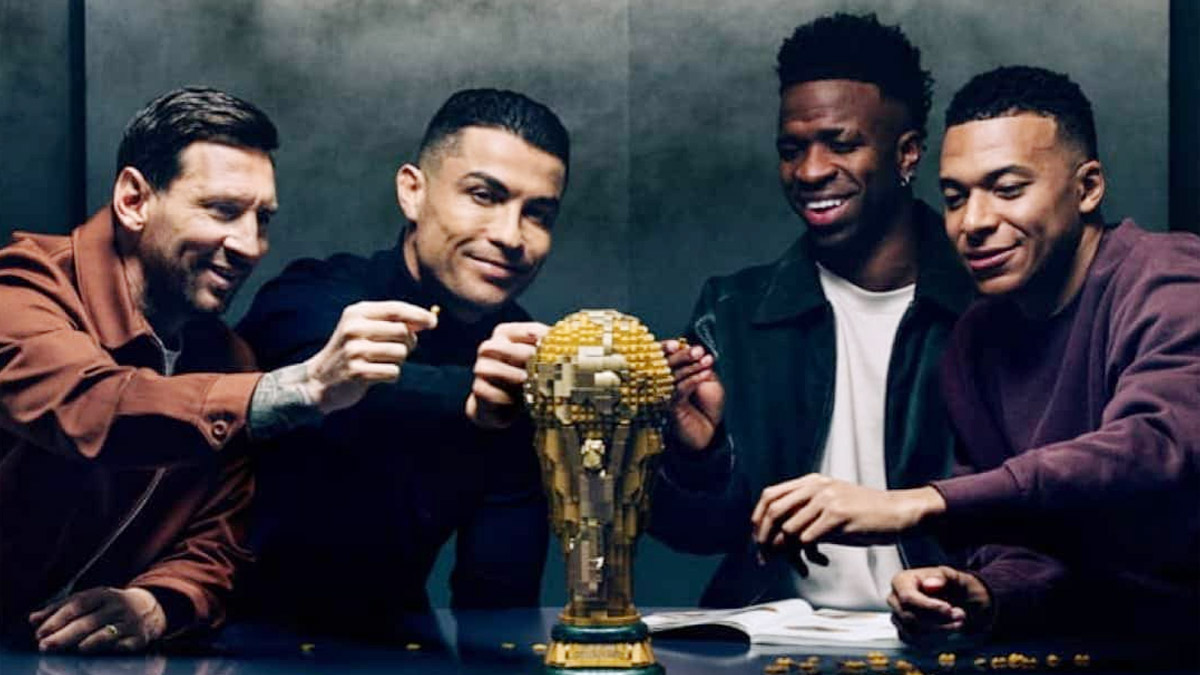
MUMBAI: Four legends, one frame and not a single tackle in sight. Lego has pulled off a crossover few thought possible, uniting Lionel Messi, Cristiano Ronaldo, Kylian Mbappé and Vinícius Júnior in a single campaign ahead of the FIFA World Cup 2026 only this time, they’re building dreams brick by brick.
Titled “Everyone wants a piece”, the campaign features the quartet assembling a Lego version of the World Cup trophy, before placing miniature versions of themselves atop it, a playful nod to football’s ultimate prize. Shared widely across social media, the ad carries a pointed disclaimer: it is not AI-generated, a subtle but telling signal in an era where even reality is often questioned.
The numbers tell their own story. The campaign has already crossed 314 million views on Instagram across the players’ accounts, with fans hailing it as a rare, almost nostalgic moment particularly for the reunion of Messi and Ronaldo, whose last shared campaign ahead of the 2022 World Cup became one of the platform’s most-liked posts.
Beyond the film, Lego is extending the play with exclusive, player-themed sets tied to each of the four stars, part of a broader football-led programme designed to ride the global momentum building towards 2026. The idea, as echoed by the players themselves, leans into the parallels between football and play experimentation, creativity, failure, and triumph.
Messi described the sets as a way to bring on-pitch moments into an imaginative, hands-on world, while Ronaldo called the transformation into a Lego figure a rare honour, blending sport with storytelling. Vinícius, meanwhile, struck a more personal note, recalling childhood moments of building with Lego and framing creativity as a universal language that transcends borders.
The timing is no accident. With the 2026 World Cup set to run from June 11 to July 19 across the United States, Canada and Mexico, and featuring an expanded 48-team format, global anticipation is already building. Argentina, led by Messi, will enter as defending champions, adding another layer of intrigue.
For Lego, the campaign does more than celebrate football, it taps into its mythology. Because when icons become figurines and rivalries turn into play, the beautiful game finds a new kind of pitch. one built, quite literally, by hand.






