MAM
Procter & Gamble Announces Newest Commitment to Gender Equality Across the Indian Subcontinent, Middle East and Africa region

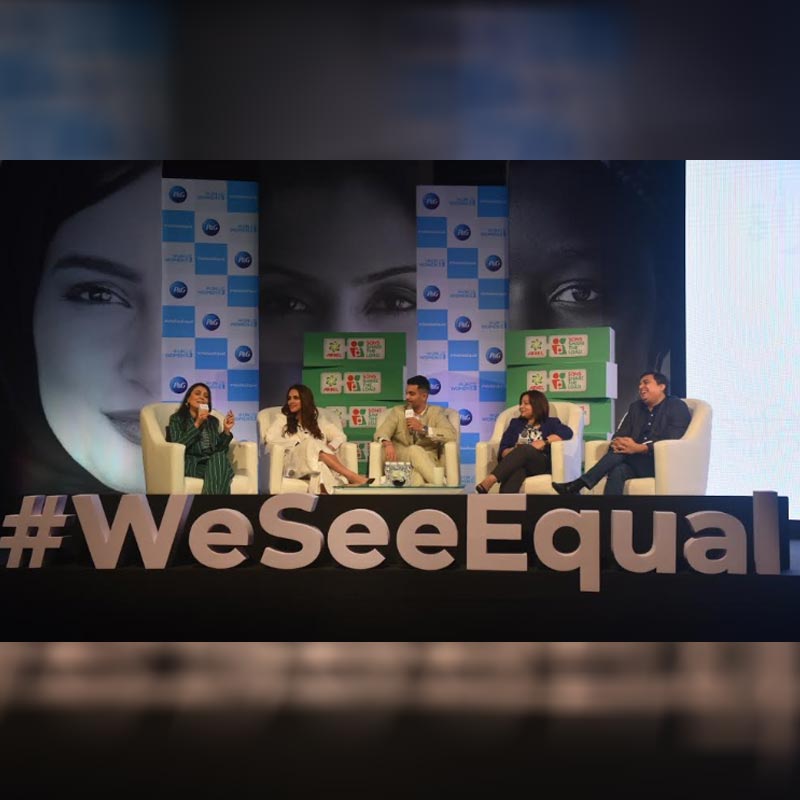
MUMBAI: Procter & Gamble (P&G) announced a new commitment around a number of initiatives that will promote gender equality across the Indian Subcontinent, Middle East and Africa (IMEA) region. The declaration, which was made by P&G’s IMEA and APAC President,MagesvaranSuranjan during the company’s inaugural #WeSeeEqualSummit in partnership with UN Womenin Mumbai on February 18, 2019, is part of the company’s citizenshipfocus on being a Force for Good and Force for Growth.
“Gender equality is a core belief at P&G. Creating a world free of bias with equal representation and equal voice for everyone is both the right thing to do and the right business choice,” explained MagesvaranSuranjan.“We also want to spark conversations and change mindsets as championsfor the cause of gender equality across the region. We will leverage the full strengths of our business and operations, and our advertising voice to tackle gender bias and encourage women’s economic empowerment.”
Over the next 3 years:

• P&G aims to spend $100 million on deliberately working with Women-Owned Businesses in IMEA with a $30 million commitment to India
• P&G will educate more than$23 million adolescent girls on puberty and hygiene across IMEA. In India, P&G has been working with young girls in various groups across the country to understand the needs in the areas of Health & Hygiene, Personality Development etc. The company’s flagship Mother Daughter Menstrual Hygiene Program has been successfully running across the country since 1995. Today, P&G runs this program with the active support of 20,000 schools to educate about 4.5 Million adolescent girls annually and educates them on the importance of menstrual hygiene
• P&G and its brands will use the company’s voice in forums such as the #WeSeeEqualSummit,brand advertising like Ariel, Whisper, Always & Gilletteand multi-stakeholder efforts to spark conversation and motivate change. Notable campaigns from India that have sparked social change include Ariel ‘Share the Load’, Vicks ‘Touch of Care’, Whisper ‘Touch The Pickle’, to name a few.
Co-hosted with UN Women, P&G’s first IMEA #WeSeeEqualSummitbrought together business and government leaders, and influencers to share inspiration and surface insights around the myths that prevent us from accelerating our progress for gender equality.
Dr. PhumzileMlambo-Ngcuka, Under-Secretary-General of the United Nations and Executive Director of UN Women, said,“To get irreversible progress in gender equality takes sustained, intentional action. We need to work together on this wherever those inequalities are present – in schools and offices; in the media; in sports arenas, farms, factories and houses of parliament. We’re driving for practical changes, like supply chain agreements that bring good business to women-owned companies, at the same time as we change the narratives about the place and power of girls and women in society – so they are both seen and treated as equals.”
Guest Speakers included:
– India’s Mary Kom, Olympian and six-time World Boxing Champion
– South Africa’s television star, business woman and philanthropist BonangMatheba,
– Egypt’s actress and philanthropistAmina Khalil,
– Award Winning Indian Actress Richa Chadha,
– Actress & TV Personality India’s Neha Dhupia
– Indian Actor & Model AngadBedi
P&G has been steadily working to improve gender equality by leveraging its unique strengths. Some of P&G’s achievements globally and in theregion, include:
– Leveraging its voice in advertising and media to tackle gender bias, spark conversations and motivate change. This includesAlways ‘Like A Girl’, Ariel ‘Share The Load’, Always ‘Saudi Generation of Firsts’, and Whisper ‘Touch the Pickle’ advertising campaigns
– Focusing on removing barriers to education for girls and economic opportunities for women through the company’s social impact programs and advocacy efforts in partnership with organizations such as UN Women, WeConnectInternational,CARE, Sesame Workshop and Galli Galli Sim Sim. Examples of current P&G programs include:
i. Puberty education campaignssuch as Always Keeping Girls in School in South Africa, Kenya & Nigeria and P&G Shiksha in India
ii. Deliberate intention to hire Women-Owned Businesses in South Africa, UAE, Egypt, India & Nigeria are long standing examples of this focus.
• Internally, P&G is working to create an inclusive, gender-equal environment with 50-50 representation of men and women at all levels and all parts of the company. P&G hires 50% women into management across the world, and an increasing proportion of women gets promoted into leadership roles into their next assignments at the same progression as men. This is consistent with P&G’s history in IMEA. P&G India hires 50% women into entry level management roles and lays special emphasis on their progression to next assignments. In a first for FMCG industry in India, P&G’s Hyderabad plant was one of the first plants to have 30% women across the workforce. What is unique is that these women employees operate across all shifts and operate manufacturing equipment and are not limited to peripheral tasks. In an unprecedented move, the company collaborated with the government and got legal approval to allow women to work across shifts.






Brands
Adobe CEO Shantanu Narayen to step down after 18 years in role
Board begins CEO search as Narayen prepares to move to chair role
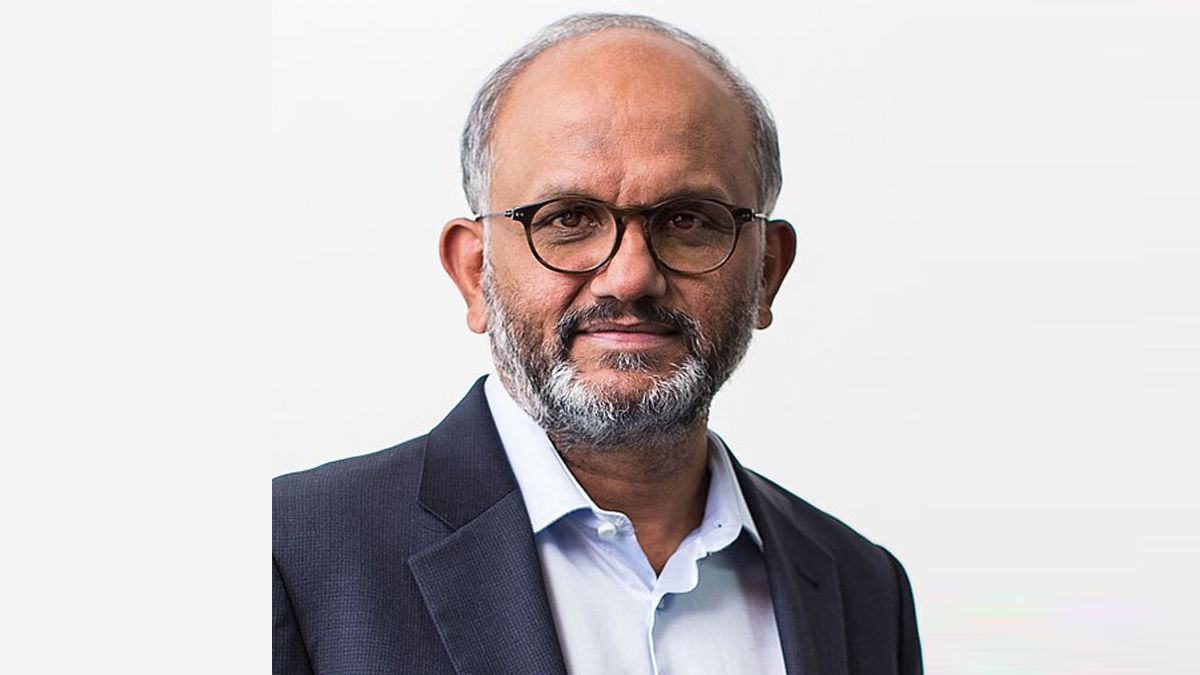
SAN JOSE: After nearly two decades at the helm, Adobe’s long-serving chief executive Shantanu Narayen is preparing to pass the baton.
The company announced that Narayen will transition from his role as chief executive officer once a successor is appointed, ending an 18-year run that reshaped Adobe from a boxed software seller into a global cloud and AI powerhouse. He will remain chair of the board following the leadership transition.
Adobe’s board has formed a special committee to oversee the succession process, led by lead independent director Frank Calderoni. The committee will evaluate both internal and external candidates.
“Shantanu’s leadership has been instrumental in Adobe’s transformation and in positioning the company for the AI-driven era,” Calderoni said in a statement. “As we begin the next phase of succession planning, our focus is on identifying the right leader for the company’s next chapter while ensuring a smooth transition.”
In a note to employees, Narayen described the moment not as a farewell but as a pause for reflection after a long journey with the company.
“I love Adobe and the privilege of leading it has been the greatest honour of my career,” he wrote, adding that he will continue to work closely with the board over the coming months to ensure a seamless leadership change.
Tributes from the technology industry quickly followed the announcement. Microsoft chairman and chief executive officer Satya Nadella congratulated Narayen on what he described as a “legendary run” at Adobe.
“Congrats Shantanu, on a legendary run at Adobe! You’ve built one of the most important software companies in the world, and expanded what’s possible for creators, entrepreneurs, and brands everywhere,” Nadella wrote on LinkedIn.
“What has always stood out to me is the empathy you’ve brought to the creative process and the example you’ve set as a leader. Grateful for your friendship, mentorship, and for all you’ve done for Adobe and for our industry.”
Narayen’s career at Adobe spans nearly three decades. He joined the company in 1998 as vice president and rose steadily through the ranks before becoming chief executive officer in December 2007.
During that time, he orchestrated one of the most significant reinventions in the software industry. In 2013, Adobe made the bold decision to abandon traditional boxed software sales and move its flagship creative tools such as Photoshop to a subscription-based Creative Cloud model. The shift initially rattled investors but ultimately transformed Adobe into a predictable recurring revenue business and a case study in digital reinvention.
Narayen also pushed Adobe beyond creative tools into the world of marketing technology and data-driven customer experience, spearheading acquisitions such as Omniture and Marketo. Those moves helped build Adobe’s digital experience division and broaden its reach far beyond designers and photographers.
The numbers tell the story of that transformation. When Narayen took over in 2007, Adobe generated roughly $3 billion in annual revenue. Today the company reports more than $25 billion. Over the same period, its workforce expanded from around 3,000 employees to more than 30,000.
In recent years, Narayen has steered Adobe into the generative AI era with the launch of Adobe Firefly, aiming to keep the company ahead in a rapidly evolving creative technology landscape.
Born in Hyderabad in 1963, Narayen studied electronics and communication engineering at Osmania University before moving to the United States for a master’s degree in computer science from Bowling Green State University. He later earned an MBA from the Haas School of Business at the University of California, Berkeley.
Widely regarded as one of Silicon Valley’s most steady and effective leaders, Narayen has earned multiple honours during his career, including India’s Padma Shri in 2019.
For Adobe, the upcoming leadership change marks the end of a defining chapter. For Narayen, however, the story is far from finished. As he told employees, the company’s next era of creativity, powered by AI and new digital workflows, is only just beginning.