MAM
Print media to get back on its feet sooner than expected


NEW DELHI: While print media lost around 80 per cent of its advertising revenue during the Covid2019 period, it made for the lost monies by reducing the number of pages in its supplements, thus minimizing the bad impact on business, shared Dainik Bhaskar Group promoter director Girish Agarwal in a live discussion with Motivator managing partner Radhika Ramani organised by The Advertising Club Bangalore. The discussion titled Reimagining Print with Siva & Girish, also saw the presence of BCCL chairman executive committee, Sivakumar Sundaram.
Agarwal highlighted, “Advertising used to amount to about 75 per cent of our earnings, which went down to 12-13 per cent during the Covid2019 period. Now, we used to subsidise our cost for our readers by Rs 2-3, and by reducing the number of pages, we have made that subsidy almost zero without increasing the cost for subscribers. Now, the advertising revenue stood very low relatively and that helped us.”
Both Agarwal and Sundaram showed great positivity towards the future of print as a medium to disseminate news and advertising in the coming future. Agarwal dismissed all the rumours of print publications shutting shops by saying, “The circulation which went down to almost 60-65 per cent of the regular in the month of March, touched 70-75 per cent in April. If we look at the shift in the following months, till the first week of July, most of the Indian language publications have already crossed the mark of 80 per cent.”

He added that the rest 20 per cent circulation is at places like railway stations and offices, which will commence by the month of August and soon the circulation will reach the 100 per cent mark. Agarwal also insisted that advertisers should be active on print now, as those who won’t take the opportunity will anyway lose sales in the coming weeks.
He said, “Most of the advertisers have started advertising already with us. The local advertisers are very much active and the big brands are coming up too. And those who are not advertising will surely lose out on sales and business.”
Sundaram highlighted that brands should be leveraging newspapers for hyperlocal reach and should be working on more regional content to benefit out of it. He highlighted that most of the national level brands see India as a homogeneous cluster, or divided into north and south India, which needs to be changed.






MAM
‘You packed my parachute’: Avinash Kaul’s farewell salutes Network18’s unsung thousands
The outgoing chief’s LinkedIn post skips the boardroom tributes and goes straight to the security guards, drivers and office boys who kept the machine running
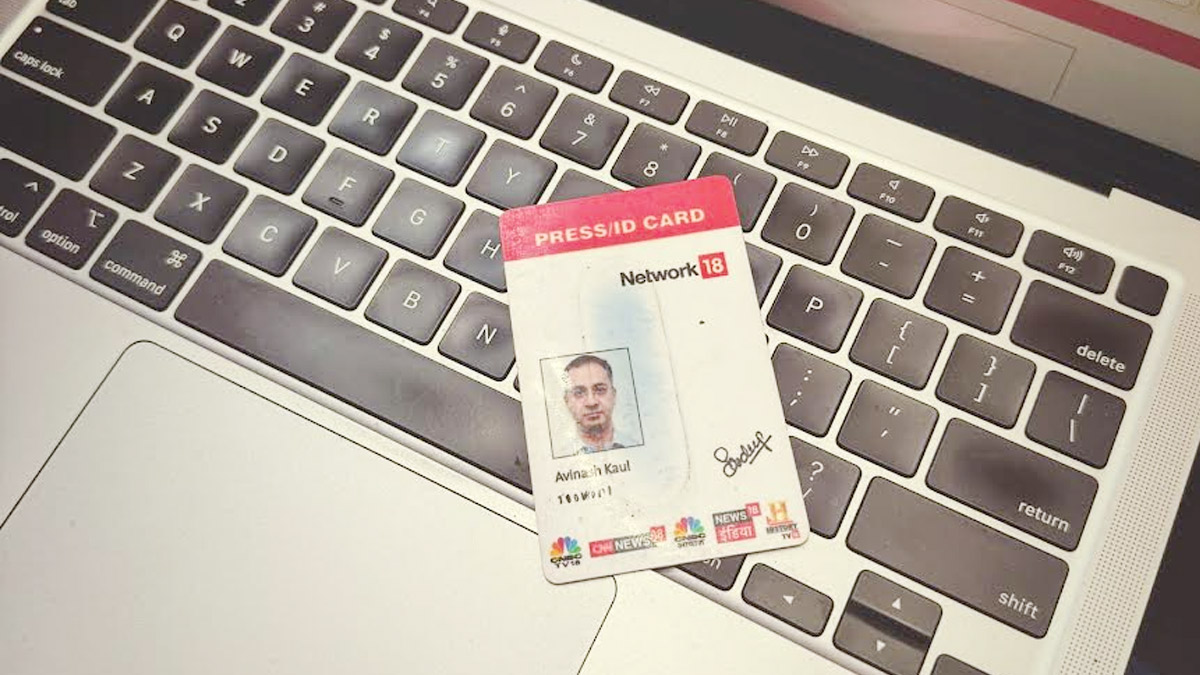
MUMBAI: Most farewell posts by senior media executives follow a familiar script: gratitude to leadership, a nod to the team, a hint of what lies ahead. Avinash Kaul’s is not that post.
Writing on LinkedIn on his last day at Network18 Media & Investments, where he spent nearly 12 years rising to chief executive, Kaul bypassed the boardroom entirely and directed his most heartfelt words at the people furthest from it: the security guard who greeted him before the building was fully awake, the fleet staff who drove him to airports at ungodly hours, the office assistants, the housekeeping teams, and the administrators who, as he put it, “held ten thousand invisible threads so the rest of us could look organised.”
“You packed my parachute,” he wrote. “Every day. Without fanfare, recognition, or ever asking for it.”
It was a striking note from a man who leaves behind a considerable operational record. Kaul joined Network18 managing three channels and exits with responsibility for 20, alongside a publishing business, a growing connected television footprint, and what he says is the highest revenue and highest channel share in the group’s history. He was quick to deflect the credit. “Not because of me. Because of 4,000 people who showed up, every day, in every department, across the country.”
To content teams across India, he issued a reminder that carries some weight given the pressures Indian news media currently faces. “Keep being custodians of trust for 700 million people. That is not a small thing. That is the whole thing.”
To colleagues in revenue and ratings who found him relentless and hard to satisfy, he was unapologetic but generous. “There was never a single moment of ill intent in my heart. Everything I pushed you towards came from one belief – that you were stronger than you knew, and I was not willing to let you settle for less than your real capability.” Those who believed him, he said, flew. Those who did not taught him to be a better communicator. He was grateful to both.
On what comes next, he offered a hint wrapped in metaphor. Something is being built, he said, prepared for “the way you pack a bag before a long climb. Not out of restlessness. Out of readiness.”
In a media landscape that rarely pauses to acknowledge the people who keep the lights on, it was, at the very least, a different kind of goodbye.