MAM
Print advertising registered 325% rise in avg ad volume per day in June: TAM AdEx


NEW DELHI: It seems that print media will soon be back on track as print advertising registered 325 per cent rise in average ad volume per day in June 2020 when compared to April 2020, cites the recently released data by AdEx India, a division of TAM Media research.
The report highlights that the month of March and April were worst hit by the lockdown but the average ad volume per day rose by 0.47 per cent in May and by 3.2 times in June.
The report says that 75 per cent of the ads in April-June were in Hindi and English and 11 other languages accounted for a 25 per cent share of ad space of April-June. With almost similar ad language share of 5 per cent ads in Kannada, Marathi and Tamil ranked 3rd, 4th and 5th in the ad language share during the period.

Cars category topped the list with eight per cent share of ad space followed by coaching/exam centres. with six per cent share in April 2020-June 2020, as per the TAM AdEx report.
Top 10 categories covered 38 per cent ad volume share in both Apr-Jun’20. Out of this, four categories were from the education sector and together accounted for 16 per cent share. It also stated that multiple courses claimed the second position in Apr-Jun’20, from thirteenth it occupied in Jan-Mar’20. Similarly, ecom-education moved up by 20 positions to perch on the ninth position in Apr-Jun’20 compared to Jan-Mar’20.
While the automobile industry was badly hit, Maruti Suzuki was the second-biggest spender in print with a three per cent share of ad space in April -June.
Coaching institute Fiitjee witnessed 4.8x rise on print ads in
April–June. Top 10 advertisers accounted for 22 per cent in April-June 2020 compared to 16 per cent in January-March of this year.
Fiitjee topped brands in print with 2.2 per cent share of ad space followed by Maruti Car Range with two per cent share. Interestingly, Ghadi Detergent Cake/Powder moved up by 592 positions to achieve the fifth spot in April-June 2020 when compared to January-March 2020. Utkarsh Classes in a similar scenario climbed up the ladder by 244 positions and bagged the eighth-most advertised brand in Apr-Jun’20.
Household Cleaners was one of the fastest-growing categories in Apr-Jun’20 recording over 9000x growth. Household UPS and Inverter Batteries accounted for over 300x growth in Apr-Jun’20 as compared to Jan-Mar’20. Interestingly, advertisements of Home Insecticides saw a 30x rise in Apr-Jun’20.
71 per cent of advertisers preferred figured outline while 16 per cent opted for teasers for innovative ad layouts. The L spared layouts claimed seven per cent share of the ad space with masthead integration taking five per cent. As per the data, 12 categories used the Innovative Ad Layouts in Print during Apr-Jun’20.







Brands
RR Kabel expands FMEG portfolio with kitchen appliances and air coolers
Company forays into mixers, cooktops and hand blenders under RR Signature brand.
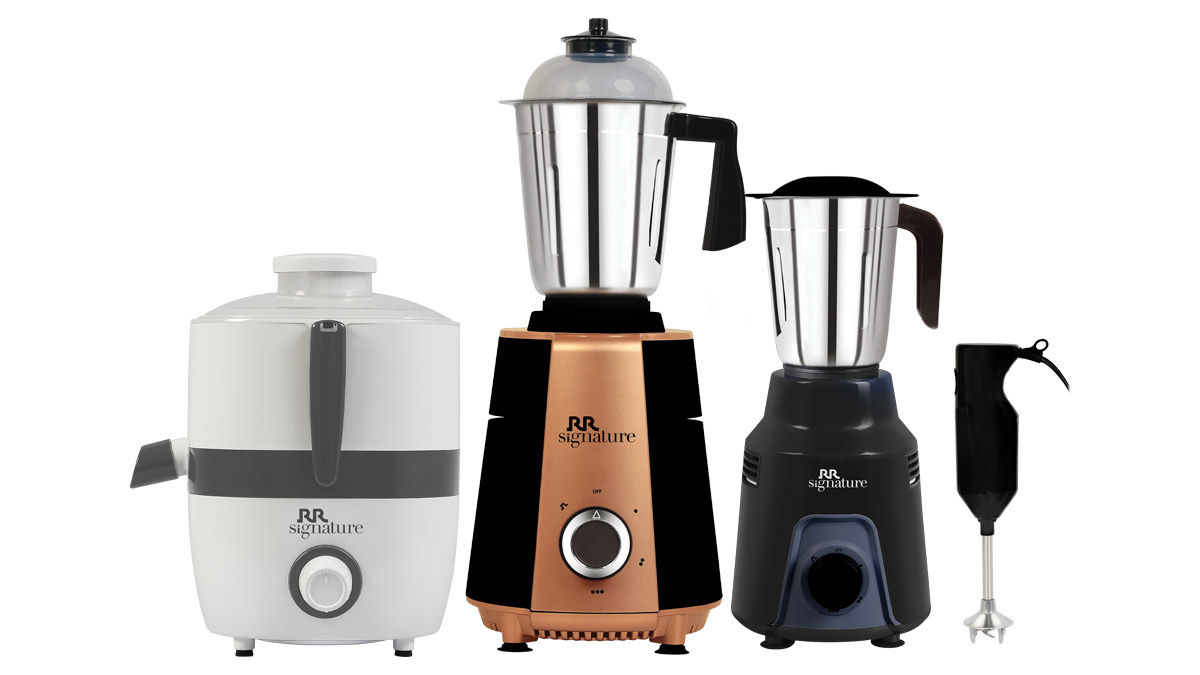
MUMBAI: RR Kabel has just cooked up something new and it’s not just another wire. The leading wires and cables manufacturer has announced a significant expansion of its Fast-Moving Electrical Goods (FMEG) portfolio by entering the kitchen appliances segment and strengthening its air coolers range under the premium RR Signature brand. The company has introduced Mixer Grinders, Electric Cooktops (both Induction and Infra-Red variants), and Hand Blenders. These products mark RR Kabel’s strategic foray into everyday kitchen essentials, allowing it to reach deeper into Indian households beyond traditional electrical categories.
The Induction and Infra-Red Cooktops are seeing particularly strong demand amid global developments affecting LPG pricing and supply. Consumers are increasingly shifting to electric cooking for its energy efficiency, precise control, and safety features. RR Signature is reinforcing its ‘Aapke Kaam Ki Baat’ promise with best-in-class warranties across the range.
The company also plans to introduce additional kitchen appliance categories in FY26-27. In parallel, it has expanded its Air Cooler portfolio with new Industrial (Semi-Commercial) models featuring higher tank capacities and superior air throw, catering to both commercial users and households seeking powerful cooling during intensifying summers.
RR Kabel executive director Mahhesh Kabra said, “Our expansion into kitchen appliances allows us to connect with consumers at more touchpoints in their daily lives, while our expanded air cooler range addresses the rising need for effective cooling solutions. These launches reflect our continued focus on quality, innovation, and market relevance.”
By stepping into kitchen appliances and enhancing its cooling solutions, RR Kabel is wiring itself more deeply into Indian homes proving that even a cables company knows how to heat things up in the kitchen and keep things cool elsewhere. The move positions the brand for broader growth as it evolves from wires to a more complete home solutions player.







