MAM
Prashanth Challapalli elevated to COO at Leo Burnett Orchard

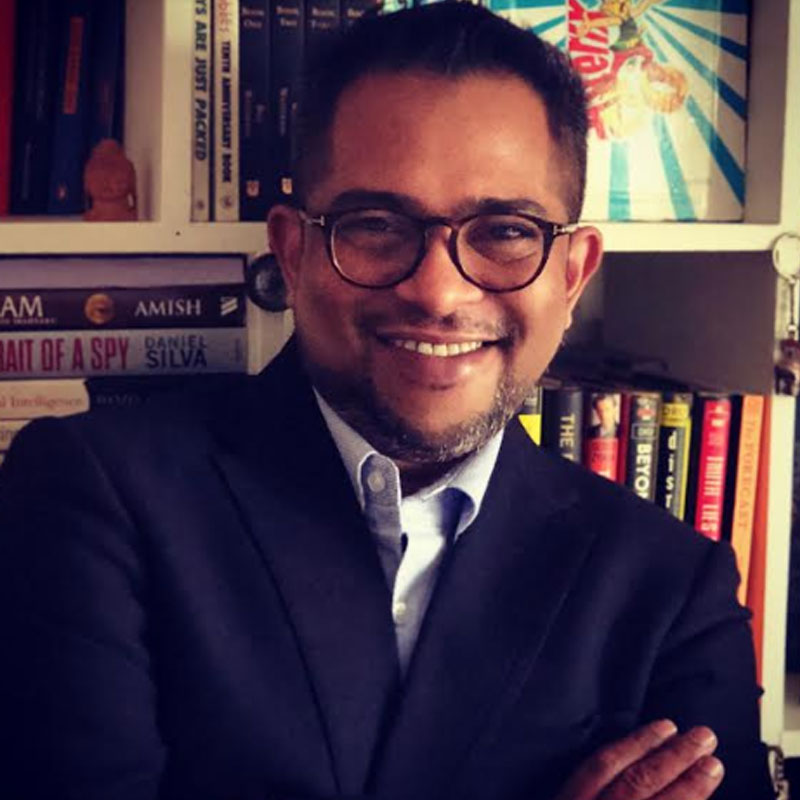
MUMBAI: The Leo Group has elevated Prashanth Challapalli as the chief operating officer for Leo Burnett Orchard.
In his new role, he will report to Leo Burnett managing director – India and chief strategy officer – South Asia Dheeraj Sinha and Leo Burnett managing director – India and chief creative officer South Asia Rajdeepak Das.
Challapalli replaces Mahuya Chaturvedi, who is moving on from the organisation. He will be based out of Leo Burnett Orchard’s Mumbai office.

Welcoming him to his new mandate, Sinha said, “One of Prashanth’s greatest assets is his knowledge and experience in driving Power of One solutions, tapping into all the Publicis Groupe companies to bring the power of creative, digital, data, content, shopper marketing, media, PR, production and entertainment to solve business problems. As we build brands and businesses that talk to consumers who live in a digitally-enabled world, Prashanth’s significant experience in this domain will be highly valuable. I have known Prashanth to get into the details of the business and lead from the front. I am convinced that he will add value to our client’s businesses and take Leo Burnett Orchard to new heights.”
Excited about the road ahead, Challapalli said, “Leo Burnett Orchard has a great set of brands and people. It is the perfect canvas for me to build the Power of One story further. The last 18 months of my role in the group as the chief integration officer have given me a really good understanding of the skill sets we have built across different specialisations. I am really looking forward to bringing these together for our clients at Leo Burnett Orchard.”
He has been an integral part of the group since the last 18 months as the chief integration officer for Leo Burnett South Asia, driving the integration agenda for key clients such as Google, P&G, McDonald’s and TVS Motorcycles.
Out of his 20 years’ experience, he spent the first 11 years in agencies such as Ogilvy, Lowe, Y&R, Dentsu & Publicis Ambience handling brands like Lakme, Fair & Lovely, Pepsodent, FedEx, Marico, Tetley and Exide. In 2009, he started Jack in the Box Worldwide, one of the most awarded digital agencies in India with campaigns like Kolaveri, Pepsi IPL and 7Up to its credit. He then ran iContract for four years winning big brands like Google, YouTube, Amazon, Kindle, Dettol, Durex, Vaseline, Hotstar and Kissan, amongst others.







Brands
Magnum Ice Cream Netherlands takes control of Kwality Wall’s India from Unilever
61.9 per cent stake transfer reshapes ownership as Unilever exits promoter role
MUMBAI: Kwality Wall’s (India) Limited has entered a new chapter, with The Magnum Ice Cream Company HoldCo 1 Netherlands B.V. acquiring a controlling 61.9 per cent stake from a clutch of Unilever PLC-led entities, marking a significant shift in ownership.
The transaction, completed on March 30, 2026, follows a share purchase agreement signed in June 2025. The incoming promoter picked up over 145 crore equity shares, effectively taking control of the company and being formally classified as its new promoter under regulatory norms.
As part of the deal, the outgoing promoter group, including Unilever Group Limited and its affiliated entities, has fully exited its shareholding in the company. They have now been reclassified from promoter to public shareholders, closing a long-standing association with the ice cream business in India.
The board of Kwality Wall’s (India) Limited took note of the ownership change and approved a series of leadership updates alongside it. Ritesh Tiwari stepped down as director, while Abhijit Bhattacharya was appointed as chairperson and additional non-executive director. Tahir Toloy Tanridagli also joined the board as an additional non-executive director.
The reshuffle signals a broader strategic reset as the Magnum-led entity looks to steer the brand’s next phase of growth in India. The transition has been carried out in line with regulatory requirements, including disclosures tied to the open offer and reclassification norms under market regulations.
With Unilever stepping back and Magnum stepping in, Kwality Wall’s India is effectively getting a fresh scoop of leadership and direction. The coming months will reveal how the new promoter plans to scale the brand in one of the world’s most competitive ice cream markets.