Digital
Poonawalla Fincorp pushes AI-first drive with five enterprise solutions


MUMBAI: Poonawalla fincorp has stepped up its AI-first transformation with the launch of five enterprise-level artificial intelligence solutions aimed at sharpening decision-making, tightening compliance and accelerating execution across the business.
Unveiled in Mumbai on 28 January, the new deployments extend AI use into competitive intelligence, customer onboarding, data governance, experience analytics and application development, signalling the lender’s push to become a digitally fluent, data-driven and highly scalable financial institution.
Among the rollouts is an AI-powered competition benchmarking engine that continuously scans market movements, tracking rivals’ pricing shifts, product changes and engagement patterns to deliver real-time, decision-ready insights. Built on the firm’s existing AI-led risk hindsight framework, it is designed to help teams respond faster to market swings.

The company has also introduced a central KYC AI platform to strengthen onboarding controls. By validating customer data for accuracy and material relevance at the entry point, the system cuts manual effort by around 15 per cent while improving turnaround times and compliance robustness.
To tackle data consistency, Poonawalla fincorp has launched an agentic data quality intelligence solution that automatically monitors information flows, flags anomalies and updates validation rules as business needs evolve, keeping reporting and risk data audit-ready.
On the customer experience front, an AI-led voice of customer categorisation tool now organises free-text feedback into actionable issue themes, linking them directly to responsible teams for faster resolution and systemic fixes.
Rounding out the suite is “build buddy”, an AI-powered development assistant embedded into the firm’s technology stack. It supports engineers with code writing, pre-commit fixes, automated refactoring and performance feedback, significantly speeding up application delivery while cutting costs.
Commenting on the move, Poonawalla fincorp managing director and CEO Arvind Kapil, said AI was reshaping how organisations think and compete, adding that the company was focused on blending machine precision with human judgement to strengthen trust and decision-making.
AI is already being used across the firm’s risk, fraud detection, marketing, compliance, HR, governance and underwriting functions. In the latest quarter alone, Poonawalla fincorp initiated 12 new AI projects, taking the total to 57, with 30 already completed.






Digital
OpenAI’s Stargate lead Peter Hoeschele exits with two senior leaders
Trio behind compute push set to join new startup amid leadership reshuffle
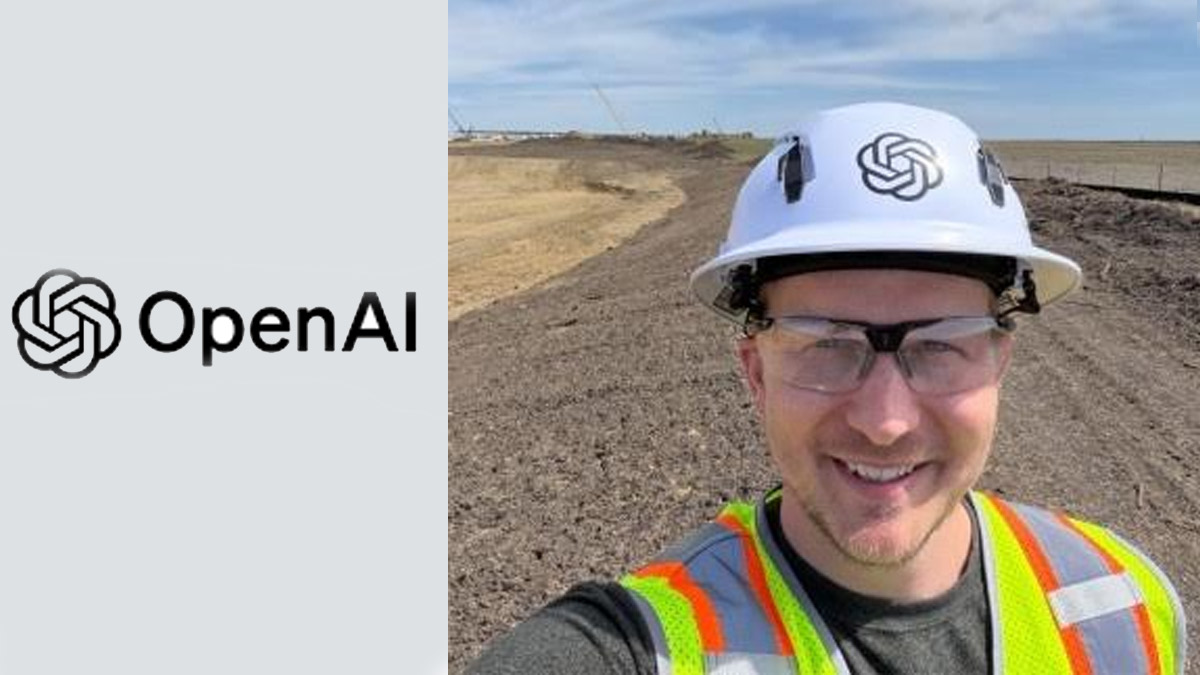
SAN FRANCISCO: Peter Hoeschele, a key figure behind OpenAI’s early Stargate data centre initiative, has exited the company, according to a report by The Information.
The departure is part of a broader leadership shift, with two other senior executives, Shamez Hemani and Anuj Saharan, also set to leave in the coming days. All three are expected to join the same new startup, although details about the venture remain under wraps.
The trio played a central role in OpenAI’s Stargate effort, an initiative aimed at building large-scale data centre capacity in-house to reduce reliance on external infrastructure providers. Their exits mark a notable moment for the company’s compute strategy as it continues to scale rapidly.
OpenAI spokesperson said in a statement to The Information, “We’re grateful for the contributions Peter, Shamez, and Anuj have made to OpenAI and wish them the very best in what comes next.” The company also pointed to the recent appointment of Sachin Katti to lead its industrial compute organisation, signalling continuity in its infrastructure roadmap.
OpenAI has indicated that it does not plan to directly replace Hoeschele’s role, suggesting a possible restructuring of responsibilities within the team.
As competition intensifies in the race to build next-generation AI systems, leadership changes in core infrastructure teams are likely to draw close attention. For now, the spotlight shifts to what this departing trio builds next, and how OpenAI adapts as it scales its ambitions.