MAM
Pocket FM strengthens leadership team; appoints Shubh Bansal as VP- growth

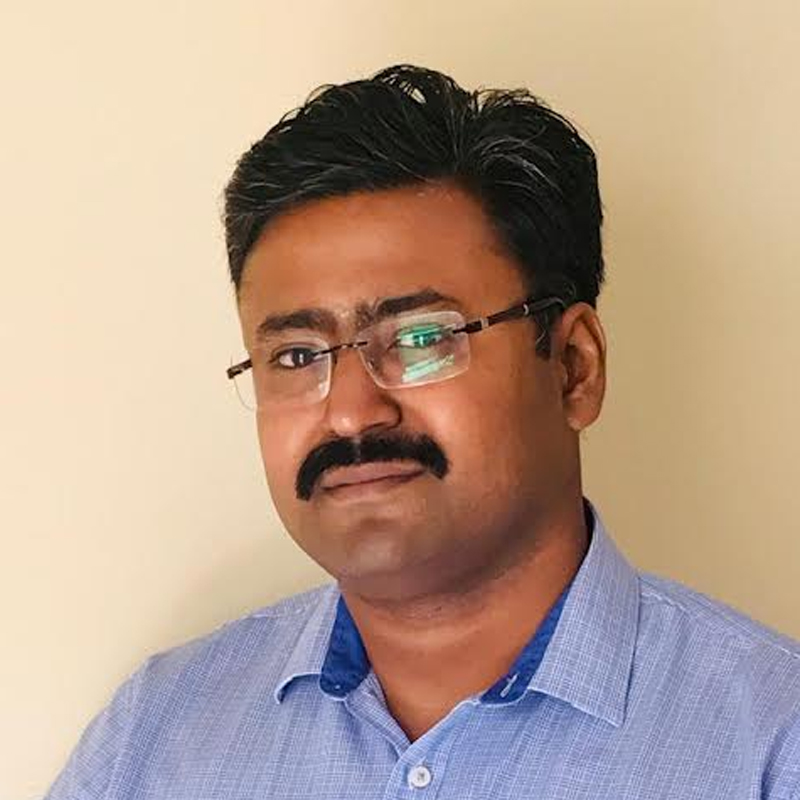
Mumbai: Personalised audio streaming service Pocket FM has announced Shubh Bansal’s appointment as VP-growth and Rahul Nag as head of communications. Both Bansal and Nag will be reporting to Pocket FM CEO and co-founder Rohan Nayak.
With these appointments, the company aims to intensify its focus to accelerate revenue, speed up growth initiatives, and elevate its brand positioning, it said in a statement.
Bansal will be leading the business growth initiatives across listeners, and new business opportunities. He was a co-founder at Truebil, an auto-tech platform acquired by Spinny where he was responsible for spearheading growth, marketing, and revenue. Before Truebil, he was associated with Housing.com.

Nag will be driving stakeholder engagement through external, social media, and internal communications along with establishing Pocket FM as a culture-first internet organisation. With over a decade and half years of experience in the communications landscape, he has worked with organisations like Flock, Mindtree, and ShareChat. In his earlier roles, he has led the crisis communication for Mindtree during the L&T takeover conflict and contributed to leading the communications for ShareChat and Moj.
Welcoming them onboard, Nayak said, “As we continue our exponential growth curve on the backdrop of a unique storytelling experience, we are bullish on our market leadership in pioneering the ‘audio entertainment’ space. Both Shubh and Rahul are proven leaders in their space and are valuable inclusions into our strategic team. With their strong skillsets and expertise, we hope they will bring the required momentum to our growth, revenue, and brand recall as we continue to build Pocket FM for our community.”
These key appointments come amidst Pocket FM scaling up rapidly, and reflects an increasing trend in audio content consumption on the internet. Over the past few months, the platform has aggressively focused on monetisation and content diversity.
Joining Pocket FM, Shubh Bansal said, “It gives me immense pleasure to work with a company that is pioneering and leading the audio-entertainment category in the OTT space. Our vision is to build category leadership for Pocket FM and lead the OTT landscape through our product innovations and business acumen. I am thankful to the founders for their trust and confidence bestowed upon me, and we will together take Pocket FM to newer milestones.”
Rahul Nag added, “I have always been a great believer in audio-first digital content and it always feels special to have the opportunity to contribute to the leader in the space. Our objective is not just to lead India but become a strong force to reckon with, and we are hopeful of emerging as a stronger brand for our listeners, creators, employees and investors.”
According to the company, it has recently raised $65 million in Series C funding to double down on its strategic priorities of building AI capabilities, multiplying its listeners base with new languages and strengthening its creator community. The company has already hired senior executives to address these priorities and continues to look for talents in the product and tech space aggressively, it stated. Pocket FM has raised $93.6 million till date and is backed by some marquee investors like Lightspeed, Times Group, Tanglin Venture Partners, Goodwater Capital, and Naver.






MAM
One Hand Clap acquires Agenseed to enter distribution space
Creative agency expands into full-stack services with strategic buyout.
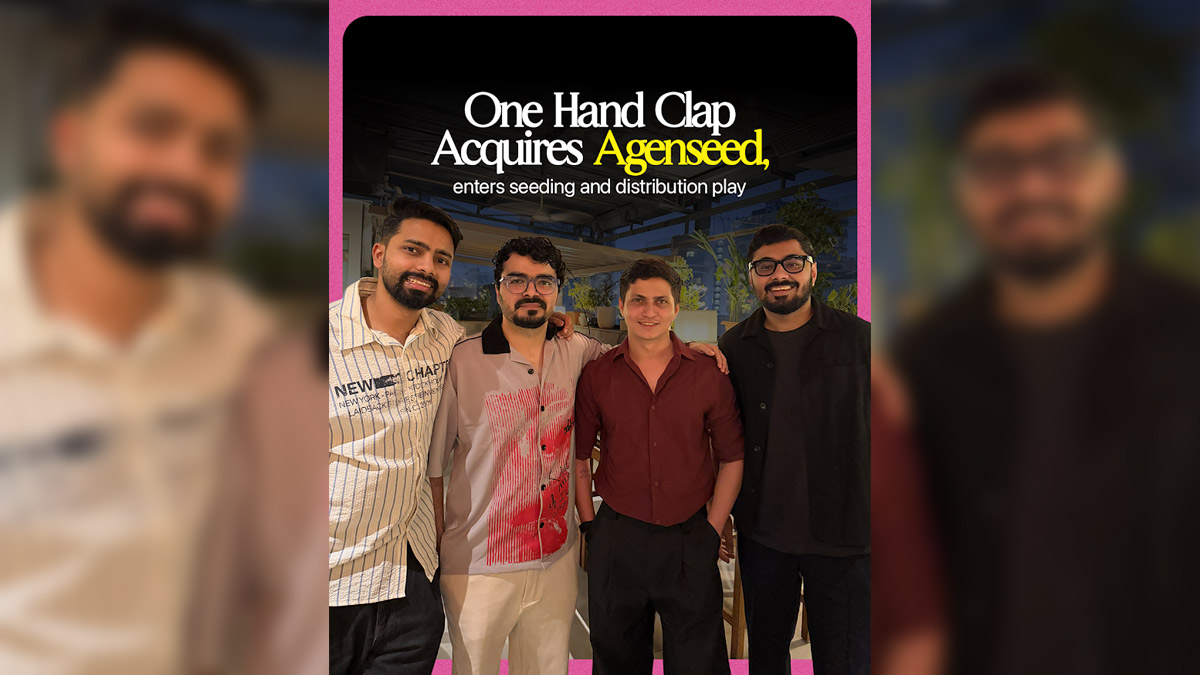
MUMBAI: One Hand Clap has decided to stop just clapping for great ideas now it wants to make sure they actually travel. The leading new-age creative agency and production house has acquired Agenseed, a seeding and distribution firm, marking its formal entry into the distribution segment. The move is aimed at expanding its role across the entire marketing value chain and unlocking new growth opportunities.
One Hand Clap expects the new distribution vertical to contribute up to 15 per cent of its overall revenues over the next 12–18 months, signalling a clear strategic shift beyond pure creative services.
Agenseed, founded by Monish Hardasani and Akram Malik, will function as the agency’s dedicated distribution arm. This acquisition strengthens One Hand Clap’s position as it aims to become a full-stack creative and distribution company in India’s rapidly growing digital advertising market.
With over 90 million posts shared daily on Instagram and brands allocating 25–35 per cent of their digital budgets to distribution and creator-led reach, amplification has become critical to campaign success. By integrating distribution early into the creative process, the agency hopes to help campaigns gain stronger cultural traction and momentum.
One Hand Clap founder Aakash Shah said, “The future of advertising is not just about executing great ideas, but about placing them intelligently. By owning both storytelling and distribution, we can drive greater impact for brands while opening up new revenue streams.”
Agenseed co-founder Monish Hardasani added, “The future belongs to ideas designed to travel. This partnership allows us to integrate distribution thinking at the source.”
Founded in 2019 by former AIB leaders Aakash Shah and Naveed Manakkodan, One Hand Clap has worked with major brands including Swiggy, Google, Netflix India, Crocs, Duolingo, CRED, Bumble, BGMI and Chetak. The agency also secured investment from Zerodha co-founder Nikhil Kamath last year.
In an increasingly fragmented attention economy, this acquisition reflects a broader industry shift where agencies are building end-to-end capabilities to stay competitive. One Hand Clap is clearly clapping louder and ensuring its ideas now reach much further.






