Brands
PepsiCo acquires Bare Foods for $200M in a bid to provide healthy products

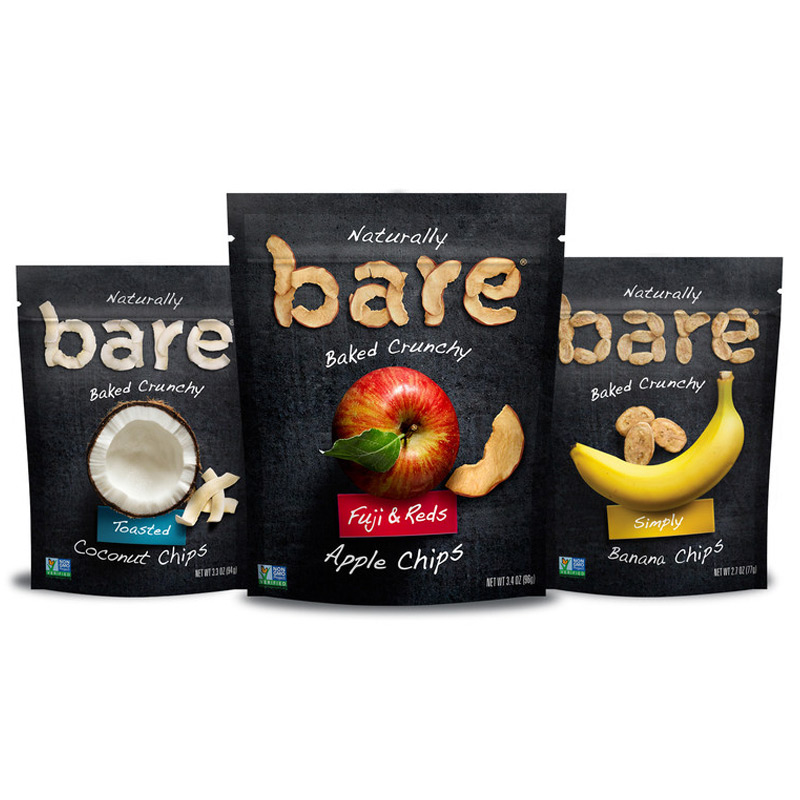
MUMBAI: A global snack brand started by an Indian, Bare Foods has been acquired by American multinational food, snack, and beverage corporation, PepsiCo.
PesiCo has entered into a definitive agreement to acquire the US snack company that is primarily into baked fruits and vegetable snacks. The transaction will expand the company’s snacking portfolio and further deliver on its vision to offer consumers more positive nutrition options.
PepsiCo chairman and chief executive officer Indra Nooyi says, “For nearly a dozen years, PepsiCo has been committed to our vision of making more nutritious products, while also reducing added sugars, salt, and saturated fat. Bare Snacks fits perfectly within that vision.”

Although both the companies did not disclose the financial terms of the deal, but it is learnt that Pepsi will pay less than $200 million for the snack company.
She adds, ”The Bare Snacks leadership team has done an outstanding job building a top-tier organisation and a strong brand with authentic roots, and I couldn’t be more excited to welcome Bare Snacks to the PepsiCo family.”
Bare Snacks was founded in 2001 by a family owned organic apple farm in Washington, that began selling packaged baked apple chips in local farmers’ markets. Under its current leadership team, it has expanded steadily to become the leader in apple, banana and coconut snacks.
It has recently expanded into vegetable chips and offers the industry’s broadest assortment of baked crunchy fruit and vegetable chips (apple chips, banana chips, coconut chips, and new beet chips, carrot chips, and sweet potato chips). Bare products are made from simple ingredients that are baked, not fried. They are non GMO project verified, feature clean labels and are sold online and in natural and conventional retail channels across the US.
Bare Foods CEO Santosh Padki is thrilled to work with the PepsiCo team to further its mission of bringing simplicity to snacking. “With a shared passion for crunchy, better-for-you snacks, PepsiCo is the right partner to help bring our simply baked fruit and vegetable snacks to even more consumers across the world and continue to grow our brand,” he adds.
Upon closing, Bare Snacks will continue to operate independently from its headquarters in San Francisco with its leadership reporting into Frito-Lay North America, a division of PepsiCo.
Frito-Lay North America president and chief operating officer Vivek Sankaran thinks that Bare premium baked fruit and vegetable chips are an exciting expansion of Frito-Lay’s better-for-you snack offerings.
PepsiCo will continue to offer the current Bare Snacks product line while also working with the Bare Snacks team to deliver new, innovative options, and ultimately expanded distribution.
PepsiCo generated more than $63 billion in net revenue in 2017, driven by a complementary food and beverage portfolio that includes Frito-Lay, Gatorade, Pepsi-Cola, Quaker and Tropicana. PepsiCo’s product portfolio includes 22 brands that generate more than $1 billion each in estimated annual retail sales.







Brands
Samsung certifies 1,000 Maharashtra students in AI and coding
The South Korean electronics giant marks its first large-scale skilling push in the state, with women making up nearly half the national programme’s enrolment
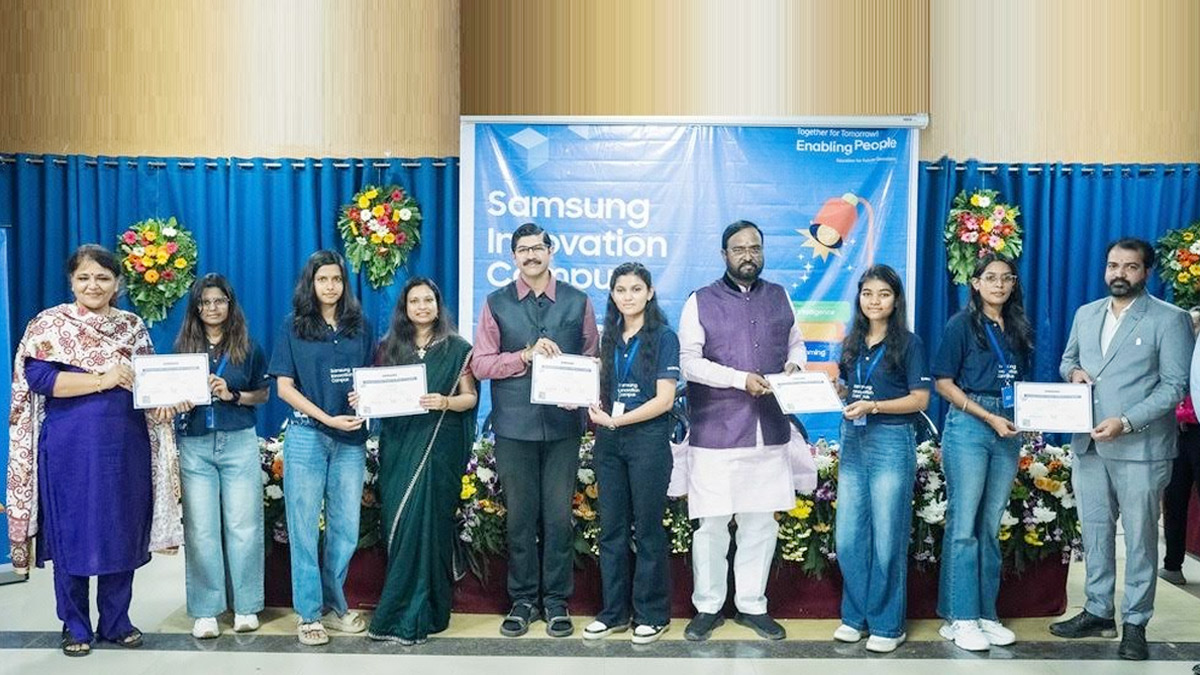
PUNE: Samsung has put 1,000 students in Maharashtra through a certified training programme in artificial intelligence and coding, the largest such drive the South Korean electronics company has run in the state and a signal that corporate India’s skilling ambitions are moving well beyond the boardroom brochure.
The certifications were awarded under Samsung Innovation Campus (SIC), the company’s flagship corporate social responsibility programme, which launched in India in 2022 with the stated aim of democratising access to future-technology education. The 1,000 graduates were drawn from four institutions: 127 from Savitribai Phule Pune University, 373 from Pimpri Chinchwad University, 250 from D.Y. Patil University’s Ramrao Adik Institute of Technology and 250 from Anjuman-I-Islam’s Kalsekar Technical Campus. All completed training in either AI or coding and programming, the two disciplines Samsung has identified as the critical pillars of the digital economy.
The programme does not stop at technical training. Soft-skills development and career-readiness modules are baked into the curriculum, a deliberate attempt to close the gap between what universities teach and what employers actually want.
“India’s digital growth story will ultimately be shaped by the quality of its talent pipeline,” said Shubham Mukherjee, head of CSR and corporate communications at Samsung Southwest Asia. “As technologies like AI move from the periphery to the core of industries, skilling must evolve from basic training to building real-world capability. This milestone in Maharashtra reflects how industry and academia can come together to create a future-ready workforce that is both globally competitive and locally relevant.”
The Maharashtra drive sits within a rapidly scaling national effort. Samsung Innovation Campus trained 20,000 young people across India in 2025, hitting its stated target for the year. Women account for 48 per cent of national enrolments, a figure the company cites as evidence of its push for an inclusive technology ecosystem. The programme is implemented in partnership with the Electronics Sector Skills Council of India and the Telecom Sector Skill Council.
Samsung, which is marking 30 years in India this year, runs SIC alongside two other initiatives, Samsung Solve for Tomorrow and Samsung DOST, as part of a broader effort to build what it calls a generation of innovators with both the technical depth and the problem-solving mindset to thrive in a fast-moving digital world.
A thousand certified students is a tidy headline. Whether they find jobs that match their new skills is the harder question, and the one that will ultimately determine whether corporate skilling programmes like this one are genuine pipelines or well-photographed gestures.






