Brands
Paytm turns the corner with Rs 225 crore profit in Q3 results


NOIDA: One 97 Communications, the parent company of Paytm, has swung decisively into the black, posting a profit after tax of Rs225 crore for the quarter ending December 2025, an improvement of Rs433 crore year-on-year. The digital payments pioneer has now clocked three consecutive quarters of profitability, with EBITDA reaching Rs156 crore and a margin of seven per cent, up from a Rs 223 crore loss in the same quarter last year.
The Noida-based firm’s operating revenue grew 20 per cent year-on-year to Rs2,194 crore, driven by higher payments, gross merchandise value, merchant subscriptions and financial services distribution. Like-for-like revenue growth stood at roughly 25 per cent, with the reported figure reflecting the timing of festive sales, lower loan distribution under default loss guarantee programmes and a more conservative revenue recognition policy.
Paytm is clawing back consumer market share in the fiercely competitive unified payments interface space. Its consumer UPI GMV jumped 35 per cent over the past nine months, handily beating industry growth of 16 per cent. The company’s AI-first, product-led strategy has delivered consistent gains for three consecutive quarters, a striking reversal after years of playing catch-up to rivals such as PhonePe and Google Pay.

“Building on this momentum, we have prudently invested in promotional expense to boost consumer retention and market share gain,” the company said in its earnings release. Promotional cashbacks and incentives rose to Rs69 crore from Rs37 crore a year earlier, with initiatives such as the Gold Coin campaign driving customer retention benefits.
The firm’s merchant business remains robust. Device subscriptions reached 14.4 million, an addition of 2.7 million year-on-year, expanding its recurring revenue base. Gross merchandise value grew 24 per cent to Rs6.2 lakh crore. Monthly transacting users hit 76 million, up 6 million year-on-year, as the company’s AI-powered features enhanced engagement among higher-quality users.
Contribution profit, a closely watched metric, stood at Rs1,249 crore, up 30 per cent year-on-year, with contribution margin improving to 57 per cent. The improvement stemmed from higher payment processing margins and an increased share of financial services distribution revenue, which grew 34 per cent to Rs672 crore. Customers availing financial services through Paytm’s platform increased from 590,000 to 710,000.
The company has absorbed the full impact of India’s new labour code in this quarter whilst keeping total indirect expenses down eight per cent year-on-year at Rs1,092 crore. Employee costs, excluding sales staff, declined 22 per cent, helped by lower ESOP costs following chief executive Vijay Shekhar Sharma’s voluntary surrender of employee stock options in the previous financial year.
Paytm received all three key payment licences from the Reserve Bank of India for online, offline and cross-border payments in its wholly owned subsidiary, Paytm Payment Services Limited. The approvals enable end-to-end payment aggregation services and support the company’s long-term growth ambitions. The firm resumed onboarding online merchants following receipt of the payment aggregator licence last quarter.
The firm also made regulatory strides internationally. The board of Paytm Arab Payments, a wholly owned subsidiary incorporated for the UAE market, approved issuance of 49 per cent of post-issue paid-up share capital to Abbar Global Opportunities Holdings Limited, an Abu Dhabi company. Paytm Cloud Technologies Limited, another subsidiary, has incorporated two new wholly owned subsidiaries in Indonesia and Luxembourg as part of its international expansion strategy.
Yet challenges loom. The Payment Infrastructure Development Fund incentive scheme, which contributed Rs216 crore over the nine months ending December 2025, expired in December. Management expects to “significantly offset the impact over time through a combination of higher revenues and targeted sales efforts”, though contribution margins are expected to slip to the mid-50s from 57 per cent.
Cash and investment balances stood at Rs12,882 crore, providing continued flexibility to expand the business. Depreciation and amortisation fell 19 per cent to Rs133 crore, reflecting lower device costs and a focus on refurbishment. The firm has moved away from “adjusted” metrics in favour of GAAP-basis reporting, which management said “drives appropriate resource allocation decisions”.
Sharma has steered Paytm through turbulent waters. After the Reserve Bank barred its payments bank from onboarding new customers in early 2024 over compliance failures, the company has methodically rebuilt trust with regulators whilst transforming its business model. The merchant loan distribution business, built on six years of experience, now exhibits what management calls “lower cyclicality and sustainable growth”, with repeat borrowers remaining above 50 per cent.
Looking ahead, management flagged that other income is expected to decline from the fourth quarter onwards. Maturing investments are being reinvested at lower yields following a 125 basis point repo rate cut over the past year, whilst an increase in the margin trading facility book generates operating income rather than other income. Starting in financial year 2027, income tax expense will apply to other income, which primarily comprises interest income, though operating profits will continue to be offset against carry-forward losses from prior periods.
The company noted “insignificant impact” from industry-wide regulatory changes, including the September 2025 stoppage of rent payments through credit cards and August 2025 real money gaming regulations, crediting proactive compliance measures. Sunil Kumar Bansal, company secretary and compliance officer, filed the earnings release with the Bombay Stock Exchange and National Stock Exchange on 29th January.
For a firm that bled cash for years whilst building India’s digital payments infrastructure, profitability marks a watershed moment. Whether Paytm can sustain these gains whilst fending off deep-pocketed rivals and navigating regulatory scrutiny will determine if this quarter proves a turning point or merely a fleeting respite.







Brands
Tessolve lands a semiconductor veteran to drive its next big push
Ravi Kumar Chirugudu, who started his career at ISRO and has spent 35 years building chips and companies, joins the Bengaluru-based firm as president and chief operating officer
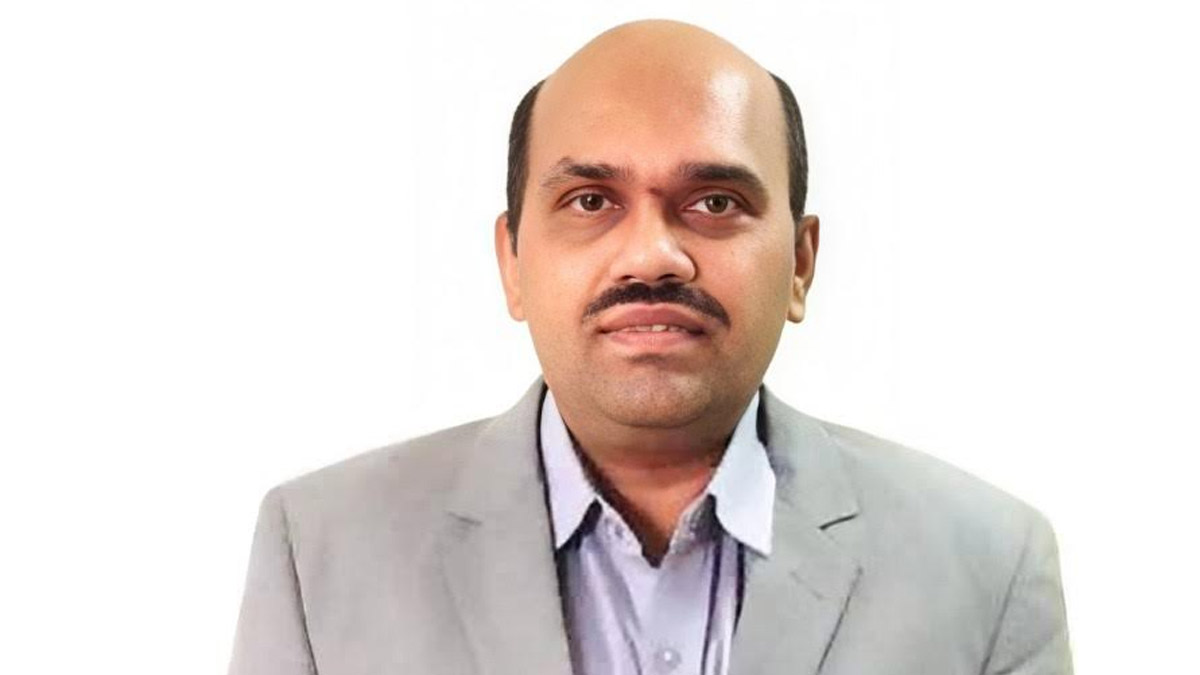
BENGALURU: Tessolve has never been shy about its ambitions. The Bengaluru-based engineering services firm already counts 18 of the world’s top 20 semiconductor companies among its clients, employs more than 3,500 engineers across 12 countries, and last year pocketed a $150m investment from TPG. Now it has hired the executive it believes can turn those assets into something bigger. Ravi Kumar Chirugudu, a 35-year semiconductor veteran who once built satellite payloads for ISRO and has since scaled engineering organisations across three continents, joins as president and chief operating officer, effective immediately.
THE MAN AND THE MANDATE
The appointment is, by any measure, a serious hire. Ravi Kumar Chirugudu comes to Tessolve after senior leadership stints at HCL Technologies, Altran and Wipro, where he managed large profit-and-loss portfolios and oversaw cross-regional teams. Over the course of his career, he has been instrumental in bringing more than 1,000 new products to market across the high-tech, energy and manufacturing verticals. Before the private sector claimed him, he began his working life as a scientist at the Indian Space Research Organisation, contributing to research and development in charge-coupled device technology and satellite payloads, a foundation that shaped everything that followed.
In his new role, he will lead Tessolve’s global growth strategy: expanding its engineering capabilities, deepening customer relationships and accelerating innovation across semiconductor and high-performance computing domains. The brief is broad, but the context is specific. Tessolve operates in the $550 billion global semiconductor market, and its recent moves, the acquisition of Germany’s Dream Chip Technologies and the TPG funding round, have sharpened both its reach and its expectations.
Srini Chinamilli, co-founder and chief executive of Tessolve, is characteristically direct about why Ravi Kumar Chirugudu was the choice:
“As we scale our global semiconductor and system engineering capabilities, Ravi’s appointment marks an important step forward. As global semiconductor demand continues to accelerate across industries, it is creating significant opportunities across the semiconductor lifecycle, from design, packaging, validation and systems integration. Ravi’s deep knowledge and leadership in this ecosystem brings the right mix of industry expertise, customer connect and execution capability, which will play a key role in strengthening our position as a trusted global engineering partner and reinforcing our market leadership.”
THE NEW ARRIVAL SPEAKS
Ravi Kumar Chirugudu, for his part, frames the move in terms of timing and culture, two factors that veteran executives tend to weigh as heavily as title or compensation:
“I am happy to join Tessolve at a time when the industry is rapidly evolving towards more complex, AI-driven systems. What stands out to me is its strong people-first culture and its commitment to bringing value to its customers. The strength of its global team, combined with its deep expertise in semiconductor innovation and next-generation product engineering, creates a solid foundation to build differentiated, scalable solutions. I look forward to working closely with the team to drive strategic growth and strengthen its role in shaping the global semiconductor ecosystem.”
The reference to AI-driven systems is not incidental. The semiconductor industry is in the midst of a structural reshaping, driven by the insatiable compute demands of artificial intelligence. For engineering services firms like Tessolve, which offers end-to-end capabilities from silicon design to packaged parts and invests in high-performance computing, high-speed interfaces, photonics and 5G, the moment is both an opportunity and a test. The company says it is well positioned to capture the next wave of industry growth. Ravi Kumar Chirugudu is now the person who has to prove it.
He came in from outer space, literally, and spent three decades learning how the semiconductor industry works from the inside out. Now Tessolve is betting that accumulated knowledge can help it cross the next frontier. In the $550 billion global chip market, the gap between ambition and execution is measured in engineering hours and leadership quality. Tessolve has just gone shopping for both.






