Brands
Paytm names Saujanya Shrivastava as ceo, new initiatives

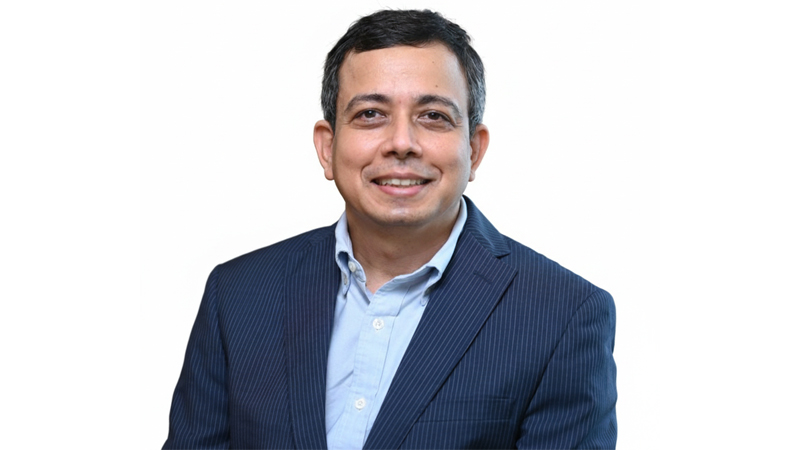
GURUGRAM: Paytm has appointed Saujanya Shrivastava as ceo, new initiatives, strengthening its leadership bench as the company sharpens its focus on building and scaling its next set of growth engines.
Shrivastava will oversee strategy, innovation and execution across Paytm’s emerging businesses. His mandate is simple but significant: turn fresh ideas into meaningful, scalable businesses that can fuel the company’s future.
Shrivastava joins Paytm after a long and varied stint at MakeMyTrip and Goibibo, where he spent more than a decade in senior leadership roles. Most recently, he served as chief operating officer, flights, holidays, gulf and b2b, managing some of the group’s most critical revenue verticals. His earlier roles there included chief operating officer, flights sbu and gulf and chief business officer, flights and growth products, giving him deep operational and product experience in high-volume consumer businesses.

Before his travel-tech chapter, Shrivastava was chief marketing officer at Bharti AXA Life Insurance, where he led brand strategy, digital business, online sales and customer management. He also headed early e-commerce initiatives at Future Group’s Futurebazaar as senior vice president and business head, well before online retail became mainstream in India.
His earlier career reads like a roll call of marquee brands. At PepsiCo, he served as vice president, marketing, launching the Pepsi Slim Can and building the brand’s powerful association with cricket. Stints at Citibank as assistant vice president, marketing and at Cadbury India in brand and sales leadership roles further rounded out his consumer and financial services experience.
An alumnus of the Indian Institute of Management Calcutta, Shrivastava brings nearly three decades of brand-building, digital innovation and executional rigour to Paytm. As the company looks to its next act, the appointment underlines a clear intent to back ambition with experience and to turn new initiatives into serious business.







Brands
Dunkin’ Donuts to exit India as Jubilant FoodWorks ends 15-year franchise deal
The quick service restaurant giant is ending a 15-year franchise partnership with the American doughnut chain, even as it renews its Domino’s agreement for another 15 years
NOIDA: Dunkin’ is done in India. Jubilant FoodWorks Ltd, the country’s leading quick service restaurant operator, has decided not to renew its franchise agreement with the American coffee and doughnut chain, and will wind down its Indian stores in a phased manner before December 31, 2026, bringing a 15-year partnership to a quiet, loss-laden close.
The decision, approved by JFL’s board on March 30, 2026, ends a relationship that began with a Multiple Unit Development Franchise Agreement signed on February 24, 2011. JFL will now evaluate and undertake what it described in a regulatory filing as the “rationalisation and/or cessation of certain operations and/or sale, transfer or disposal of assets and/or assignment or transfer of franchise rights,” all in consultation with Dunkin’s brand owners and strictly within the terms of the original agreement.
The numbers tell the story bluntly. In the financial year 2024-25, Dunkin’ India posted a revenue of Rs 37 crore against a loss of Rs 19 crore — a haemorrhage that was always going to test the patience of a parent company recording revenues of Rs 6,104 crore and a profit of Rs 194 crore in the same period. Doughnuts, it turns out, were never going to move the needle.
The contrast with JFL’s handling of its other marquee franchise could hardly be sharper. Even as it walks away from Dunkin’, the company has just doubled down on Domino’s, signing a fresh Master Franchise Agreement on March 31, 2026, granting it exclusive rights to develop and operate Domino’s Pizza stores in India for 15 years, with an option to renew for a further 10.
JFL, incorporated in 1995 and promoted by the Bharatia family, operates a network of more than 3,500 stores across six markets — India, Turkey, Bangladesh, Sri Lanka, Azerbaijan and Georgia. Its portfolio includes Domino’s and Popeyes on the global side, and two home-grown brands: Hong’s Kitchen and COFFY, a café brand in Turkey.
For Dunkin’, India was always a stretch. The brand never quite cracked the cultural code in a market where filter coffee and chai command fierce loyalty and where the doughnut remains, at best, an occasional indulgence rather than a daily habit. Fifteen years, mounting losses and a parent with better things to spend its capital on was always going to be a difficult equation to solve.
The doughnut has had its last day. The pizza, however, is staying.






