MAM
Parle-G’s latest ‘G Mane Genius’ TV campaign harps on inculcating values in children

Mumbai: Parle Products, one of the leading biscuit brands in India has released its latest TV Campaign for its flagship product – Parle G. This TV Campaign is part of their brand’s G Maane Genius positioning. In 2022, Parle-G revealed an innovative version of its ‘G Maane Genius’ campaign. The proposition was elevated by touching upon the emotional quotient in children. The innate empathy of young children, devoid of personal benefit was the lynchpin of the campaign.
Riding on the back of that campaign’s success, Parle has come out with a series of bite-sized films with the same messaging. The new set of five films created by Thought Blurb Communications has been carefully created to evoke the same emotion without the luxury of elaborate storytelling. The new 15-second format manages to balance the emotion elicited by the proposition with daily situations with children at home and play. The emphasis is on their interaction with parents, loved ones and friends.
1. Dadaji:

2. Musical Chairs:
3. Puppet Show:
4. Science Project:
5. Toy Store:
The series of films takes simple uncomplicated scenarios to demonstrate a child’s compassion. These are situations that a child may easily find themselves. The intuitive need to help others is encompassed in the signature thought, ‘Genius wohi, jo auron ke khushi mein paye apni khushi’.
The simplicity of the films is key to the campaign’s effectiveness. These are situations that every child would have faced. The portrayal of sensitivity in the protagonist child is not shown as a moral lesson or a teachable moment. In fact, the protagonists are neither good, nor bad. The statement ‘Genius wohi, jo auron ke khushi mein paye apni khushi’ clearly defines the brand’s definition of a genius, in any child. These are the values that the ads seek to inculcate in children without speaking from a pulpit.
For the parent in the room, the message is clear. Parle-G stands for a feeling of empathy and sacrifice in children. These attributes are the sublimation of uncorrupted compassion and the need to protect, help and make others happy. The shorter version of the campaign brings a new dimension to the concept of ‘genius’ and makes it an everyday demonstration of emotion in its purest form.
“The core values expressed in this campaign are quite strong. Young children around the world have an effortless capacity for empathy, which gives them a facility for goodness born out of innocence. We equate this to a higher intelligence relatable to genius,” said Parle marketing – VP Mayank Shah. “We needed to see if the idea had legs to travel through different formats and media.” It was a challenge thrown to the advertising agency which Thought Blurb gladly accepted.
Thought Blurb Communications founder & CCO Vinod Kunj spoke about his team’s approach to the campaign. “We immediately realized that we needed to throw out all our pre-conceived notions of scripting. The short format gave us little time to establish relationships and situations. The establishing shots would have to portray the conflict and solutions presented simply. Nothing overly convoluted would work.”
Thought Blurb Communications national creative director Renu Somani explained, “Emotions are not slaves to duration. We rejected the concept of shorter edits of the master films and created fresh masters in the short format. Each story is born from the need for 15-second stories and not pared down versions of the longer ones.”






Brands
Vodafone Idea elevates Vineeth Jayendranath as VP, marketing head Mumbai
Telecom marketer takes charge of Mumbai circle with growth and brand focus
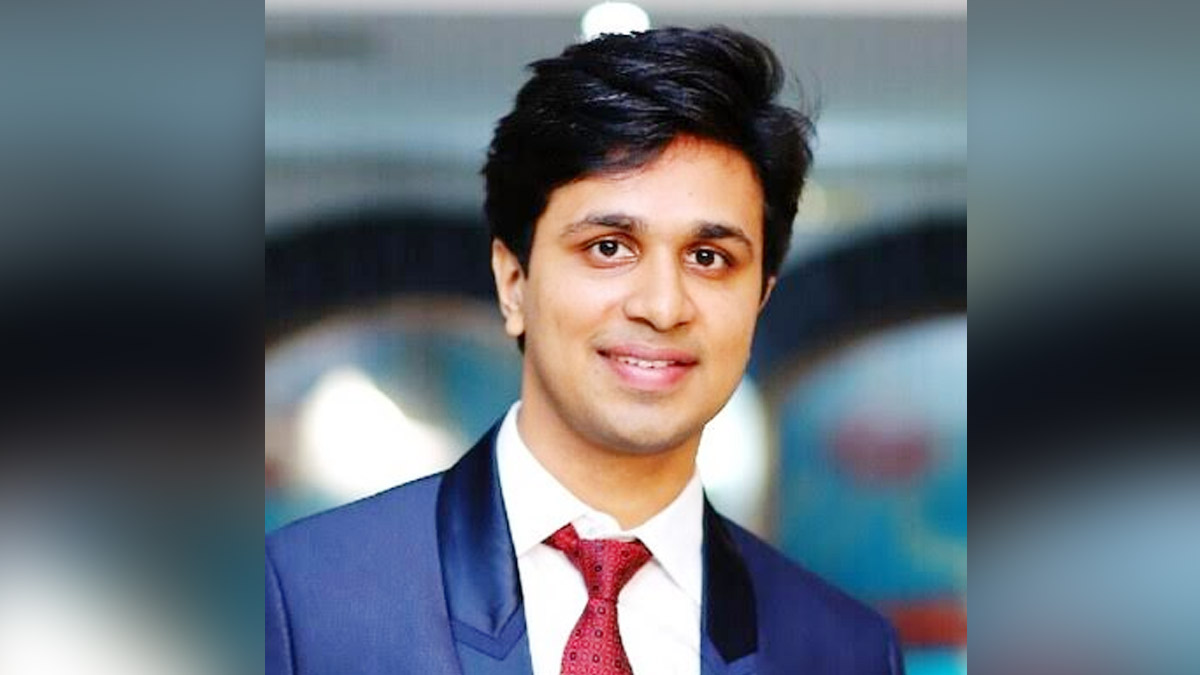
MUMBAI: Vodafone Idea Limited has promoted Vineeth Jayendranath to vice president, marketing head for the Mumbai circle, marking a key milestone in his career as the telecom operator sharpens its regional strategy.
In his new role, Jayendranath will lead marketing efforts across prepaid and postpaid segments in one of the country’s most competitive telecom markets. His mandate includes driving revenue growth, strengthening brand positioning, and deepening customer engagement, while also managing profit and loss responsibilities for the circle.
Sharing the update, Vineeth Jayendranath said, “Excited to share, I am starting my new stint as Vice President, Marketing Head for Mumbai circle at Vodafone Idea Ltd. Would like to thank everyone who has supported me in this journey.”
Jayendranath brings over 12 years of experience spanning telecom and IT, with a strong focus on customer value management and data-led marketing. Since joining Vodafone Idea, he has held multiple leadership roles, most recently serving as general manager leading customer value management and prepaid business across Gujarat, Maharashtra and Goa.
During this period, he handled large subscriber bases and multi-billion rupee revenue portfolios, while rolling out hyper-personalised campaigns and a “segment of one” strategy to improve customer retention and upgrades. He also championed a digital-first approach, pushing adoption of data services and unlimited plans through targeted, insight-driven initiatives.
Earlier, he worked with Idea Cellular Ltd in strategy and business intelligence roles, and began his career at Infosys as a systems engineer. A brief stint at Hyundai Motor India Ltd during his internship added early exposure to marketing strategy.
An alumnus of SVKM’s Narsee Monjee Institute of Management Studies, Jayendranath has steadily built a reputation for combining analytics with marketing execution.
His elevation comes as telecom players double down on circle-level strategies to stay competitive, and Vodafone Idea appears to be betting on data-backed marketing to keep Mumbai firmly in its corner.







